THE ENGINE OFGLOBAL INNOVATION
From Silicon Valley to DARPA, the United States is the primary laboratory of modern civilization. The internet, the transistor, the smartphone, cloud computing, and artificial intelligence were all invented and scaled here.
How America Designs the Digital Future
The technological rise of the United States was not an accident of history, but the product of a unique ecosystem that pairs state-funded foundational research (through agencies like DARPA and NASA) with the unmatched depth of private capital and the high-risk culture of Silicon Valley.
From the silicon microchip invented in the mid-20th century to the frontier AI models of today, American companies continue to command the most valuable layers of the global technology stack: intellectual property design, critical design software, and the global cloud computing fabric.
Pillars of the Digital Economy
The Semiconductor Design Chokehold
US firms capture approximately 50% of global semiconductor design revenues (Nvidia, AMD, Apple Silicon) and control the critical EDA software tools used to design advanced chips globally.
The Venture Capital Catalyst
Nearly half of all global venture capital flows through American hubs centered in Silicon Valley, enabling high-risk, high-reward technologies to secure deep funding.
Hyper-Scale Cloud Domination
Three American providers (AWS, Microsoft Azure, and Google Cloud) host over 65% of the global cloud infrastructure, powering the modern digital commons.
The AI Investment Surge
US private AI investment hit $109 billion in 2024 — nearly 12 times China's total ($9.3B) and 24 times the UK's ($4.5B) (Stanford HAI AI Index 2025).
The World's Most Productive Patent Machine
The USPTO granted 365,614 patents in fiscal year 2024, a 5.6% increase over the prior year — the second consecutive annual rise.
The Nobel Prize Superpower
American laureates have won 428 Nobel Prizes across all categories over the prize's history, more than any other nation, with a substantial share going to immigrant researchers.
EXPLORE DEEPER
Domains of Innovation
 DARPA & ARPANET
The Internet
How a defense project evolved into the global digital commons, created and scaled in the United States.
 Silicon Valley
AI & Tech
Inside the design chokehold and computing clusters powering the generative artificial intelligence frontier.
 Apple & Android
Smartphones
The iPhone and mobile ecosystems that put the sum of human knowledge in the palm of every hand.
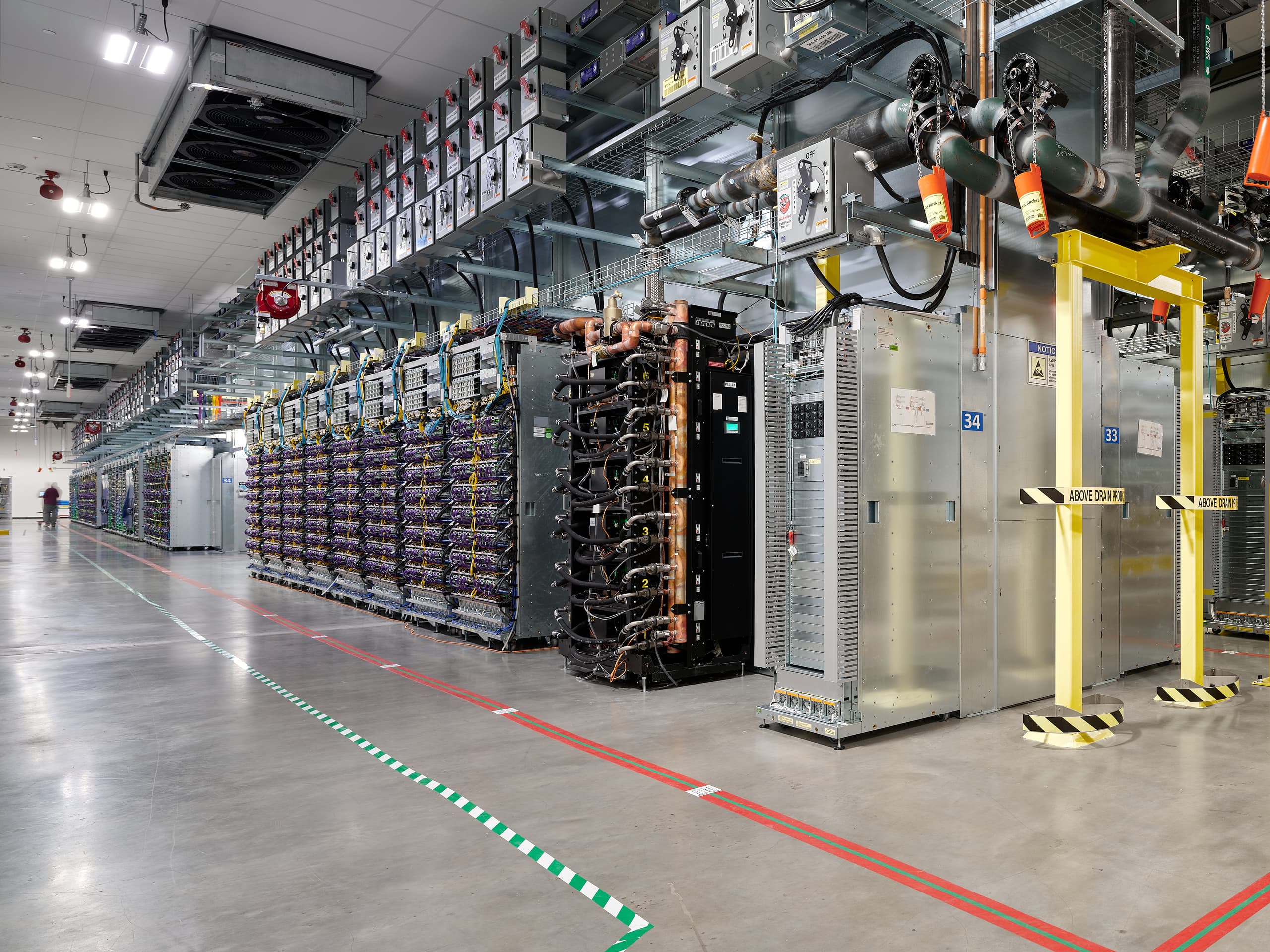 AWS & Google Cloud
Cloud Computing
The decentralized utility scaling global compute, built upon massive American data center architecture.
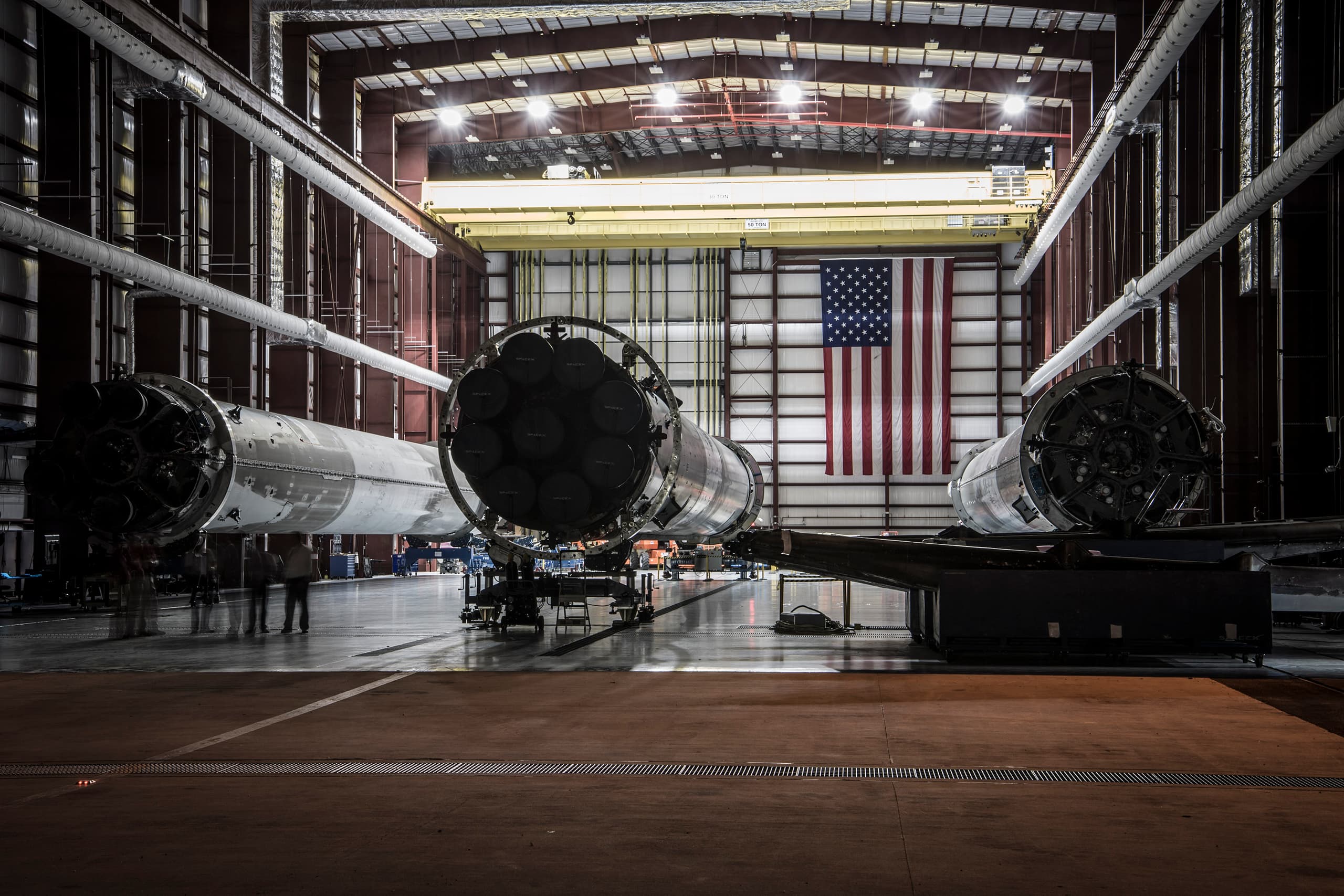 SpaceX & NASA
Space Technology
From Apollo's historic legacy to the modern private rocket systems conquering the orbital marketplace.
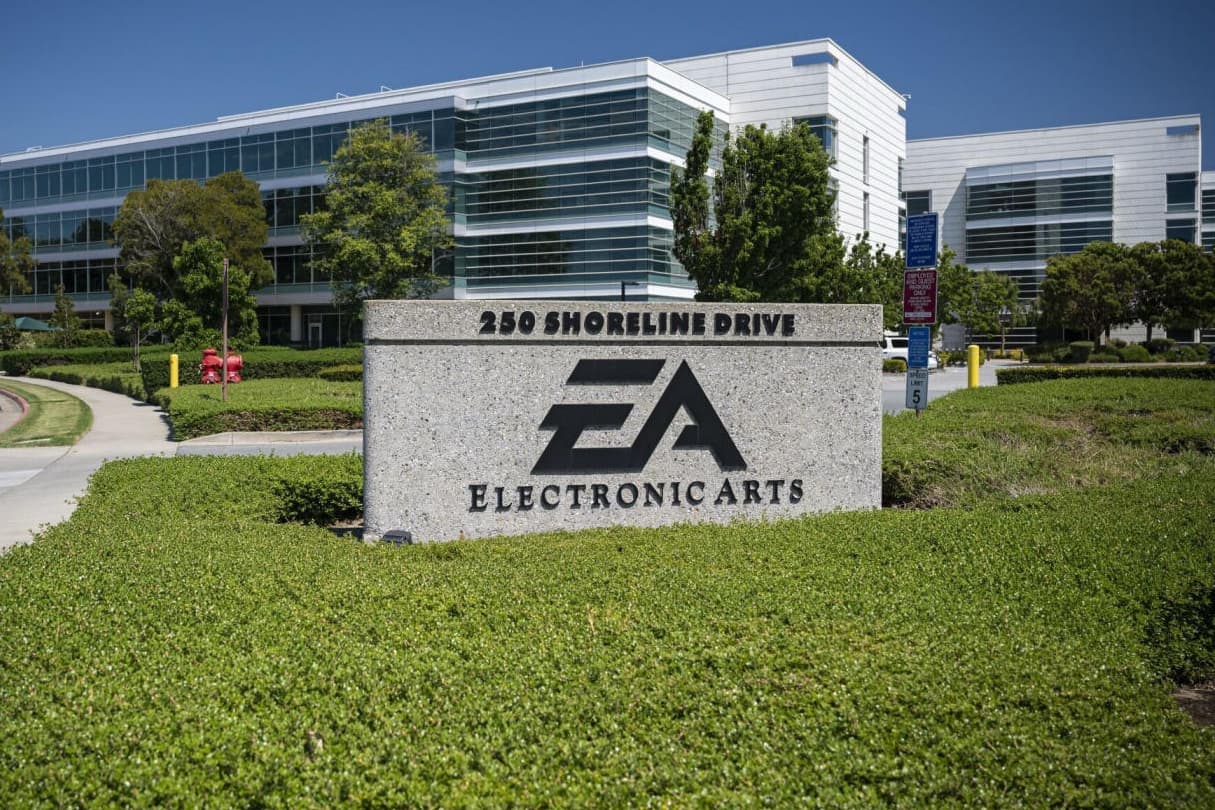 Atari to Unreal Engine
Gaming
The birth of interactive entertainment, from early arcade cabinets to state-of-the-art physics engines.
The Visual Record
Iconic Photographs
From the first nuclear fireball to the deepest views of the cosmos, the milestones of American science and spaceflight, captured on film.
Buzz Aldrin on the Moon1969
Neil Armstrong photographed Buzz Aldrin during Apollo 11, July 20, 1969: the first crewed Moon landing and one of the defining images of the 20th century.
Sea of Tranquility, the Moon
The Wright Brothers' First Flight at Kitty Hawk1903
John T. Daniels' photograph records the first sustained, controlled, powered flight of a heavier-than-air craft: the birth of the aviation age on a North Carolina dune.
Kill Devil Hills, Kitty Hawk, North Carolina
Earthrise1968
William Anders photographed the Earth rising beyond the Moon on December 24, 1968: an image widely credited with galvanizing the modern environmental movement.
Lunar orbit
ENIAC in Operation1946
Unveiled at the University of Pennsylvania in 1946, ENIAC's 18,000 vacuum tubes performed thousands of calculations per second, opening the computing era.
University of Pennsylvania, Philadelphia
Alexander Graham Bell Opening the New York–Chicago Telephone Line1892
Alexander Graham Bell placed the ceremonial first call on the New York–Chicago line in 1892, demonstrating the reach of the telephone network he had invented.
New York City
The Trinity Test1945
The Manhattan Project's Trinity test in the New Mexico desert, July 16, 1945, ushered in the atomic age; Jack Aeby's and the Army's frames recorded the fireball.
Jornada del Muerto, New Mexico
Saturn V Rocket Launch for Apollo 111969
On July 16, 1969, the Saturn V carried Armstrong, Aldrin, and Collins off Launch Complex 39A toward the first lunar landing.
Kennedy Space Center, Florida
Bell X-1 in Flight1947
Chuck Yeager flew the bright-orange Bell X-1 'Glamorous Glennis' past Mach 1 on October 14, 1947, over the Mojave: the dawn of supersonic flight.
Muroc Army Air Field, California
Space Shuttle Columbia's Maiden Voyage1981
Columbia lifted off on April 12, 1981 with John Young and Robert Crippen aboard, beginning three decades of Space Shuttle flight.
Kennedy Space Center, Florida
The SR-71 Blackbird in Flightc. 1960s
Lockheed's SR-71 reconnaissance jet cruised above Mach 3 at the edge of space, an icon of Cold War aerospace engineering from Skunk Works.
United States
Steve Jobs Introducing the iPhone2007
At Macworld on January 9, 2007, Steve Jobs unveiled the iPhone, redefining the smartphone and the mobile era.
Moscone Center, San Francisco
Jobs and Wozniak with the Apple I1976
Steve Jobs and Steve Wozniak built and sold the hand-assembled Apple I in 1976, launching the company and helping spark the personal-computer industry.
Los Altos, California
Thomas Edison1878
Thomas Edison, photographed with his phonograph, whose practical incandescent bulb and the power systems around it transformed daily life worldwide.
Menlo Park, New Jersey
Wernher von Braun Next to the Saturn V F-1 Engines1969
Wernher von Braun stands beside the five F-1 engines of the Saturn V's first stage, the propulsion that sent Apollo to the Moon.
Marshall Space Flight Center, Alabama
Nikola Tesla in his Colorado Springs Laboratory1899
Tesla's famous (double-exposure) 1899 publicity photo sitting calmly amid arcs from his magnifying transmitter dramatized his electrical experiments.
Colorado Springs, Colorado
Robert Goddard with the First Liquid-Fueled Rocket1926
Robert Goddard launched the first liquid-fueled rocket on March 16, 1926, in Auburn, Massachusetts, founding modern rocketry.
Auburn, Massachusetts
SpaceX Falcon 9 Dual Booster Landing2018
The Falcon Heavy demo in 2018 returned its twin side boosters to synchronized landings, advancing reusable rocketry and lowering launch costs.
Cape Canaveral, Florida
Dr. Grace Hopper,
Grace Hopper programmed the Harvard Mark I in the 1940s and went on to pioneer compilers and the COBOL language during a long Navy career.
United States Navy
Philo Farnsworth1924
Philo Farnsworth demonstrated the first fully electronic television system in the late 1920s, the basis of broadcast TV.
San Francisco, California
The First Transatlantic Telegraph Cable Fleet1858
The 1858 transatlantic telegraph cable, backed by American financier Cyrus Field, briefly connected continents and previewed instant global communication.
Atlantic Ocean
The Hubble Space Telescope Being Repaired in Orbit1993
The 1993 servicing mission corrected Hubble's optics, rescuing the telescope that has since transformed astronomy.
Low Earth orbit
The Pale Blue Dot1990
Voyager 1 photographed Earth as a single pixel from 3.7 billion miles away in 1990, inspiring Carl Sagan's reflection on our place in the cosmos.
Edge of the Solar System
Pickering, Van Allen, and von Braun Holding Explorer 11958
William Pickering, James Van Allen, and Wernher von Braun celebrate Explorer 1, the first U.S. satellite, which discovered the Van Allen radiation belts in 1958.
Washington, D.C.
J. Robert Oppenheimer and General Leslie Groves at the Trinity Site1945
Oppenheimer and Groves examine the remains of the Trinity test tower in 1945, the scientific and military faces of the Manhattan Project.
Trinity Site, New Mexico
The Pillars of Creation1995
Hubble's 1995 image of star-forming pillars in the Eagle Nebula became one of the most famous astronomical photographs ever made.
Eagle Nebula (Hubble)
Albert Einstein and Edwin Hubble at Mount Wilson1931
Einstein visited Hubble at Mount Wilson in 1931 to see the evidence for cosmic expansion that reshaped his view of the universe.
Mount Wilson Observatory, California
Carl Sagan and the Viking Mars Lander1976
Carl Sagan, popularizer of science and a Viking team member, helped bring the 1976 Mars landings to a global public.
Jet Propulsion Laboratory, California
The First Image of a Black Hole2019
In 2019 the Event Horizon Telescope, a global array led in part by U.S. institutions, produced the first direct image of a black hole's shadow.
Galaxy M87 (EHT)
Arno Penzias and Robert Wilson at the Holmdel Horn Antenna1965
Penzias and Wilson detected the cosmic microwave background with the Holmdel horn antenna in 1965, confirming the Big Bang and winning the Nobel Prize.
Holmdel, New Jersey
Ernest O. Lawrence and the Cyclotron1939
Ernest Lawrence's cyclotron, for which he won the 1939 Nobel Prize, launched the era of big-machine physics at Berkeley.
Berkeley, California
Glenn Seaborg and the Periodic Table1951
Glenn Seaborg co-discovered plutonium and other transuranium elements, reshaping the periodic table; element 106 (seaborgium) bears his name.
Berkeley, California
The Hollerith Census Machine1890
Herman Hollerith's punch-card tabulator processed the 1890 U.S. Census in record time; his company became part of IBM.
Washington, D.C.
The James Webb Space Telescope's First Deep Field2022
Webb's first deep field, released in 2022, revealed thousands of galaxies billions of light-years away in unprecedented detail.
Galaxy cluster SMACS 0723 (JWST)
Raymond Damadian and the First MRI Scanner1977
Raymond Damadian produced the first MRI scan of a human body in 1977 with his machine 'Indomitable,' founding a pillar of modern medicine.
Brooklyn, New York
Thomas Hunt Morgan in the Fly Room1910s
Thomas Hunt Morgan's Columbia 'Fly Room' established the chromosome theory of heredity using fruit flies, founding modern genetics.
Columbia University, New York
The LIGO Facility in Operation2015
LIGO's twin observatories detected gravitational waves from colliding black holes in 2015, confirming Einstein and opening a new astronomy.
Hanford, Washington / Livingston, Louisiana
Silicon Valley
Silicon Valley is a colloquial term for a roughly 50-mile-long region in the southern San Francisco Bay Area of Northern California, primarily encompassing Santa Clara County and adjacent areas of San Mateo, Alameda, and San Francisco counties, which emerged as the preeminent global center for high-technology development and entrepreneurship beginning in the mid-20th century.
The Ask America Oracle
Ask the AI Oracle about Silicon Valley, internet history, artificial intelligence, smartphone developments, or space systems.