THEY BUILT THEMODERN WORLD
A system built on patent protections, risk capital, and academic freedom has produced more Nobel Laureates than any other nation in history.
The Engine of Scientific Inquiry
From the electric lightbulb and the airplane to the microchip and artificial intelligence, the modern world runs on American intellectual property. This dominance is not a happy accident; it is the direct product of a legal framework established in Article I of the Constitution to protect patent rights, combined with massive funding for research.
The US leads the world in peer-reviewed scientific citations and attracts the finest international minds. Whether curing diseases or pioneering the digital age, American scientists operate with a level of resource depth and administrative freedom unmatched globally.
Scientific Leadership by the Numbers
398
Nobel Laureates
American scientists have won ~34% of all Nobel Prizes in history. Since 1970, over half of all prizes have been won by Americans (nearly two-thirds recently), and they account for half of all global scientific citations.
350k+
Annual Patents
A continuous flow of new utility patents protecting intellectual property.
#1
Global R&D Funding
Investing over $900 billion annually across corporate labs and public institutions.
Chronology of Innovation
Inventions Pre-1890
The foundations of modern connectivity: the telegraph, lightbulb, telephone, and vulcanized rubber.
Inventions 1890-1945
The era of speed and power: the airplane, assembly line, movie projector, and nuclear fission.
Post-War Miracles
Creating the digital universe: the transistor, microprocessor, laser, internet, and GPS.
Medicine & Biotech
Conquering disease: polio vaccines, recombinant DNA, gene sequencing, and mRNA platforms.
Energy Dominance: The Shale Revolution
In 2008, the United States was a net importer of oil and gas, geopolitically constrained by OPEC pricing. By the mid-2010s, it had become the world's single largest producer of both oil and natural gas simultaneously: surpassing Saudi Arabia and Russia: driven entirely by private entrepreneurs, risk capital, and a property rights system that let landowners profit from what lay beneath their own soil.
No government planned this; it was market-driven ingenuity. Powering this is the Pipeline Nation: the US operates the world's largest energy pipeline network with over 2.8 million miles of pipe: a 65% global share (vs Russia 8%, Canada 3%). This underground web delivers cheap natural gas and crude invisibly and continuously, creating a domestic commodity market structurally insulated from the foreign import vulnerabilities that haunt Europe.
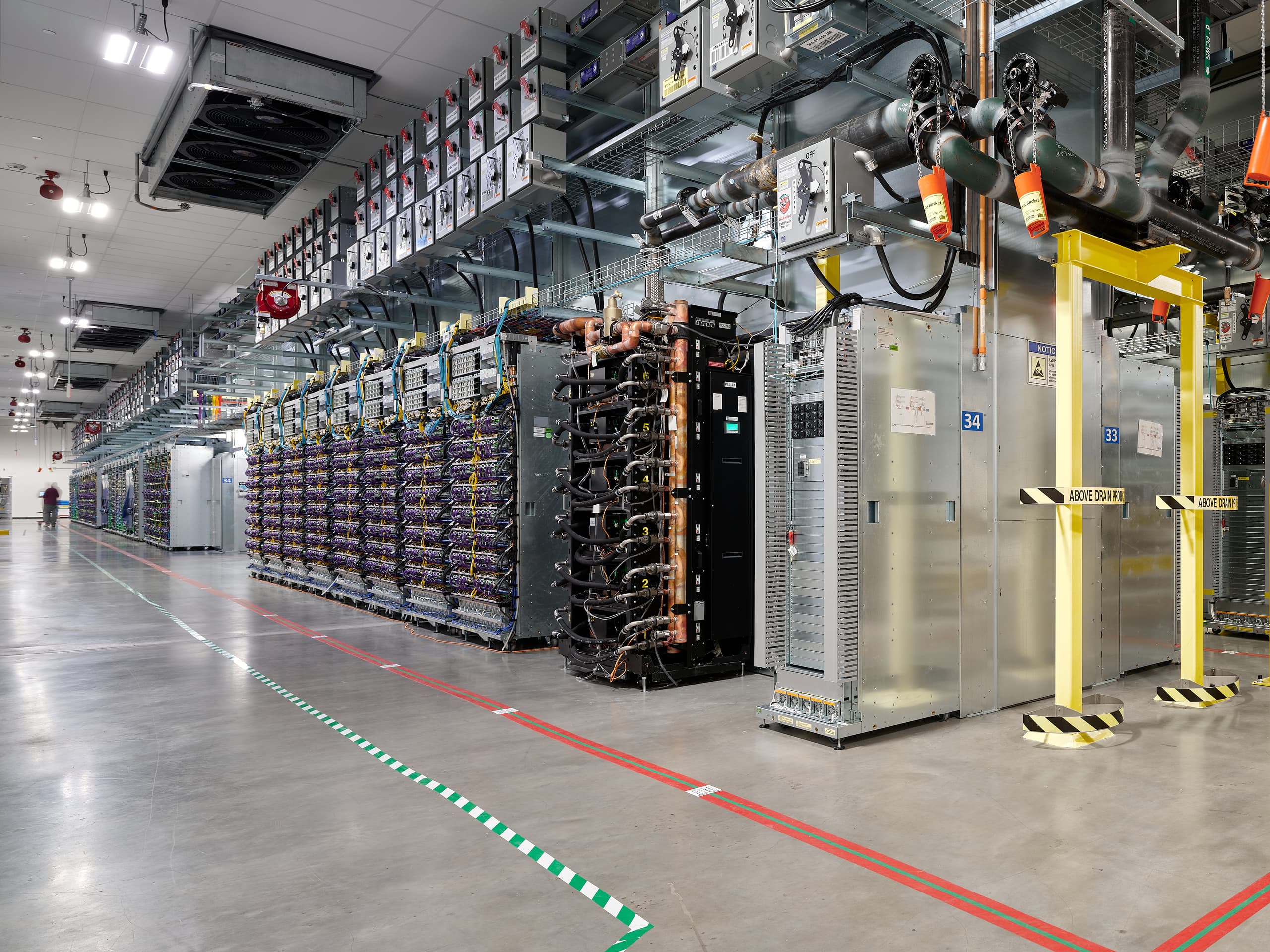
The DOE National Labs: Unmatched Research Infrastructure
The Department of Energy's 17 National Laboratories (including Lawrence Livermore, Oak Ridge, Argonne, SLAC, and Fermilab) represent the most comprehensive scientific research system in the world. Directly descended from the wartime Manhattan Project, this system coordinates specialized, large-scale scientific infrastructure that no other country can replicate.
Operating continuously for over 70 years, these institutions house instruments found nowhere else on Earth. It was here that scientists achieved the world's first fusion ignition at Lawrence Livermore in 2022 and built some of the fastest supercomputers in existence at Oak Ridge. The system stands as a monument to deep research that no single private corporation or foreign state could fund.
The Ask America Oracle
Ask the AI Oracle about historic scientific breakthroughs, transistors, biotechnology developments, or American Nobel prize counts.