ARCHITECTS OFSPEED AND POWER
How the convergence of industrial scaling, corporate research labs, and wartime mobilization accelerated American technological dominance.
Mass Production and the Crucible of Global War
Between 1890 and 1945, the United States transitioned from an emerging industrial player to the industrial and scientific workshop of the world. The era was defined by scaling: the invention of the assembly line transformed luxury items into accessible consumer goods, and electrical networks expanded across the country. American ingenuity shifted from solitary inventors to structured research labs, like those of General Electric, DuPont, and Bell Labs.
This era of scaling reached its absolute peak under the extreme crucible of World War II. Facing existential global threats, the U.S. government coordinated with private corporations and elite universities under the Office of Scientific Research and Development. This mobilization produced radar, mass-produced penicillin, synthetic rubber, and ultimately the atomic bomb, establishing a federally-funded scientific infrastructure that continues to define global technology.
Defining 1890-1945 Inventions
The Airplane
At Kitty Hawk, North Carolina, the Wright brothers achieved the first controlled, sustained, and powered flight of a heavier-than-air aircraft. Through their pioneering research in three-axis control, they solved the fundamental aerodynamic stability problems that had blocked flight for centuries, launching the modern aviation age.
The Moving Assembly Line
Ford revolutionized industrial manufacturing by installing the first moving assembly line for the mass production of the Model T. By dividing labor, standardizing parts, and bringing the work directly to the worker, he cut chassis assembly time from 12 hours to 93 minutes, making cars affordable to the working class.
The Liquid-Fuel Rocket
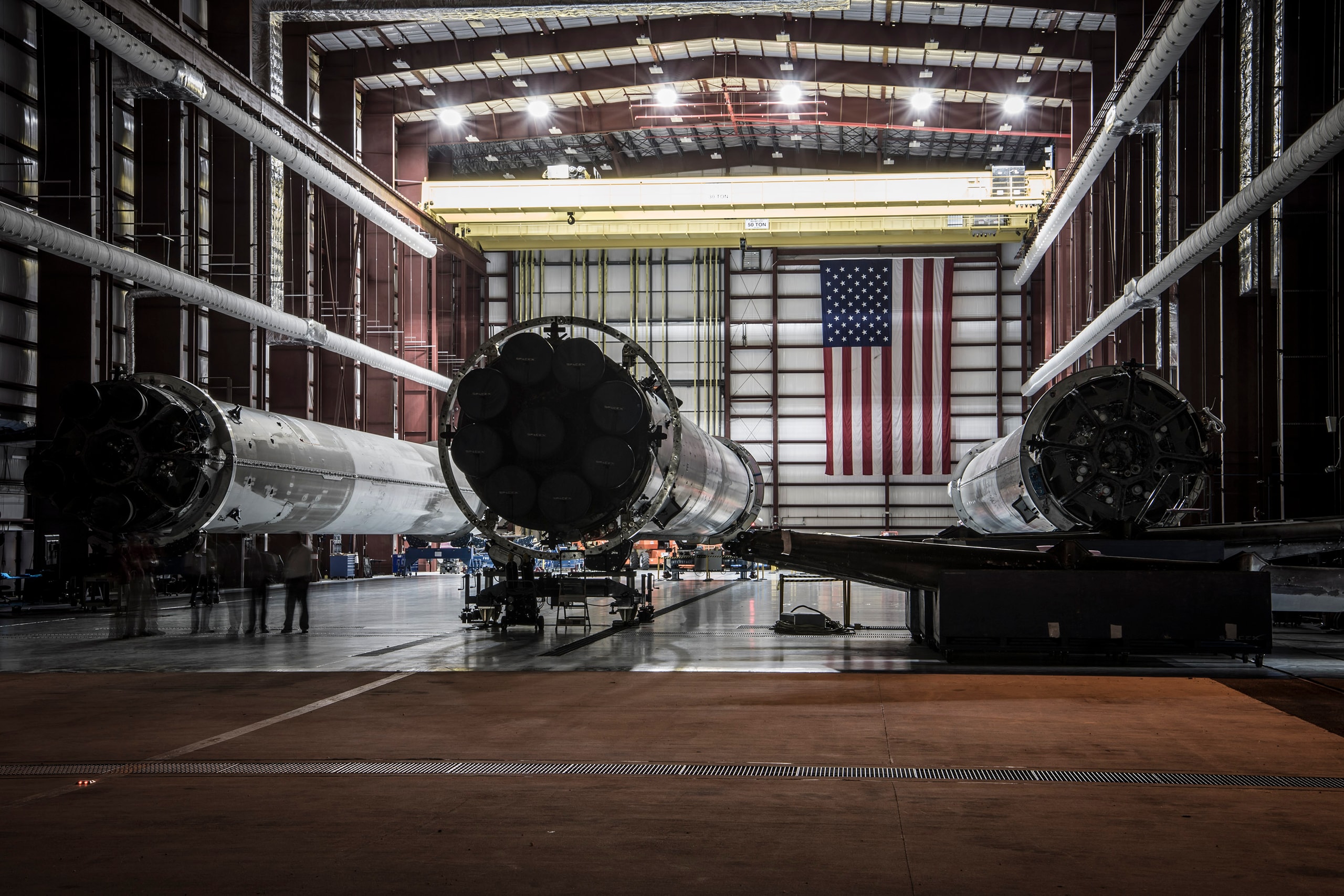
Goddard launched the world's first liquid-propellant rocket in Auburn, Massachusetts. Using gasoline and liquid oxygen, the flight lasted 2.5 seconds and reached 41 feet, proving that liquid propulsion was physically possible. This breakthrough laid the direct structural foundation for Apollo lunar flights and modern space travel.
The Atomic Bomb (Nuclear Fission)
Under the extreme urgency of WWII, the US government mobilized the Manhattan Project, the largest scientific collaboration in history. Culminating in the Trinity test in July 1945, this breakthrough harnessed controlled nuclear fission, bringing a rapid end to WWII and thrusting humanity into the nuclear age.
The Machine Age archives
Explore the full, detailed history of 234 American inventions from the Progressive Era, the Roaring Twenties, and World War II.
Stop sign
A stop sign is a traffic sign, usually erected at road junctions such as a four-way intersection, that instructs drivers to stop and then to proceed only if the way ahead is clear. The idea of placing stop signs at road junctions was first conceived in 1890 when William Phelps Eno of Saugatuck, Connecticut, proposed and devised the first set of traffic laws in an article published in Rider and Driver. However, the first use of stop signs did not appear until 1915 when officials in Detroit, Michigan, installed a stop sign with black letters on a white background. Throughout the years and with many alterations made to the stop sign, the current version with white block-lettering on a red background that is used in the United States as well as emulated in many other countries around the world today, did not come into use until the Joint Committee on Uniform Traffic Control Devices adopted the design in 1954.
Tabulating machine
The tabulating machine is an electrical device designed to assist in summarizing information and, later, accounting. The results of a tabulation are electrically coupled with a sorter while displayed on clock-like dials. The concept of automated data processing had been born. In 1890, Herman Hollerith invented the mechanical tabulating machine, a design used during the 1890 Census which stored and processed demographic and statistical information on punched cards.
Shredded wheat
Shredded wheat is a type of breakfast cereal made from whole wheat. Shredded wheat also comes in a frosted variety, which has one side coated with sugar and usually gelatin. Shredded wheat was invented in 1890 by Henry Perky of Watertown, New York.
Babcock test
The Babcock test was the first inexpensive and practical test which were used to determine the fat content of milk. Invented by Stephen Moulton Babcock in 1890, the test was developed to prevent dishonest farmers who could, until the 1890s, water down their milk or remove some cream before selling it to the factories because milk was paid by volume.
Smoke detector
A smoke detector is a device that detects smoke and issues a signal. Most smoke detectors work either by optical detection or by physical process, but some of them use both detection methods to increase sensitivity to smoke. Smoke detectors are usually powered by battery while some are connected directly to power mains, often having a battery as a power supply backup in case the mains power fails. The first automatic electric fire alarm was co-invented in 1890 by Francis Robbins Upton and Fernando J. Dibble. Upton and Dibble were issued U.S. patent #436,961. Upton was an associate of Thomas Alva Edison, although there is no evidence that Edison contributed to this invention.
Incandescent lamp
One of the most dramatic improvements occurred in artificial lighting. Thomas Edison's development of an electric lamp that did not rely on open flames made lighting more practical for factories, offices, and homes, and transformed city life.
Ferris wheel
A Ferris wheel is a non-building structure, consisting of an upright wheel with passenger gondolas attached to the rim. Opened on June 21, 1893, at the Chicago World's Fair, the original Ferris wheel was invented two years earlier by the Pittsburgh bridge-builder George Washington Gale Ferris Jr. in 1891.
Dow process
The Dow process is the electrolytic method of bromine extraction from brine, and was Herbert Henry Dow's second revolutionary process for generating bromine commercially in 1891.
Tesla coil
A Tesla coil is a type of resonant transformer circuit invented by Nikola Tesla around 1891. Nikola Tesla used these coils to conduct innovative experiments in electrical lighting, phosphorescence, x-ray generation, high frequency alternating current phenomena, electrotherapy, and the transmission of electrical energy without wires for point-to-point telecommunications, broadcasting, and the transmission of electrical power.
Rotary dial
The rotary dial is a device mounted on or in a telephone or switchboard that is designed to send electrical pulses, known as pulse dialing, corresponding to the number dialed. The early form of the rotary dial used lugs on a finger plate instead of holes. The rotary dial was invented by Almon Brown Strowger in 1891. Strowger filed U.S. patent#486,909 on December 21, 1891, that was later issued on November 29, 1892.
Pastry fork
A pastry fork, also known as a "pie fork", is a fork designed for eating pastries and other desserts while holding a plate. The fork has 3 or 4 tines. The 3 tine fork has a larger, flattened and beveled tine on the side while the 4 tine fork has the 1st and 2nd tine connected or bridged together and beveled. On July 7, 1891, Anna M. Mangin of Queens, a borough of New York City, filed the first patent for the pastry fork. U.S. patent #470,005 was later issued on March 1, 1892.
Schrader valve
A Schrader valve consists of a hollow cylindrical metal tube, typically brass, with the exterior end threaded. The interior end takes a variety of forms depending on its application. In the center of the exterior end is a metal pin pointing along the axis of the tube; the pin's end is flush with the end of the valve body. Generally, all Schrader valves are used on tires. They have threads and bodies of a single standard size at the exterior end, so caps and tools generally are universal for the valves on all automobile and bicycle pneumatic tires. Also, pressure valves can be used on Schrader valves in place of caps in order to measure the pressure of pneumatic tires. In 1891, George Schrader, the son of German-American immigrant August Schrader, invented the Schrader valve. A patent was issued on April 11, 1893.
Bottle cap
Bottle caps, or closures, are used to seal the openings of bottles of many types. They can be small circular pieces of metal, usually steel, with plastic backings, and for plastic bottles a plastic cap is used instead. Caps can also be plastic, sometimes with a pour spout. Flip-Top caps like Flapper closures provide controlled dispensing of dry products. The crown cork, the first form of a bottle cap, possessed flanges bent over a sealed bottle to compress the liquid inside. It was invented and patented in 1892 by William Painter of Baltimore, Maryland.
Dimmer
Dimmers are devices used to vary the brightness of a light. By decreasing or increasing the RMS voltage and hence the mean power to the lamp it is possible to vary the intensity of the light output. Although variable-voltage devices are used for various purposes, a dimmer is specifically those devices intended to control lighting. Dimmers are popularly used in venues such as movie theatres, stages, dining rooms, restaurants, and auditoriums where the need or absence of light during activities requires constant change. The dimmer was invented in 1892 by Granville Woods.
Bicycle seat (padded)
A bicycle seat, unlike a bicycle saddle, is designed to support the rider's buttocks and back, usually in a semi-reclined position. First known as the "Garford Saddle", the padded bicycle seat was invented in 1892 by Arthur Lovett Garford of Elyria, Ohio.
internal combustion-powered tractor
A tractor is a distinctive farm vehicle specifically designed to deliver a high tractive effort at slow speeds, for the purposes of hauling a trailer or machinery used in agriculture or construction. Agricultural implements may be towed behind or mounted on the tractor, and the tractor may also provide a source of power if the implement is mechanized. While steam powered tractors had been built earlier, In 1892, John Froelich invented and built the first gasoline-powered tractor in Clayton County, Iowa.
Zipper
The zipper is a popular device for temporarily joining two edges of fabric. Zippers are found on trousers, jeans, jackets, and luggage. Whitcomb L. Judson was an American mechanical engineer from Chicago who was the first to invent, conceive of the idea, and to construct a workable zipper. Using a hook-and-eye device, Judson intended for this earliest form of the zipper to be used on shoes. He also conceived the idea of the slide fastener mechanism in conjunction with the invention of the zipper. Patents were issued to Judson for the zipper in 1891, 1894, and 1905.
Spectroheliograph
The spectroheliograph is an instrument used in astronomy that captures a photographic image of the Sun at a single wavelength of light, a monochromatic image. The spectroheliograph was invented in 1893 by George Ellery Hale and independently later by Henri Alexandre Deslandres in 1894.
Pinking shears
Pinking shears are a type of scissors that have blades of which are sawtoothed instead of straight. Used to cut woven cloth, pinking shears leave a zigzag pattern instead of a straight edge. The earliest patent for pinking shears was U.S. patent #489,406 which was issued to Louise Austin of Whatcomb, Washington, on January 3, 1893. Early 1890s Phantoscope A film projection machine created by Charles Francis Jenkins in the early 1890s. Jenkin's machine was the first projector to allow each still frame of the film to be illuminated long enough before advancing to the next frame sequence.
Sousaphone
The sousaphone, sometimes referred to as a marching tuba, is a wearable tuba descended from the hélicon. It was designed such that it fits around the body of the wearer and so it can be easily played while being worn. The sousaphone is named after John Philip Sousa but was invented by C.G. Conn in 1898.
Clasp locker
The period's ingenuity extended to fastening devices in 1893, when Whitcomb Judson patented the clasp locker, an early sliding fastener with interlocking metal clasps operated by a pull tab, serving as the precursor to the modern zipper and initially applied to shoes and clothing. These inventions collectively exemplified the Gilded Age's shift toward efficient, electrified urban living, building on prior communication breakthroughs like the telephone to integrate technology into everyday commerce and infrastructure.
Stadimeter
A stadimeter, a type of optical rangefinder, is an optical device for estimating the range to an object of known height by measuring the angle between the top and bottom of the object as observed at the device. It is similar to a sextant, in that the device is using mirrors to measure an angle between two objects but differs in that one dials in the height of the object. The stadimeter was invented in 1894 by Bradley Allen Fiske, a Rear-Admiral in the United States Navy. The first sea tests, conducted in 1895, showed that it was equally useful for fleet sailing and for navigation. Likewise, the stadimeter proved useful during the Battle of Manila Bay during the Spanish–American War. U.S. patent #523,721 was issued to Fiske on July 31, 1894.
Mousetrap
A mousetrap is a specialized type of animal trap designed primarily to catch mice. However, it may also trap other small animals. Mousetraps are usually set in an indoor location where there is a suspected infestation of rodents. The first mouse trap was invented by William C. Hooker of Abingdon, Illinois, exactly three years before James Henry Atkinson developed a prototype called the "Little Nipper". Atkinson probably saw the Hooker trap in shops or in advertisements, and copied it as the basis for his own model. Hooker received US patent #528671 for his invention, the mousetrap, in 1894.
Medical glove
Medical gloves are disposable gloves used during medical examinations and procedures that help prevent contamination between caregivers and patients. Medical gloves are made of different polymers including latex, nitrile rubber, vinyl and neoprene; they come unpowdered, or powdered with cornstarch to lubricate the gloves, making them easier to put on the hands. In 1894, William Stewart Halsted, the Surgeon-in-Chief of Johns Hopkins Hospital, invented the medical glove in an effort to make medical care safer and more sterile for patients and health care workers.
The Ask America Oracle
Ask the AI Oracle about the Wright brothers' airplane, Henry Ford's assembly line, Robert Goddard's rockets, or the Manhattan Project.