TheAI FrontierTHE SILICON AGE
How Silicon Valley and American intellectual property command the design layer of the global computing stack.
The Architecture of Intelligence
From the silicon transistor invented at Bell Labs to the neural networks powering generative AI, the United States is the primary architect of digital intelligence. While physical fabrication has expanded globally, the core design layer, specialized architectures, and software toolchains remain deeply concentrated in American technology hubs. This structural advantage ensures that every compute cycle on earth relies on American IP.
This command is secured by a double lock: Electronic Design Automation (EDA) software and Instruction Set Architectures (ISAs). Because high-value chip design requires billions in R&D capital, American firms capture the majority of global industry profits. Physical fabrication is outsourced as a service to overseas foundries, while the high-margin, irreplaceable design layer remains safely in Silicon Valley.
Of global semiconductor design revenues captured by US firms
Global reliance on US EDA software for advanced chip design
Of frontier AI training compute running on American designed IP
Chronology of Compute
The Silicon Transistor
Invented at Bell Labs in New Jersey, this solid-state amplifier replaced fragile, hot vacuum tubes, creating the core binary building block of all modern digital logic.
The Integrated Circuit
Co-invented in the United States, this breakthrough consolidated multiple transistors, resistors, and capacitors onto a single flat piece of silicon, scaling compute density.
The Microprocessor
Intel released the 4004, the world's first commercial single-chip CPU. Placing all computing components on a single chip democratized personal computing and microchips.
GPU Parallel Compute
Nvidia invented the GeForce 256, defining the Graphics Processing Unit. By executing thousands of mathematical calculations in parallel, GPUs later became the bedrock of deep learning.
The Transformer Architecture
Google researchers published the 'Attention Is All You Need' paper. By introducing self-attention mechanisms, it allowed neural networks to process data in parallel and capture complex context.
Generative Scaling & LLMs
American research labs scaled neural networks to trillions of parameters. GPT models and ChatGPT proved that scaling compute power yields emergent cognitive reasoning capabilities.

Semiconductor Design: The Invisible American Chokehold
The global semiconductor supply chain is often viewed through the lens of physical manufacturing in Taiwan. However, the design layer controls the ecosystem's direction and captures its economic value. Nvidia, AMD, Qualcomm, Apple Silicon, Broadcom, and Intel, the companies that draft the blueprints for the chips running every AI supercomputer, hyperscale data center, and smart device on Earth, are all headquartered in the United States.
Moreover, two American companies, Synopsys and Cadence, hold a virtual duopoly on Electronic Design Automation (EDA) software, the highly complex computer-aided tools required to layout billions of transistors on a single chip. Without this software, semiconductor design globally would halt. As a result, US firms capture approximately 50% of all global semiconductor revenue despite owning minimal physical fabrication capacity. The 2022 export restrictions demonstrated that the global compute pipeline has a physical master switch controlled entirely by American intellectual property.
The Programming Moat: CUDA and the US Framework Monopoly
Silicon hardware is useless without compiler software to orchestrate parallel computations. The ultimate lock-in of the American AI stack is the software layer, anchored by Nvidia's CUDA (Compute Unified Device Architecture) platform. Launched in 2006, CUDA has received nearly two decades of continuous optimization, creating a developer ecosystem so deeply integrated that porting AI workloads to non-Nvidia hardware is exceptionally difficult and costly.
On top of the compiler layer lie the neural network frameworks. PyTorch, originally developed by Meta, and TensorFlow, created by Google, are the standard tools used by virtually every AI engineer on Earth. Because these open-source frameworks are engineered and maintained in the United States, they are naturally optimized first for American silicon, creating a self-reinforcing flywheel that keeps global AI development bound to the American software toolchain.
Source: Ark Invest Research, 2025.
Frontier Labs: Orchestrating the Mind
The most advanced foundation models on Earth are conceptualized, trained, and scaled by American research institutions.
OpenAI
Pioneer of Reasoning at ScaleLaunched GPT-5.5 (April 2026), the dominant flagship for complex reasoning and enterprise coding. Released GPT-Rosalind, a specialized frontier model for genomics and drug discovery, extending AI reach into the life sciences.
Anthropic
Safety-First Frontier ReasoningLaunched Claude Fable 5 (June 2026), its most capable model for long-horizon agentic work. Introduced the Mythos performance tier for high-stakes enterprise environments, matching the frontier on both raw reasoning and safety alignment.
Google DeepMind
Agentic Orchestration LeadersDeployed Gemini 3.5 Flash (May 2026) for high-speed agentic and coding workflows. Pivoted to an 'Agentic 2.0' strategy emphasizing multi-agent parallel task orchestration with the world's longest production context windows.
Meta AI
Open-Weight Force MultiplierReleased Llama 4 (Maverick & Scout), natively multimodal Mixture-of-Experts models enabling sovereign, on-premises AI deployment globally. Llama 4's open weights have been downloaded over 700 million times, anchoring the open-source AI ecosystem.
The Physical Infrastructure of AI
Artificial intelligence runs on the most complex manufacturing supply chains and massive physical infrastructure on Earth, from specialized silicon hardware to hyper-scale data centers consuming gigawatts of energy.
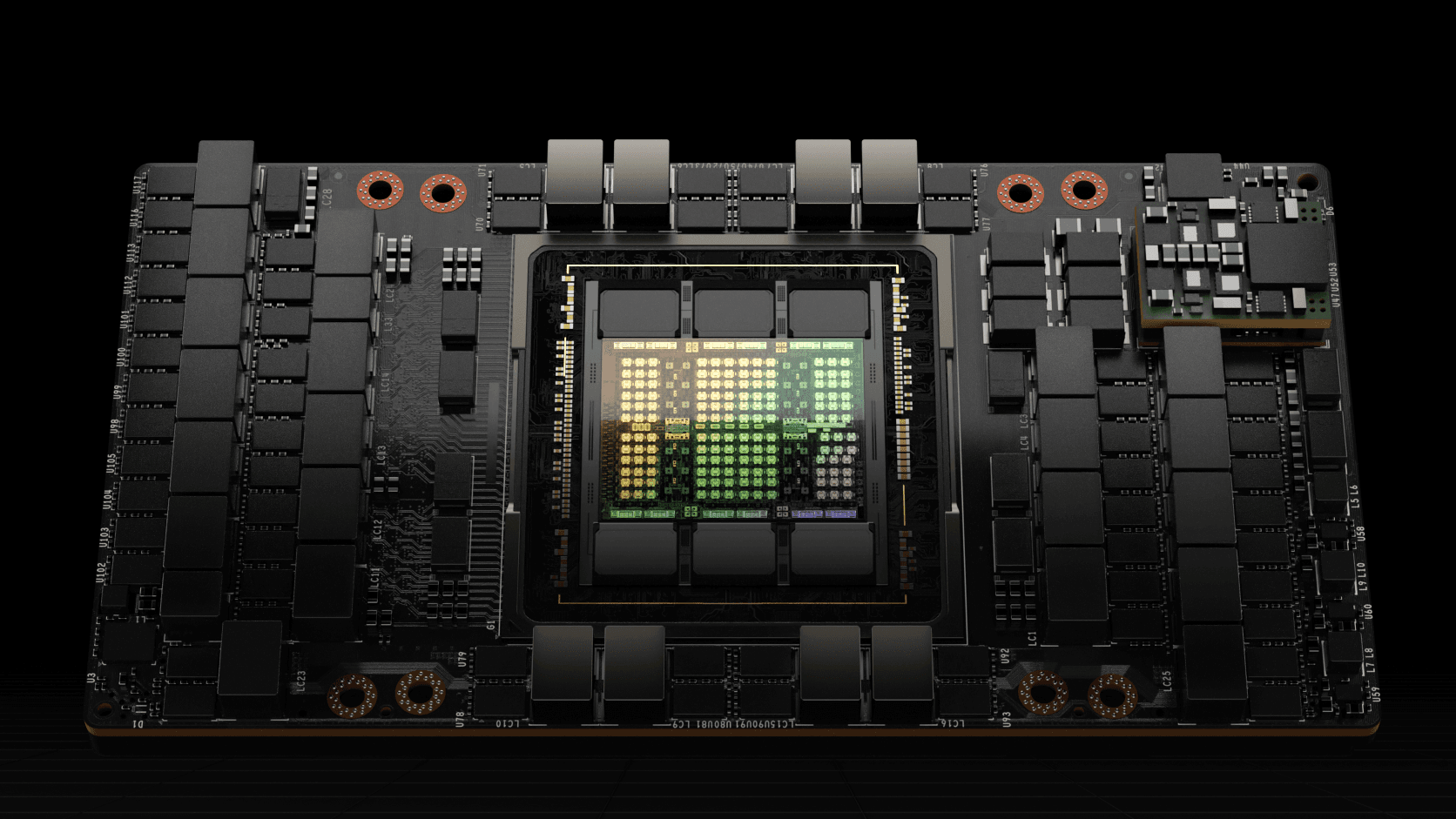
Nvidia H100: The AI Engine
The NVIDIA H100 Tensor Core GPU, built on the Hopper architecture, represents a monumental leap in acceleration. It houses 80 billion transistors and is designed to train LLMs at unprecedented speed and efficiency, serving as the foundational hardware block for AI supercomputers.

Semiconductor Tooling
While ASML handles lithography, the fabrication process requires hundreds of other advanced machines. US companies, Applied Materials, Lam Research, and KLA, hold a near-monopoly on critical deposition, etching, and metrology equipment, forming a secondary hardware chokehold.
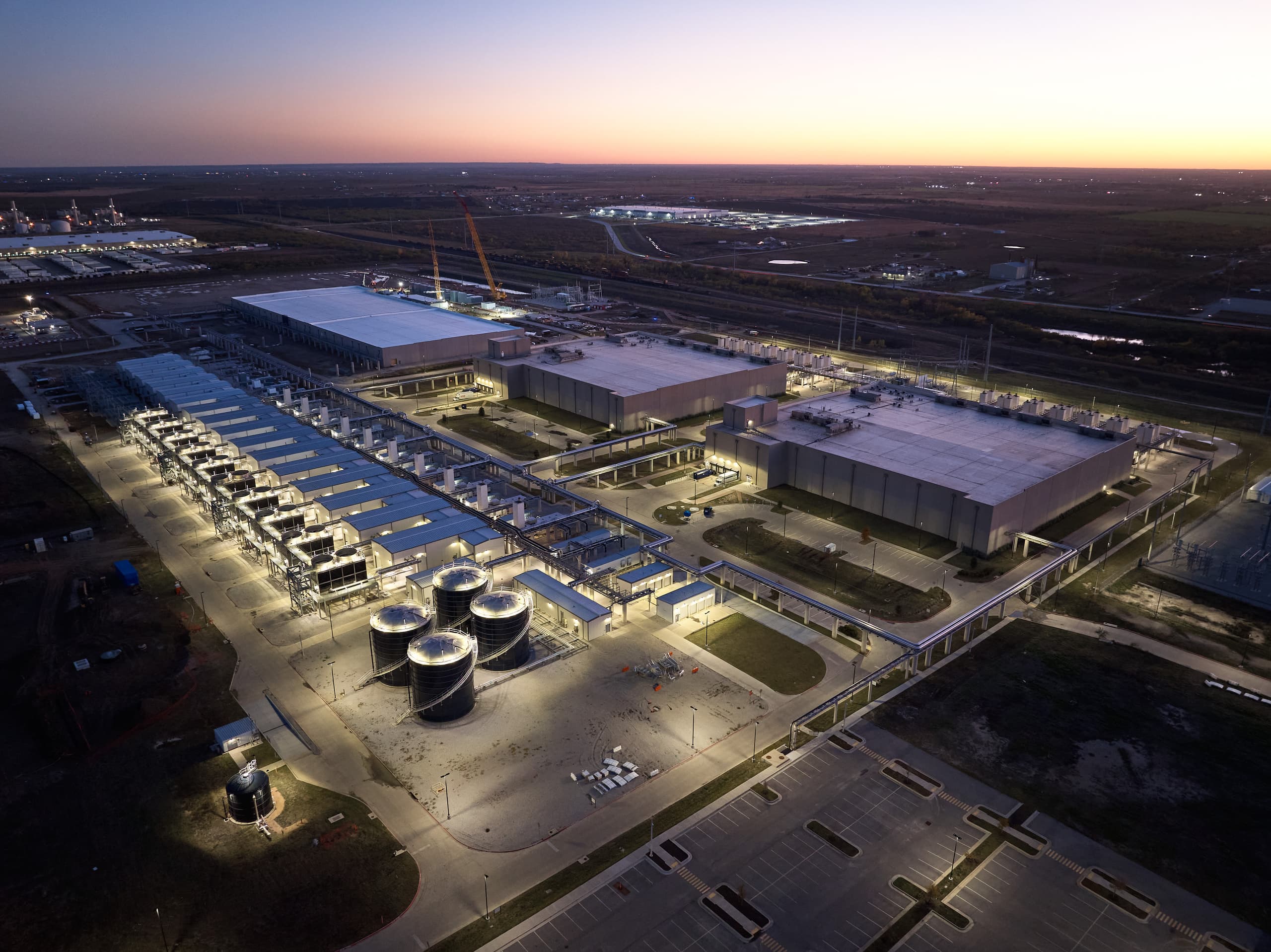
Google Midlothian: The Powerhouse
Google's data center in Midlothian, Texas, showcasing the scale of cooling water tanks and generator yards. These modern facilities run 24/7 to host TPU clusters and cloud services, operating with advanced water and power efficiency to minimize carbon footprint.
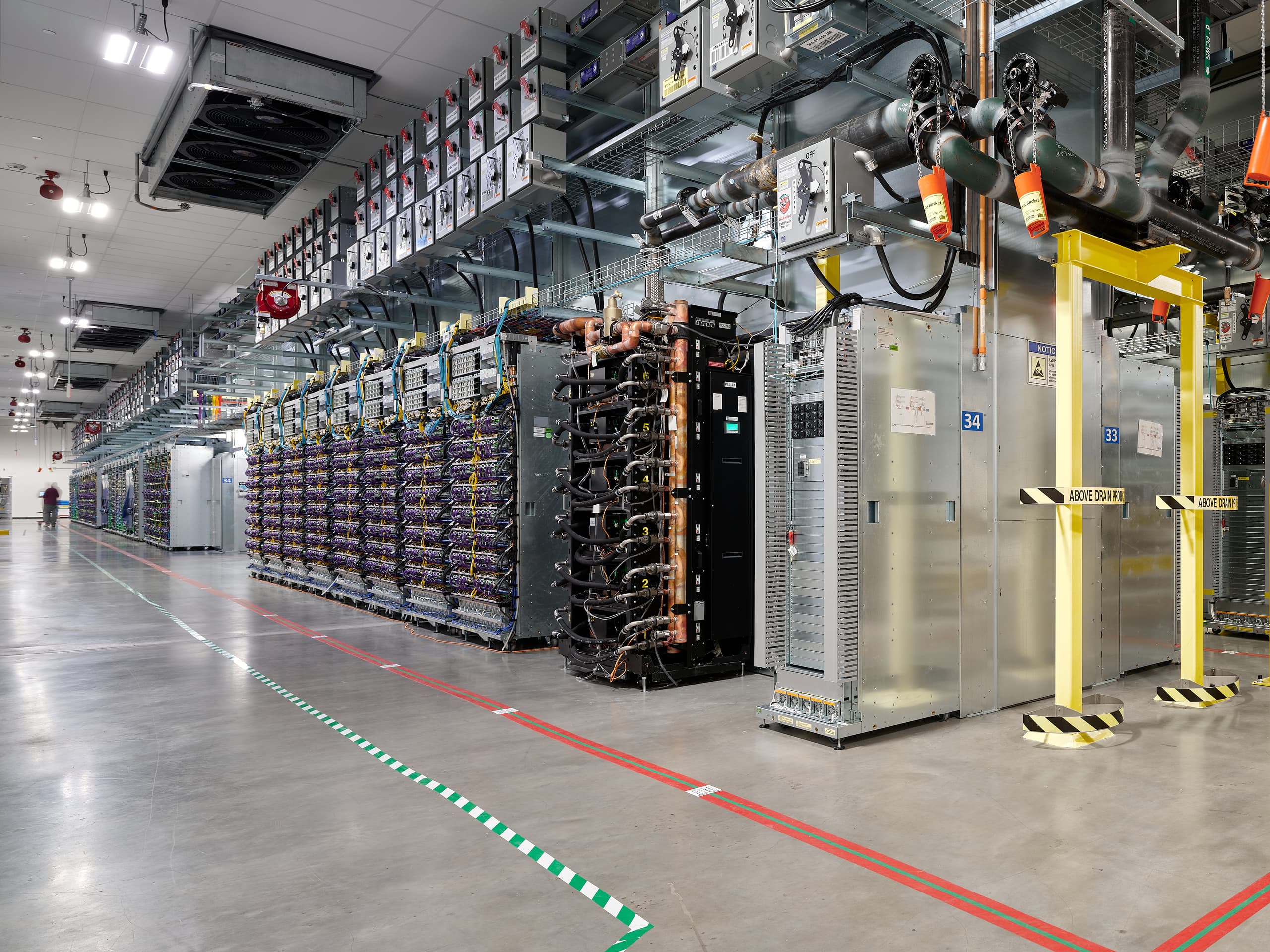
The Ohio Server Aisles
Inside a high-density server aisle in Google's Ohio data center. Thousands of servers containing advanced processors are networked with high-throughput fiber optics, forming the distributed computing fabric that runs frontier AI models.
The Ask America Oracle
Ask the AI Oracle about electronic design automation software, Nvidia H100 architecture, ARM instruction sets, or US semiconductor export controls.