Privatizing the CosmosCOMMERCIAL SPACE
How private American enterprise and venture capital revolutionized access to orbit, breaking the launch monopolies of nation-states.
The Shift to Commercial Space
For decades, space was the exclusive domain of national governments, driven by geopolitical competition and public funds. Today, the space economy is led by American private capital, rapid engineering iterations, and vertical integration. By fostering a regulatory environment that allows failure and fast learning, the United States has unlocked orbit as a commercial marketplace.
This shift is powered by rapid reuse, mass satellite production, and a private launch cadence. The physical infrastructure of space, once dictated by civil agencies, is now dominated by private fleets launching from American soil, reducing launch costs by an order of magnitude.
Of global orbital launches conducted by SpaceX in 2024
Of total satellite mass delivered to orbit in 2024
Of all active operational satellites in space today
Key Milestones in Space Tech
The Apollo Program
The pinnacle of state-funded space exploration, landing twelve Americans on the Moon and proving the power of national scientific mobilization.
The Space Shuttle
The world's first reusable spacecraft, launching the Hubble Space Telescope and assembling the International Space Station.
Commercial Crew & Cargo
NASA partnered with private firms, shifting from buying rockets to purchasing transportation services, seeding a massive commercial ecosystem.
Rapid Reusability
Private launch systems achieved rapid rocket booster reusability, dropping orbital access costs by 90% and making mega-constellations viable.
GPS: The Invisible American Utility Running Global Trade
Developed by the United States Department of Defense in 1978 and opened to civil utility in the 1980s, the Global Positioning System (GPS) is a space-based radio navigation network operated and maintained by the United States Space Force. By broadcasting continuous, high-precision timing signals from Medium Earth Orbit (MEO), GPS provides geolocation, velocity, and synchronization data to billions of devices worldwide, entirely as a free public service funded by American taxpayers.
This infrastructure is the silent heartbeat of the modern global economy. It coordinates the transoceanic routes of global shipping fleets, regulates the separation of commercial aircraft, synchronizes global cell towers, and stamps timestamps onto every financial transaction on Wall Street. While other nations have built regional alternatives, GPS remains the foundational planetary standard, saving global industries hundreds of billions of dollars annually.
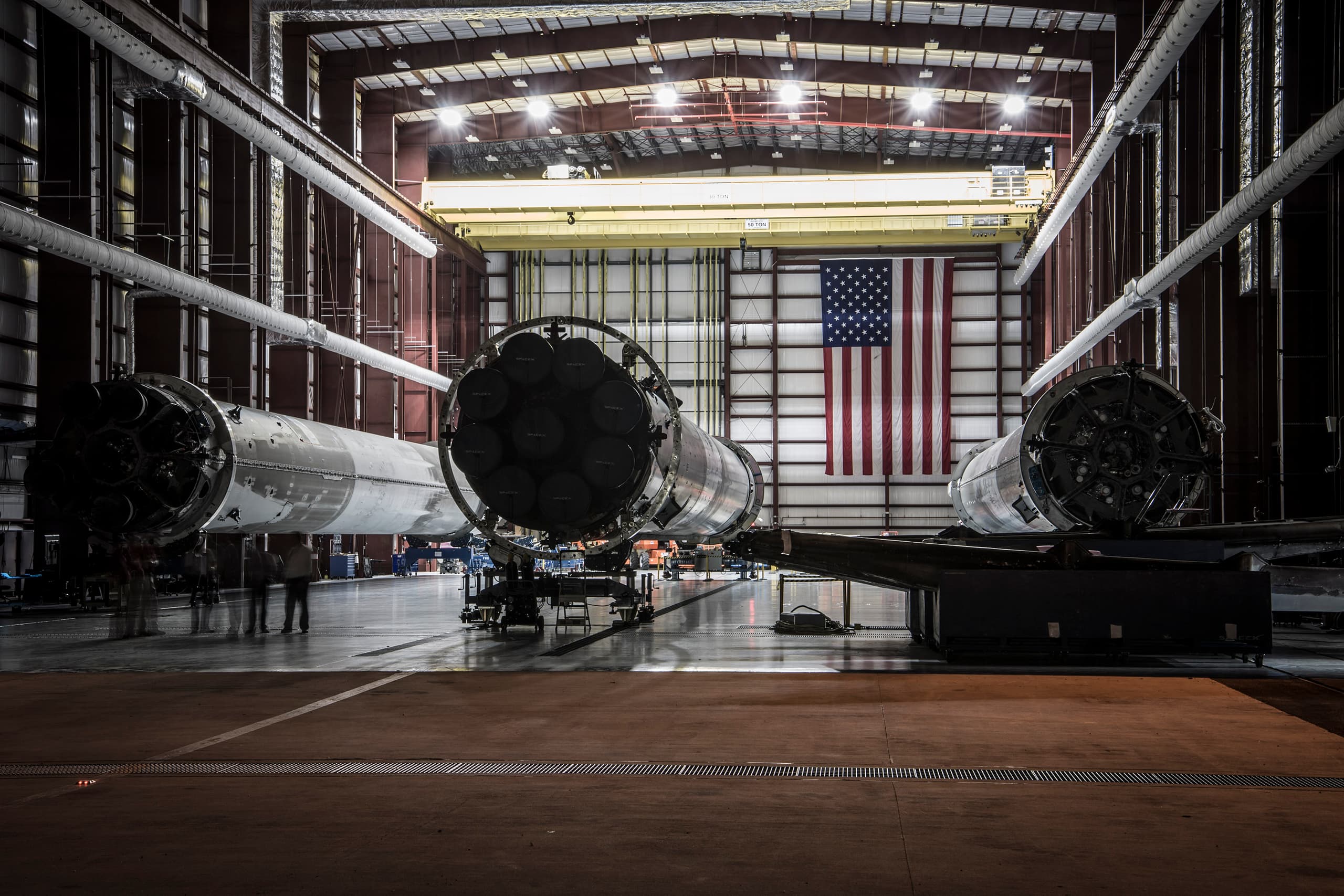
Commercial Space: SpaceX & Launch Hegemony
SpaceX conducted 52 percent of all orbital launches globally in 2024, launched 84 percent of all satellites, and delivered 84 percent of total satellite mass to orbit. The United States has nearly three times as many operational satellites as all other countries combined, overwhelmingly due to SpaceX's Starlink constellation, which comprises 65 percent of all operational satellites in space.
Founded in 2002 by an immigrant, built with private capital, and operating in a regulatory environment that permits rapid iteration, SpaceX achieved what no European space agency, Chinese state enterprise, or Russian program has matched. The Falcon 9 has fundamentally restructured the global launch market like the 747 restructured air travel, while Starlink serves 9 million users in 125 countries, doing to global broadband what the interstate highway system did to domestic freight.
CINEMATIC MULTIMEDIA
SpaceX Technology in Action
Falcon 9 Launch & Landing
Watch the breathtaking precision of the Falcon 9 booster launching into space and returning to land upright on an autonomous drone ship in the Atlantic Ocean. This engineering breakthrough turned rocket reuse into a routine commercial operation.
Next-Gen EVA Spacesuit
Designed for the Polaris Dawn mission and future Martian voyages, the SpaceX Extravehicular Activity (EVA) suit provides advanced life support, thermal protection, and mobility in the vacuum of space, scaling astronaut safety.
Starship & Artemis: Re-Engineering Human Frontiers
The second space age is defined by NASA's Artemis project collaborating with private space enterprises to build a high-frequency supply line to the Moon and Mars. Unlike the expendable Saturn V of the Apollo era, the anchor of this new logistical pipeline is SpaceX's Starship. Standing 121 meters tall, Starship is the most massive launch vehicle ever assembled, built to be fully and rapidly reusable to lower launch costs by two orders of magnitude.
By pioneering in-orbit cryogenic propellant transfer, refueling methane and oxygen in low Earth orbit, Starship bypasses the traditional constraints of gravity wells, enabling the delivery of over 100 metric tons of cargo to the lunar surface. Developed in South Texas (Starbase), Starship is the core transport vehicle of a logistics network designed to extend permanent human presence into deep space.
THE APOLLO LEGACY
The Apollo Program Historical Archive
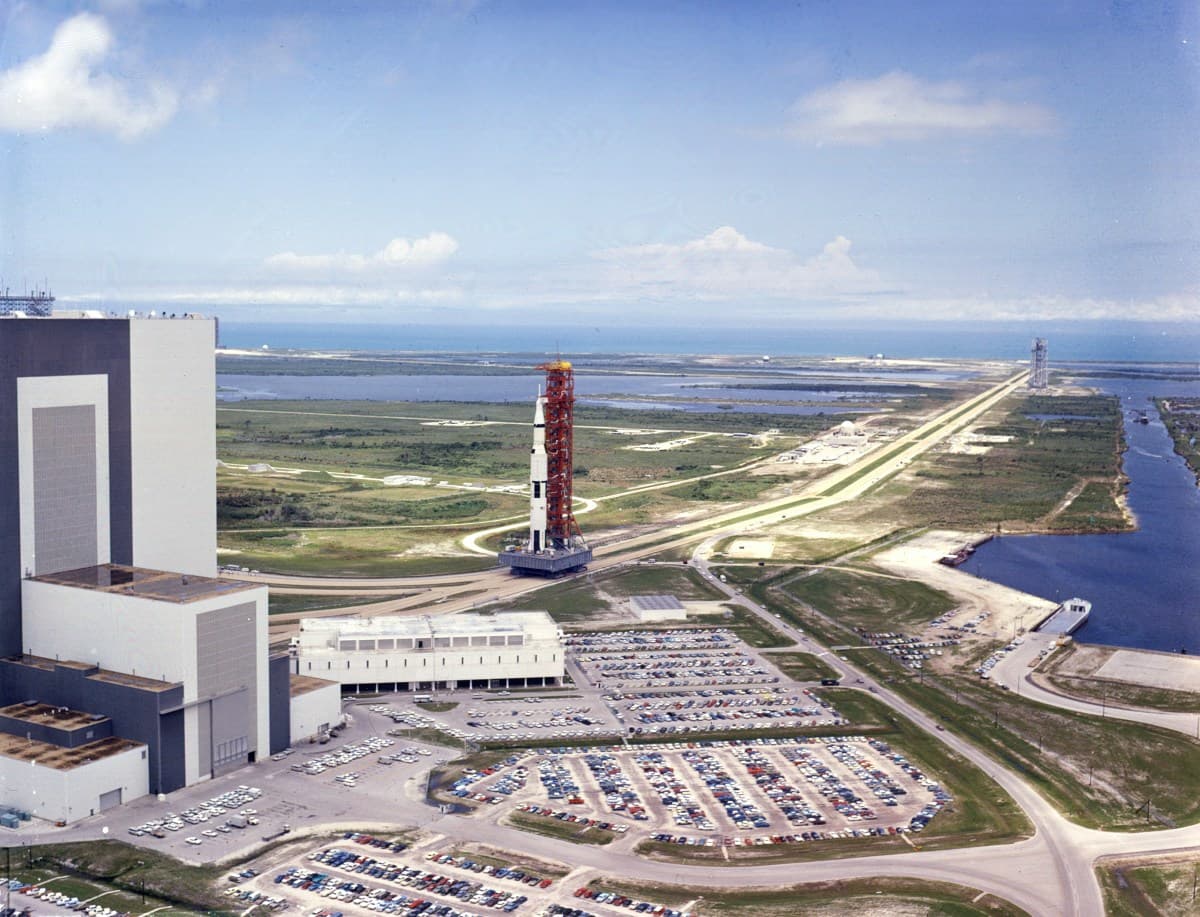
Saturn V Rollout
The Saturn V SA-506 rocket, carrying Apollo 11, moves out of the Vehicle Assembly Building (VAB) towards Launch Complex 39 on July 16, 1969. Standing 363 feet tall, it remains the tallest, heaviest, and most powerful rocket ever brought to operational status.
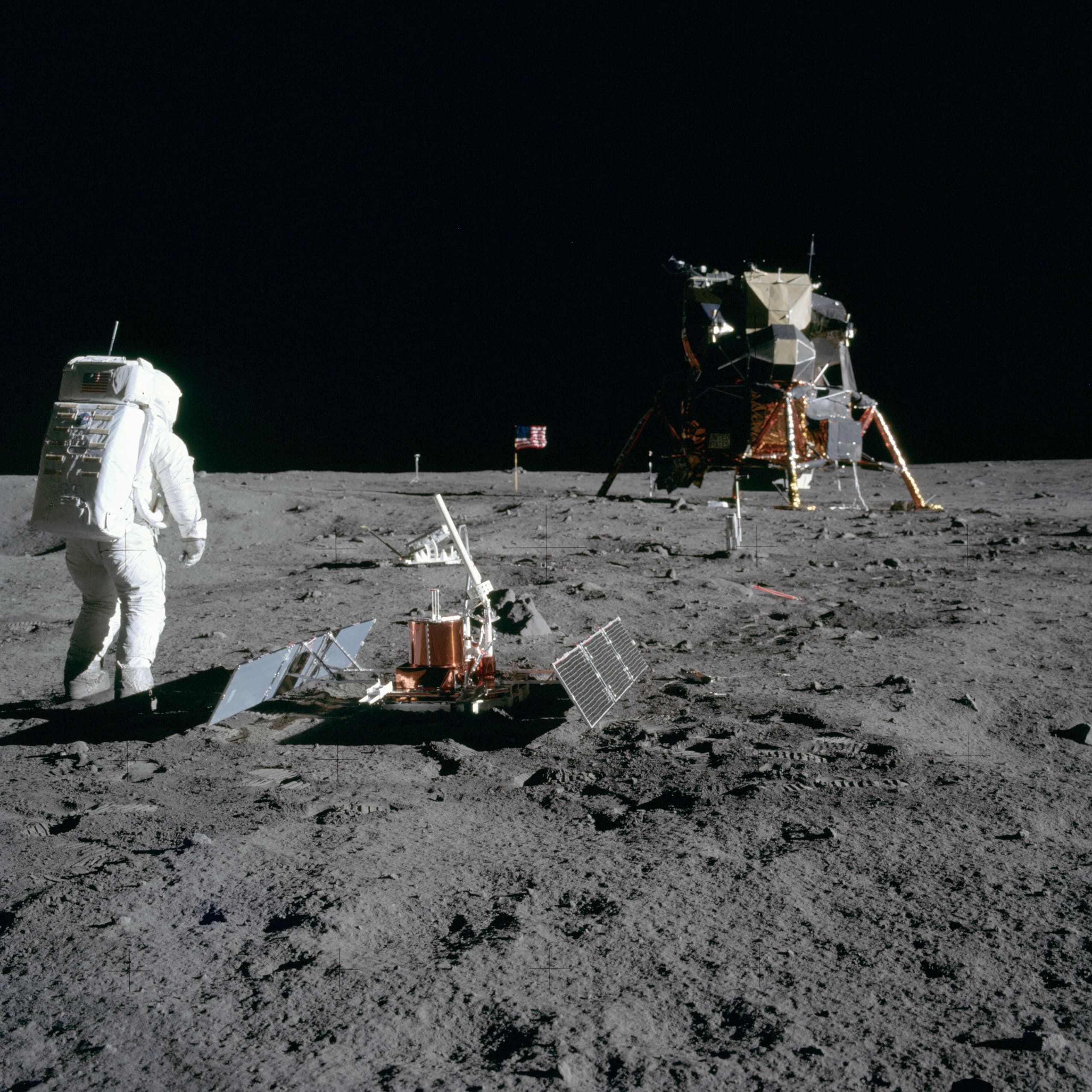
Scientific Deployment
Buzz Aldrin stands next to the Passive Seismic Experiment Package on the lunar surface, with the Lunar Module Eagle in the background. This package recorded the first moonquakes, providing key insights into the Moon's internal structure.
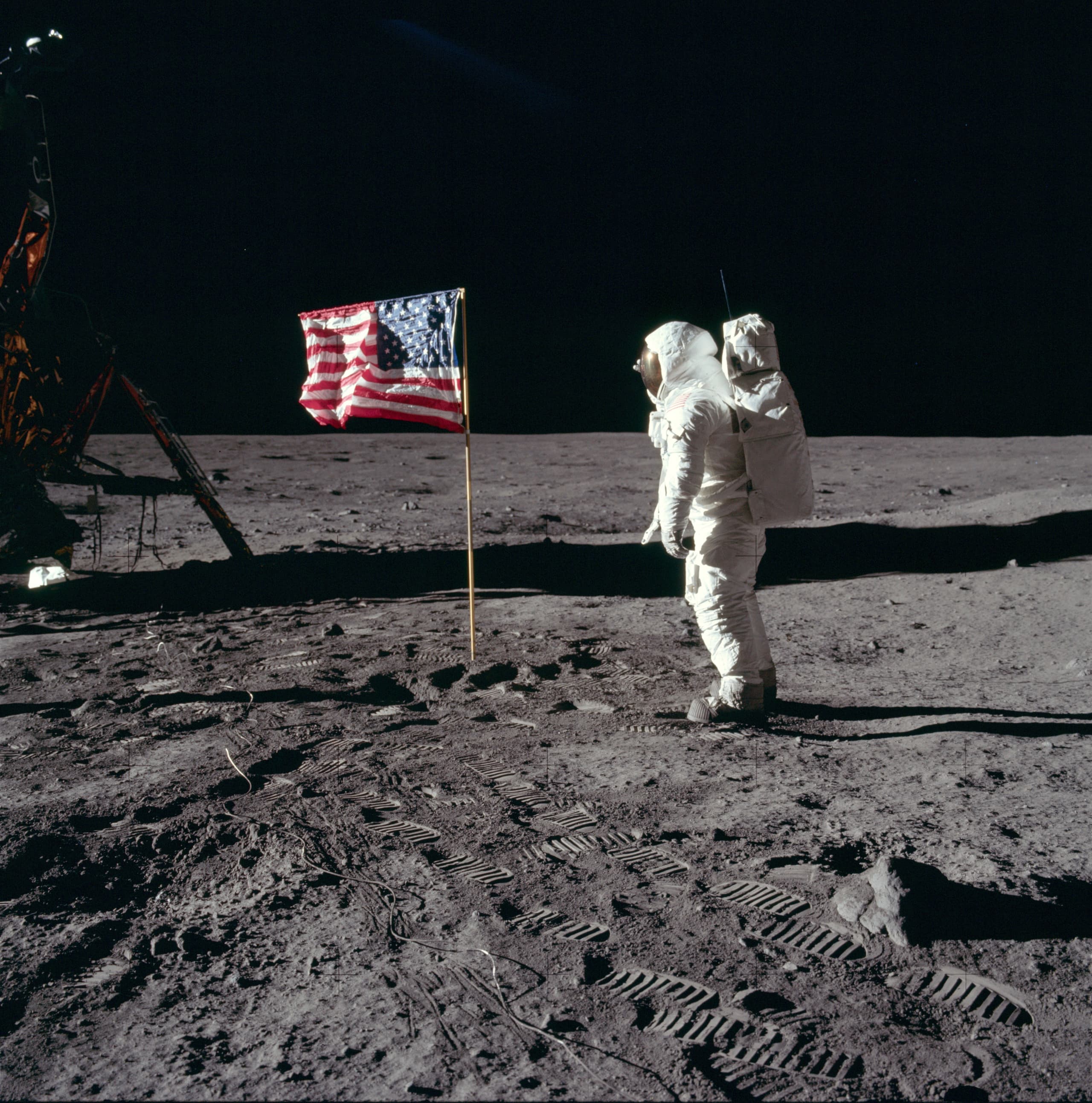
Saluting the Stars and Stripes
Astronaut Buzz Aldrin salutes the U.S. flag deployed on the lunar surface during the Apollo 11 mission. Neil Armstrong captured this iconic image, showing the flag stiffened by a horizontal rod to remain visible in the vacuum of space.
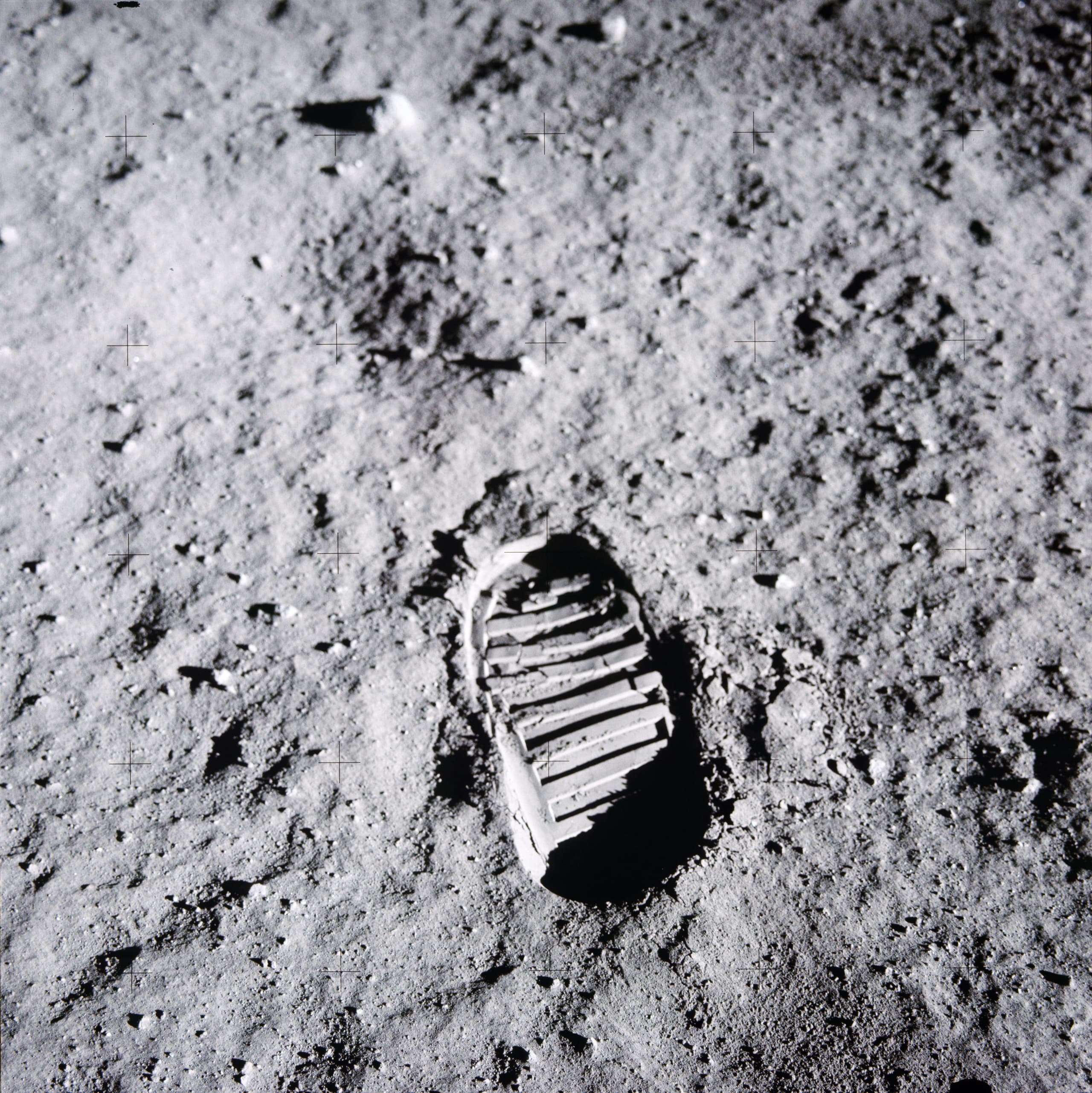
The First Footprint
Buzz Aldrin's bootprint in the fine lunar soil, taken to study the soil mechanics of the surface. This image became one of the most recognizable symbols of human exploration and technological achievement.
The Ask America Oracle
Ask the AI Oracle about SpaceX launch cadence, reusable rocket economics, Starlink global coverage, or NASA commercial crew partnerships.