AmericaBuilt the GameINTERACTIVE ENTERTAINMENT
How the United States invented the video game, built the platforms every studio runs on, and now controls the engine powering interactive entertainment worldwide.
America Invented the Video Game, and Owns Every Platform It Runs On
In 1972, Nolan Bushnell and Ted Dabney founded Atari in Sunnyvale, California, and released Pong, the world's first commercially successful video game. What began as a single coin-operated cabinet in a Silicon Valley bar became the foundation of the most profitable entertainment medium in human history. The global video game industry now generates more annual revenue than Hollywood film and the global music industry combined.
Today, the most critical platforms, engines, and intellectual properties in gaming are American-built. Microsoft, Epic Games, Unity, and Valve underwrite the software foundations of global interactive entertainment. Unreal Engine powers over 50% of all AAA titles shipped globally, collecting royalties from studios on every continent. Valve's Steam marketplace controls 90% of digital PC game sales. Riot Games' League of Legends remains the most-played PC game on Earth. America invented video games and owns the global infrastructure on which they run.
Annual revenue of the global video game industry, more than film and music combined
People who play video games regularly, the vast majority on American-built platforms and engines
Of all AAA titles shipped globally run on Epic Games' Unreal Engine, built in North Carolina
The American Arcade
Atari & Pong
Nolan Bushnell founds Atari in Sunnyvale, California, the first commercially successful video game company. Pong becomes the world's first arcade hit. Within three years, Atari generates $40M in annual revenue and the entertainment software industry is born.
The FPS Revolution
id Software (Dallas, TX) releases Doom, defining the first-person shooter genre and proving that PC gaming can achieve mass-market scale. An estimated 10 million people play Doom within 24 months. Its open modding architecture becomes the template for community-driven game development.
Steam & Digital Distribution
Valve (Bellevue, WA) launches Steam, transforming how games are sold. What begins as an update client for Half-Life 2 becomes the dominant PC game platform, controlling ~90% of digital PC game sales and serving 132 million active users through American servers.
Fortnite & Gaming as Platform
Epic Games (Cary, NC) launches Fortnite Battle Royale, reaching 350 million registered accounts by 2020 and redefining gaming as a social platform. Epic's Unreal Engine 5, the world's most advanced real-time rendering engine, powers titles from studios in 190 countries, with royalties flowing back to North Carolina.
US Studios Control Every Critical Layer of the Global Game Stack
The video game industry's infrastructure is more thoroughly American than any other entertainment sector. The three largest game distribution platforms, Steam (Valve), Xbox Game Pass (Microsoft), and Epic Games Store (Epic), are all headquartered in the United States. The two dominant game engines, Unreal Engine (Epic) and Unity (Unity Technologies, San Francisco), are American. Every major Western console platform, Xbox, is American-built.
Microsoft's $68.7 billion acquisition of Activision Blizzard in 2023 created the world's third-largest gaming company, combining Call of Duty, World of Warcraft, Overwatch, and Candy Crush under a single American balance sheet. Combined with first-party Xbox Game Studios, Microsoft now holds one of the largest collections of game intellectual property in existence. The entire value chain, from engine license to distribution cut to subscription revenue, is controlled in the United States.
How Epic Built the Infrastructure of Interactive Reality
Epic Games' Unreal Engine is to the gaming industry what CUDA is to artificial intelligence: a proprietary middleware layer so deeply embedded in global production pipelines that switching away is effectively impossible. Built in Cary, North Carolina, Unreal Engine powers over 50% of AAA game titles worldwide, along with cinematic visual effects (The Mandalorian), automotive visualization, and architectural rendering. Every studio that ships a game on Unreal owes Epic a 5% royalty on gross revenue above $1 million.
Unreal Engine 5's flagship technologies, Nanite virtualized geometry and Lumen global illumination, set a technical standard that competitors require years to approach. The engine's Blueprint visual scripting system lowered the barrier for game development globally, expanding Epic's installed base to hundreds of thousands of studios while deepening platform lock-in. No government, no non-US company, and no open-source project has come close to matching it.
INTERACTIVE CINEMA
The Art and Culture of American Gaming
Video Games: The Movie
A documentary journey through the history of American gaming, from the arcade cabinets of Atari's Sunnyvale to the global esports arenas of today. Featuring the founders, designers, and executives who built the world's most lucrative entertainment industry from a single coin-operated machine.
The Call, League of Legends
Riot Games' Season 2022 cinematic for League of Legends, one of the most-watched game trailers in history, produced entirely in-house by a studio born in Los Angeles. League of Legends has 150 million registered accounts and remains the most-played PC game on Earth, 14 years after its launch.
THE AMERICAN STUDIOS
The Companies That Built Interactive Entertainment
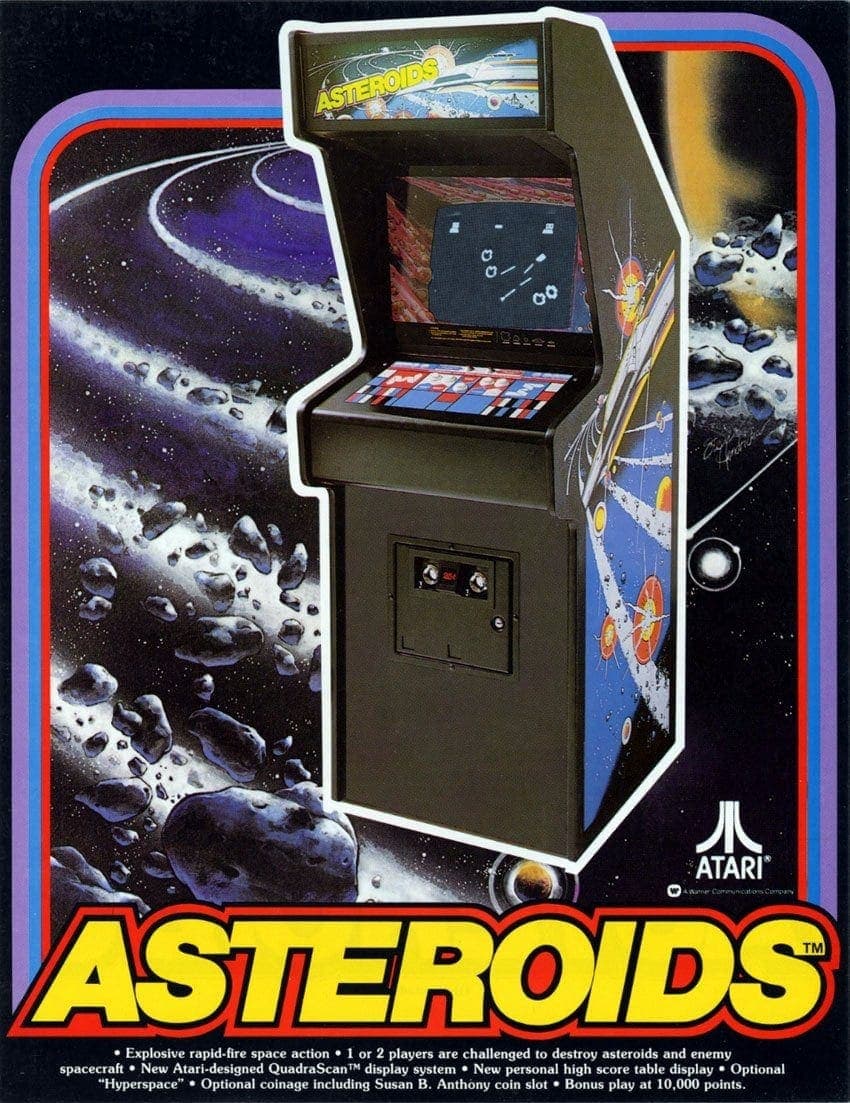 Atari, 1972
Where It All Started
Atari's Pong cabinet, the world's first commercially successful video game, was placed in Andy Capp's Tavern in Sunnyvale, California, in November 1972. Within days it broke down: the coin box was overflowing with quarters. That moment marked the beginning of an industry that now generates more revenue annually than film and music combined.
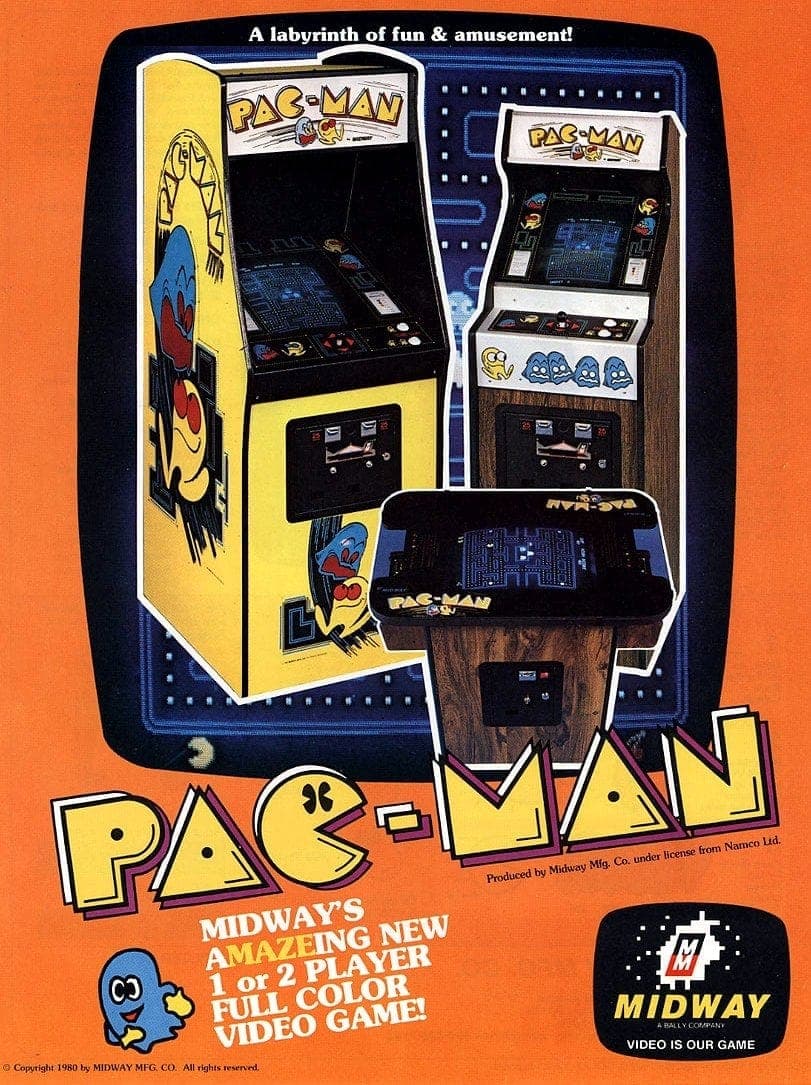 Namco / Midway, 1980
Pac-Man and the Arcade Era
Pac-Man's 1980 North American release, distributed by Midway, a Chicago company, became the highest-grossing arcade game in history, generating over $2.5 billion in quarters. The US arcade industry at its 1982 peak generated $8 billion annually, more than the entire Las Vegas casino industry at the time.
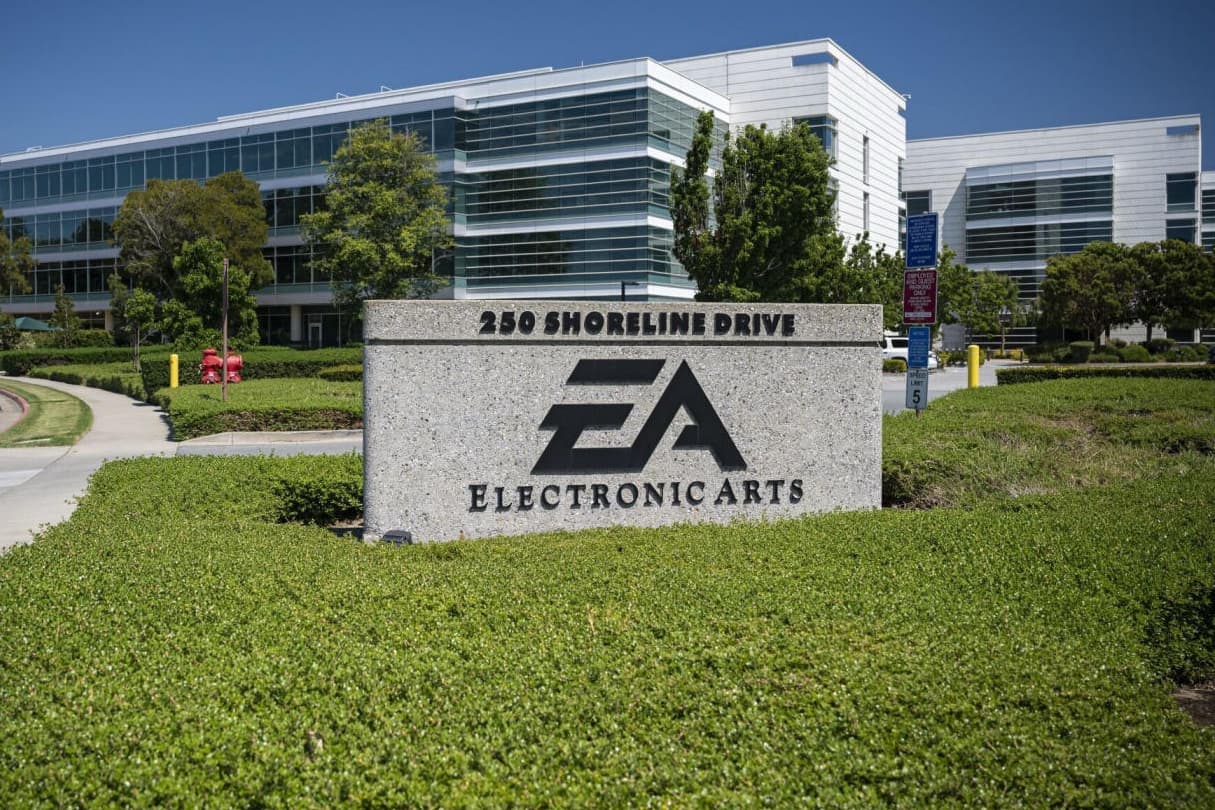 EA Inc., Redwood City
EA: The World's Largest Sports Game Publisher
Electronic Arts, founded in 1982 in San Mateo, California by Trip Hawkins, became the world's largest sports game publisher, with FIFA, Madden NFL, and The Sims generating billions annually. EA's Redwood City campus is the headquarters of a company with $7.4 billion in annual revenue and sports franchises licensed across every major global league.
The Industry Power Stack
Microsoft / Xbox
Redmond, WAXbox Game Studios + Activision Blizzard, $68.7B acquisition · Call of Duty, Halo, Forza, Minecraft
Epic Games
Cary, NCUnreal Engine · 50%+ of global AAA titles · Fortnite, 350M accounts · 5% gross revenue royalty
Valve
Bellevue, WASteam, 90% of digital PC game sales · 132M active users · Half-Life, Counter-Strike, Dota 2
Riot Games
Los Angeles, CALeague of Legends, 150M registered accounts · most-played PC game on Earth · Valorant, Teamfight Tactics
Electronic Arts
Redwood City, CA$7.4B annual revenue · EA Sports FC, Madden NFL, The Sims, Battlefield, Apex Legends
Unity Technologies
San Francisco, CA#2 engine after Unreal · dominates mobile gaming · 70%+ of top 1000 mobile games built on Unity
The Ask America Oracle
Ask the AI Oracle about Atari's founding, the Doom engine's influence on FPS games, Valve's Steam monopoly, Epic's Unreal Engine royalties, or Riot Games' League of Legends global player base.