The Global CloudTHE ELASTIC WEB
How Silicon Valley engineering and hyper-scale capital created the on-demand utility infrastructure running the modern digital world.
The Utility Engine of Civilization
The creation of the cloud is the story of turning raw computer hardware into an on-demand public utility. In 2002, an internal mandate at Amazon declared that all teams must expose their data and functionality through service interfaces, preparing the architectural groundwork. In 2006, Amazon Web Services launched S3 and EC2, followed closely by Google Cloud and Microsoft Azure, permanently shifting the global economy from physical server purchase cycles to elastic rental infrastructure.
This transformation decoupled software scaling from physical limits. Startups that once required millions of dollars in capital expenditure to buy server hardware could now launch for dollars a day, while multi-national corporations and sovereign states could dynamically scale their computations to meet real-time spikes. The modern internet is not a decentralized network of independent machines; it is a virtualization layer running on hyper-scale infrastructure engineered in America.
Of all operational data centers worldwide are located in the United States
Installed capacity in the US, compared to the entire EU's 11.9 GW
Hyper-scale and enterprise data centers powering global transactions
PLATFORM EVOLUTION
Key Pillars of the Cloud
Virtualization
Pioneered by VMware, virtualization decoupled software from physical hardware. By introducing the hypervisor, it allowed single physical servers to run dozens of virtual machines simultaneously, increasing CPU utilization rates from a wasteful 5-15% to over 80%.
The AWS API Mandate
Jeff Bezos' famous 2002 internal directive mandated that all software modules communicate via APIs, preparing the architecture for the public launch of AWS in 2006. This turned computing, database storage, and bandwidth into instantly rentable utilities.
The SaaS Revolution
The cloud enabled the Software-as-a-Service model. Led by Salesforce, Adobe, and ServiceNow, software shifted from physical CD-ROMs and desktop licenses to dynamic web subscriptions, creating a multi-trillion dollar market and accelerating enterprise productivity.
AI Superclusters
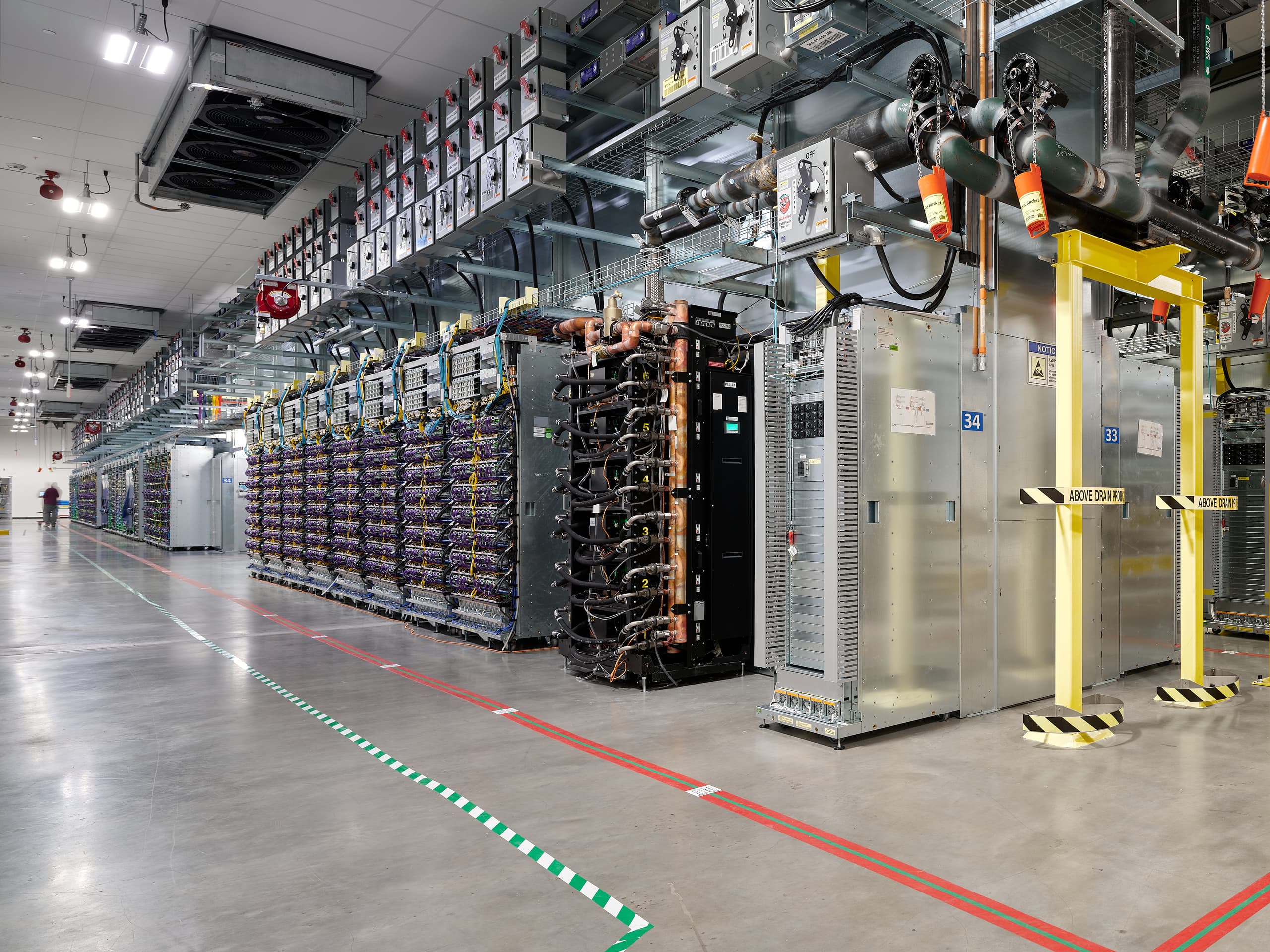
The training of modern generative AI models shifted the cloud from individual virtual servers to massive, unified supercomputers. Hyper-scalers now deploy tens of thousands of GPUs connected by high-speed NVLink fabrics inside single custom-built facilities.
STACK FROM THE GROUND UP
Architectural Layers of the American Cloud
The hidden software and hardware innovations that enable millions of businesses to run on shared global utility hardware.
Hyper-scale SDN Fabrics
Virtualization extends from CPU to the physical network. Technologies like Google's Andromeda and AWS's Hyperplane abstract physical switches, routing trillions of packets per second with microsecond latency, enabling secure multi-tenant isolation on shared routers.
The Global Fiber Substrate
To bypass public internet congestion, American tech giants have financed and laid over 100 private undersea fiber optic cables across the Atlantic and Pacific. Google, Meta, and Microsoft now own or lease the majority of global transoceanic bandwidth.
Eleven 9s Durability
Systems like Amazon S3 and Google Colossus store data as chunks replicated across multiple physical storage domains. By automated parity coding, they achieve 99.999999999% durability, ensuring data is never lost even during simultaneous data center power losses.
Proprietary Cloud Silicon
To optimize power and performance, cloud leaders design proprietary chips. AWS's Graviton processors provide ARM-based efficiency for server workloads, while Google's custom TPUs (Tensor Processing Units) power the world's largest AI neural training grids.
The Physical Substrate: America's Data Center Dominance
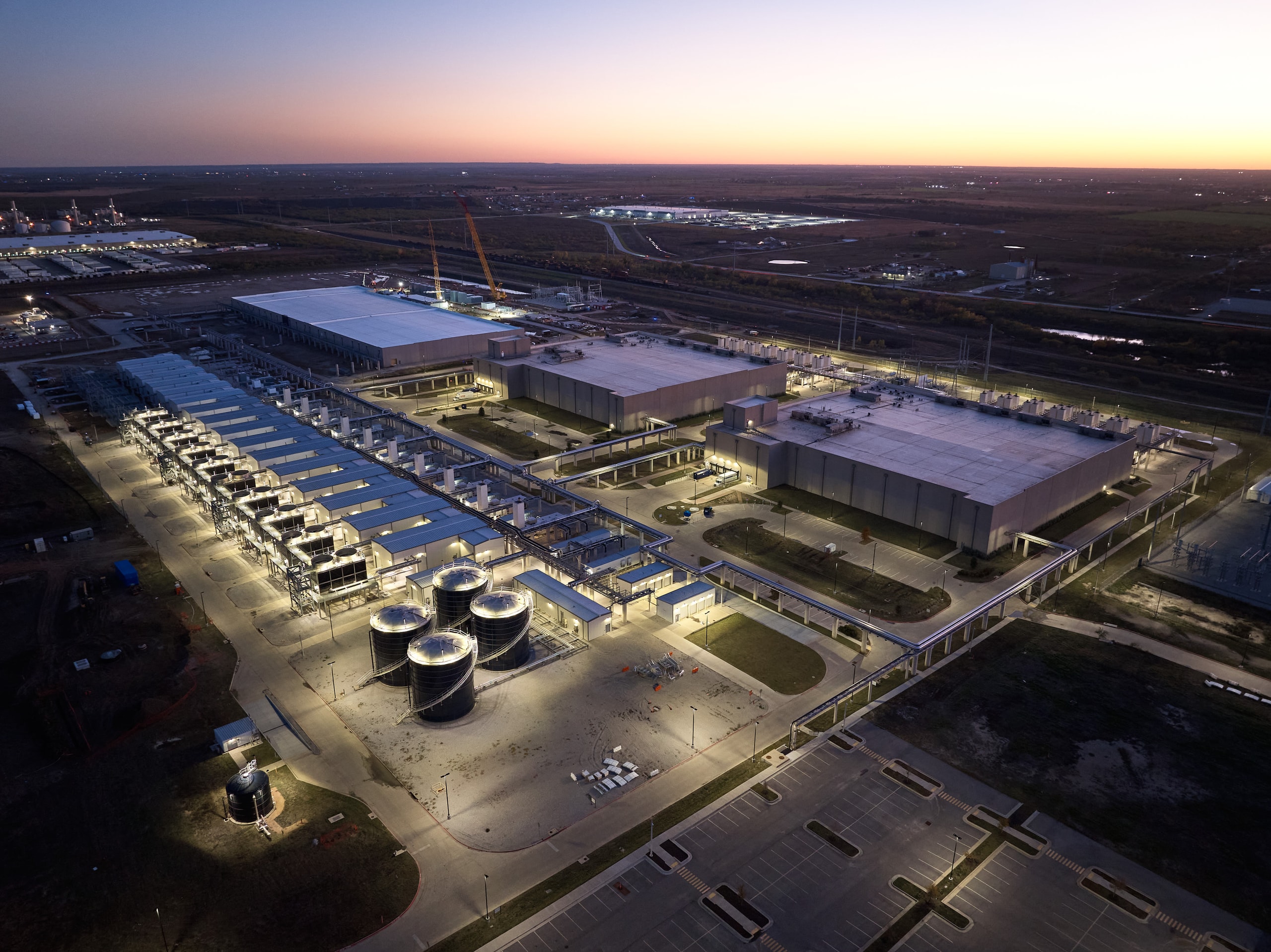
Behind the ephemeral metaphor of the 'cloud' lies an immense physical reality of concrete and power lines. The United States houses over 5,400 operational data centers, representing 43% of the global total, more than the next ten nations combined. In terms of raw electrical grid capacity, the US represents 53.7 gigawatts of installed data center capacity, eclipsing the entire European Union's 11.9 gigawatts by more than four times.
This density is anchored in regional hubs like Northern Virginia (the 'Data Center Alley' of Loudoun County), which processes an estimated 70% of the world's daily internet traffic. Because global fiber optics, undersea cables, and routing protocols are physically anchored in these American corridors, the data streams of foreign governments, multinational corporations, and billions of individuals are routed through and stored on infrastructure managed under American jurisdictional and technical standards.
The Ask America Oracle
Ask the AI Oracle about AWS launch history, virtualization technologies, data center power capacity, or SaaS economic growth.