fleet integration
Carrier-based autonomous refueling
Extends the reach of the carrier air wing and moves unmanned aviation directly into cyclic deck operations.
FORWARD DEPLOYED · SEMPER FORTIS · READY ON ARRIVAL
The U.S. Navy isn't just the world's largest: it displaces more tonnage than the next thirteen navies combined. No other nation operates more than three aircraft carriers.
Sources: IISS Military Balance 2024, Naval Vessel Register
The Navy's power comes from the integration of ships, aircraft, submarines, satellites, software, industrial depth, and crews trained to operate under extreme tempo.
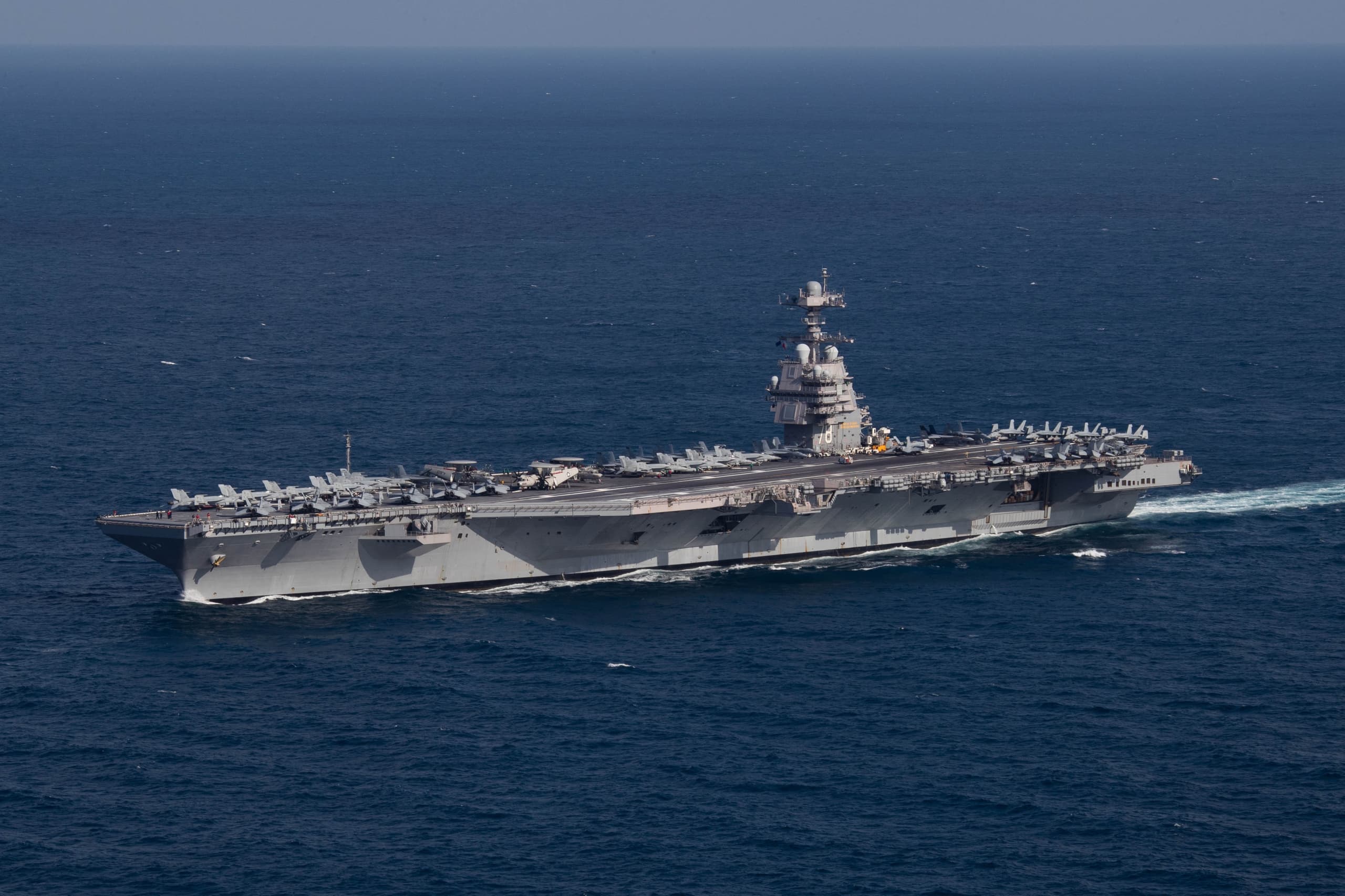
A carrier strike group is a mobile airbase, missile battery, sensor network, command node, and sovereign American presence moving through international waters.
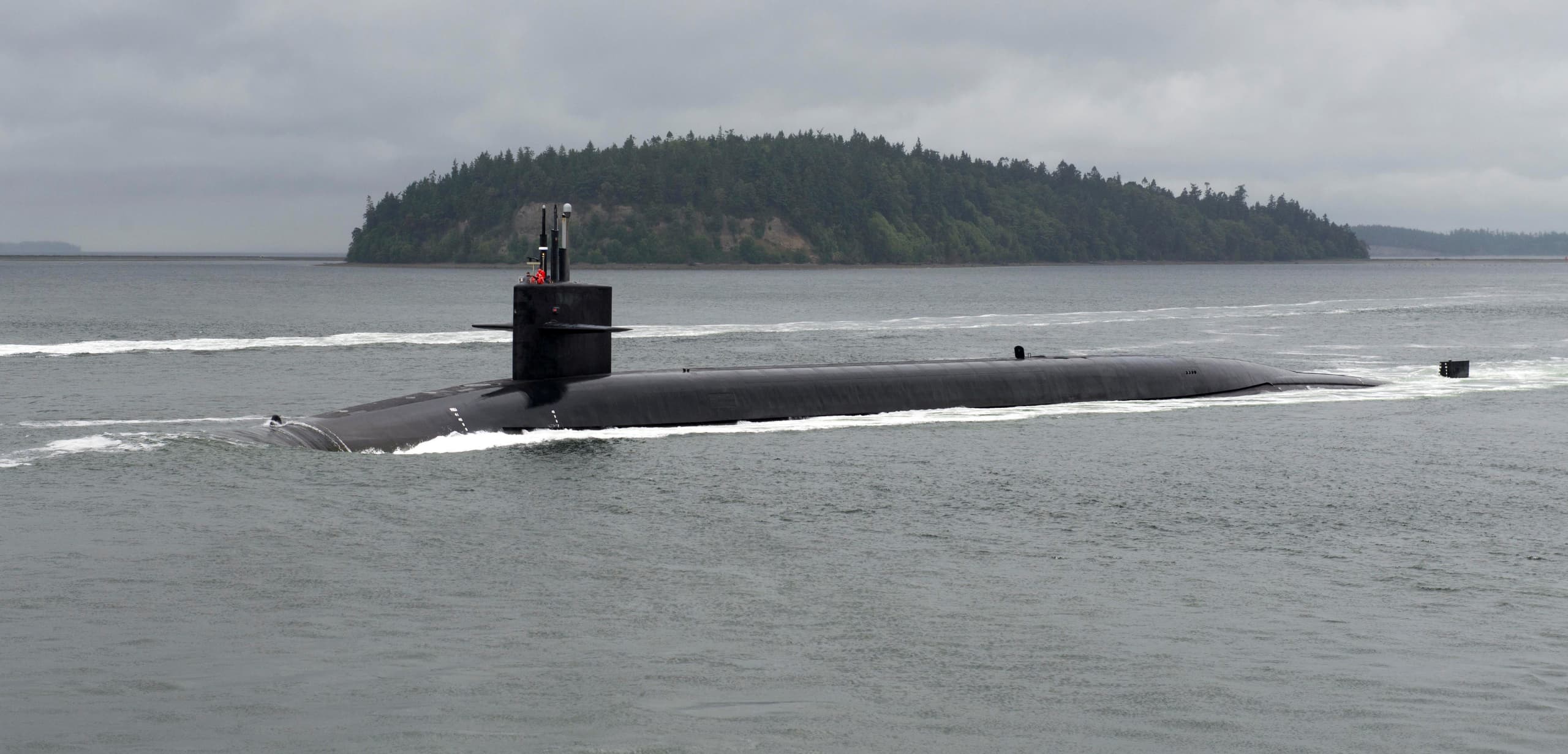
Attack submarines hunt, map, shadow, and collect. Ballistic missile submarines remain hidden to guarantee strategic second-strike credibility.
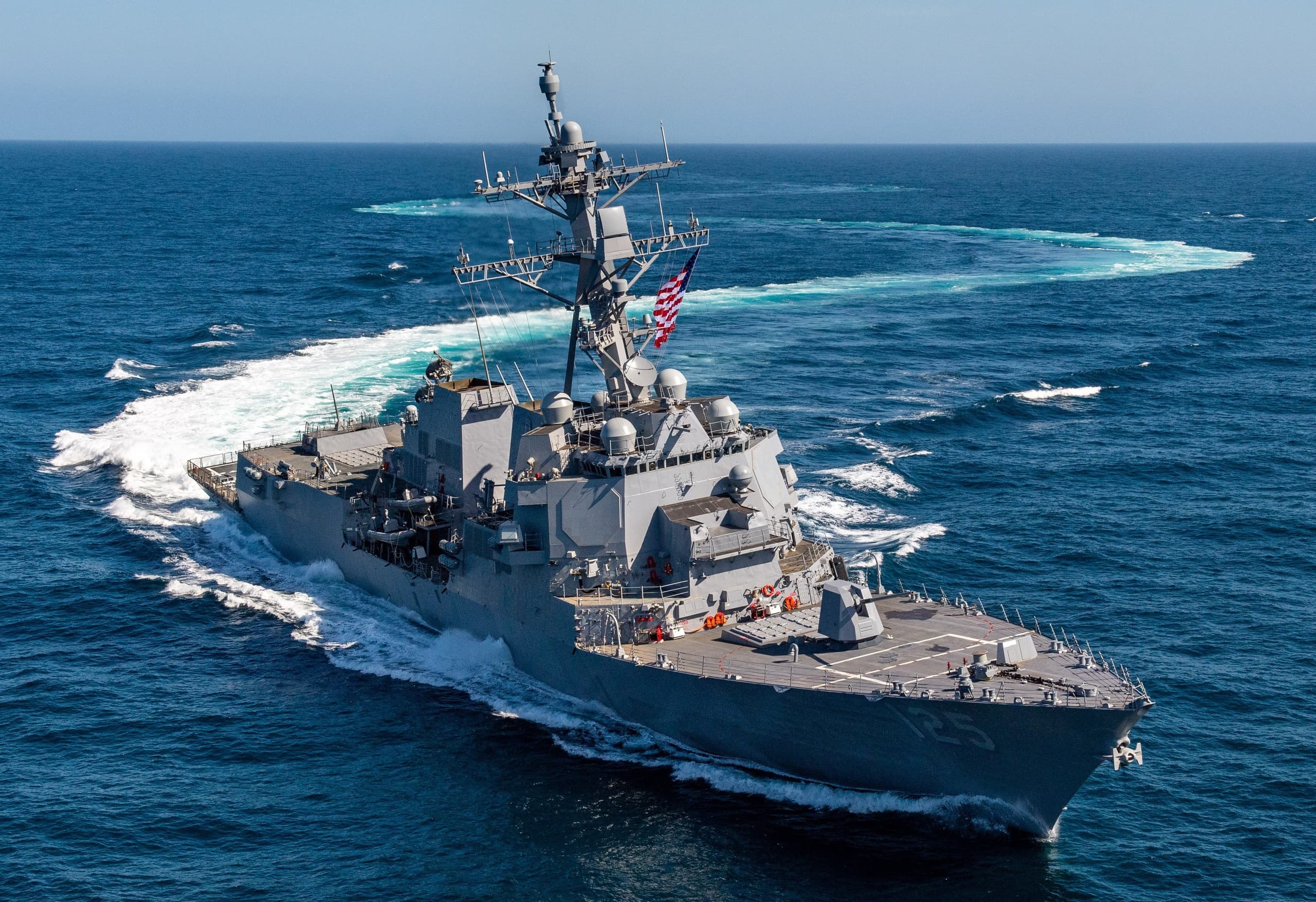
Aegis fuses ship sensors, weapons, command software, and cooperative engagement into a fleet-wide air and missile defense architecture.
Unmanned surface, air, and undersea systems extend sensing, targeting, decoy, logistics, and strike capacity across the maritime battlespace.
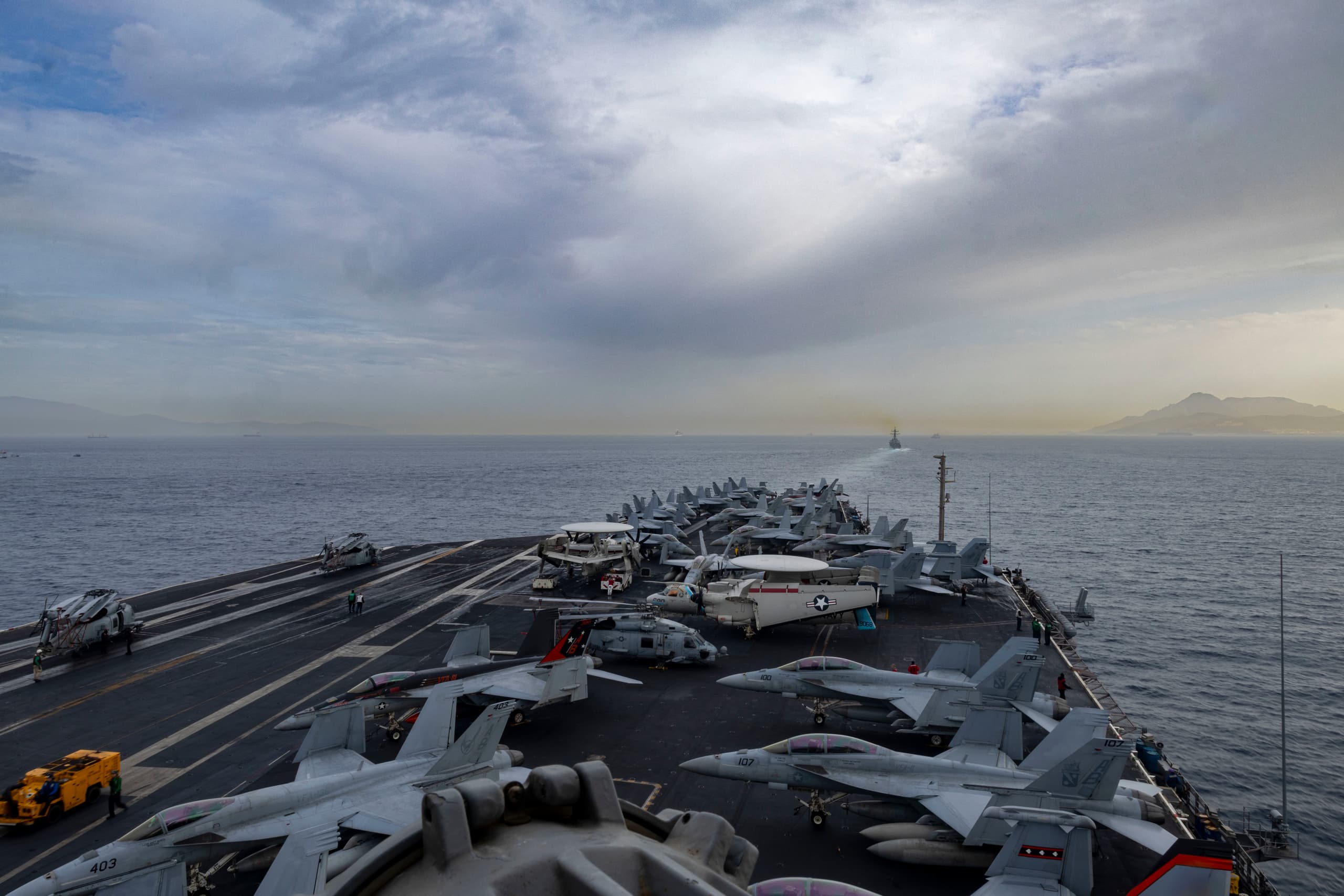
A carrier air wing combines strike fighters, electronic warfare, airborne early warning, ASW helicopters, fleet logistics, and autonomous platforms into a single integrated aerospace ecosystem.
Multirole air superiority, precision strike, fleet defense
5th-gen stealth penetration, sensor fusion, electronic attack
Airborne electronic attack, radar jamming, SIGINT
Battle management, long-range surveillance, datalink coordination
Anti-submarine warfare, surface search, torpedo attack
Vertical replenishment, SAR, MEDEVAC, mine countermeasures
Carrier onboard delivery, high-speed resupply, passenger transport
Autonomous aerial refueling, ISR extension, strike range doubling
Select a theater. The interface reframes the same Navy as presence, deterrence, logistics, aviation, and command infrastructure tuned to a different strategic environment.
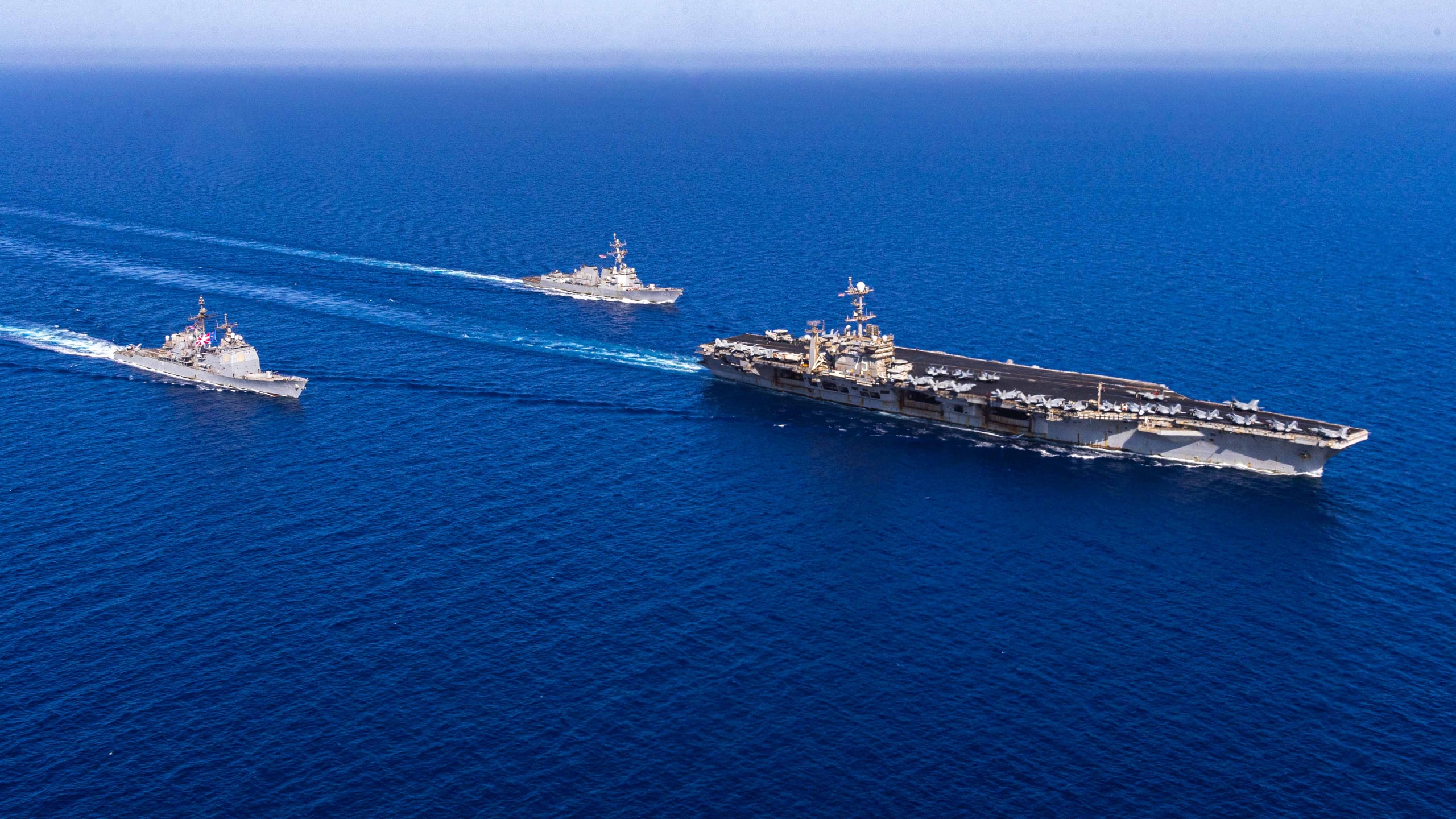
Carrier aviation, submarines, destroyers, Marines, space cueing, and allied bases combine into a layered maritime architecture across the world's largest ocean.
Carriers and submarines don't operate from a vacuum. Sea power requires a global network of bases, piers, magazines, and maintenance facilities positioned to sustain persistent forward presence.
Home to the Atlantic Fleet, Norfolk hosts more than 75 ships and 134 aircraft. It is the operational hub for carrier strike groups deploying to the Mediterranean, Middle East, and Arctic.
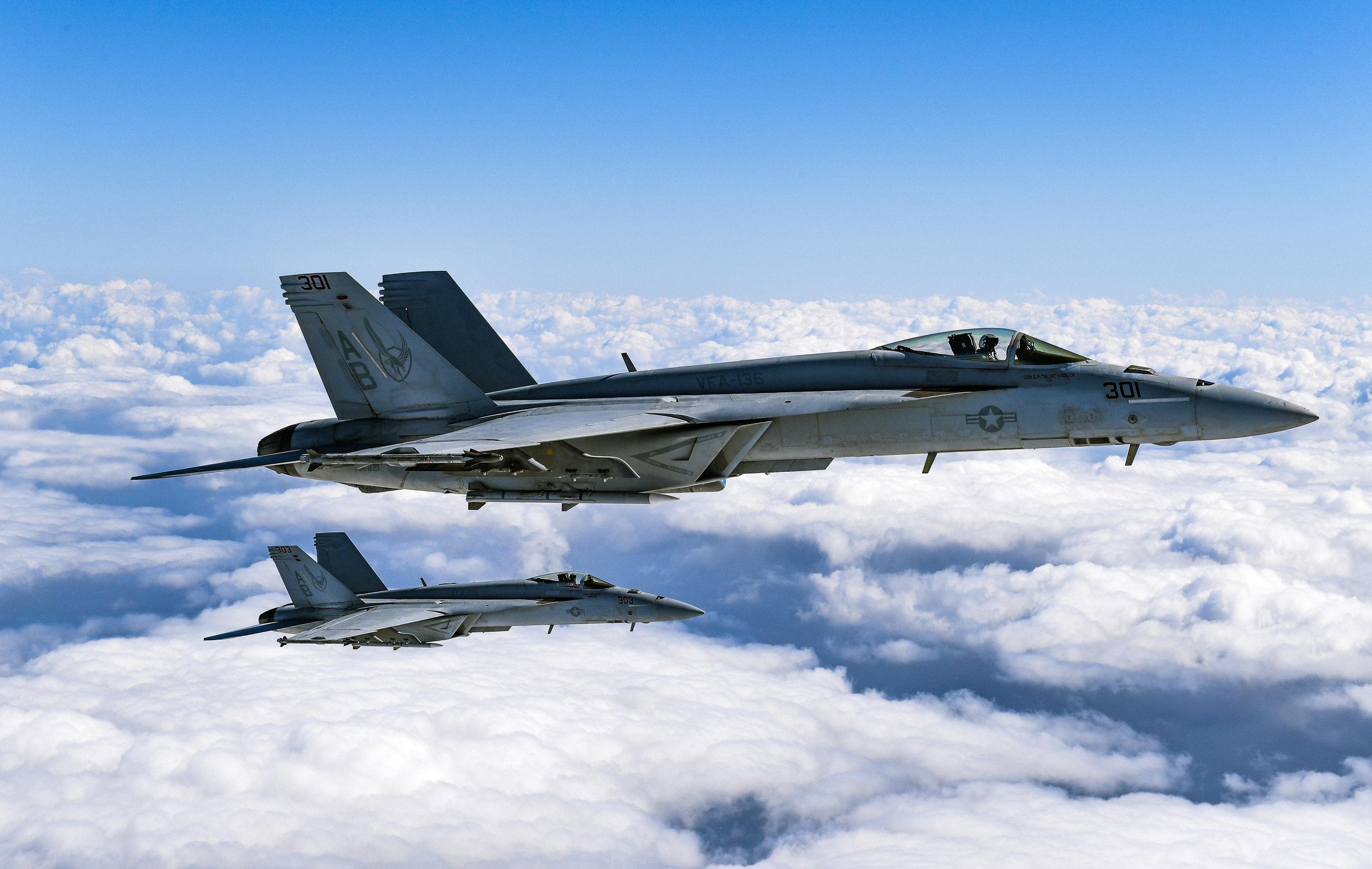
Launch, recover, arm, fuel, repair, and launch again. The deck turns naval power into a repeatable industrial rhythm at sea.
Each platform is designed as part of a larger kill web: sensors, launchers, communications, logistics, aviation, cyber, and allied command structures.
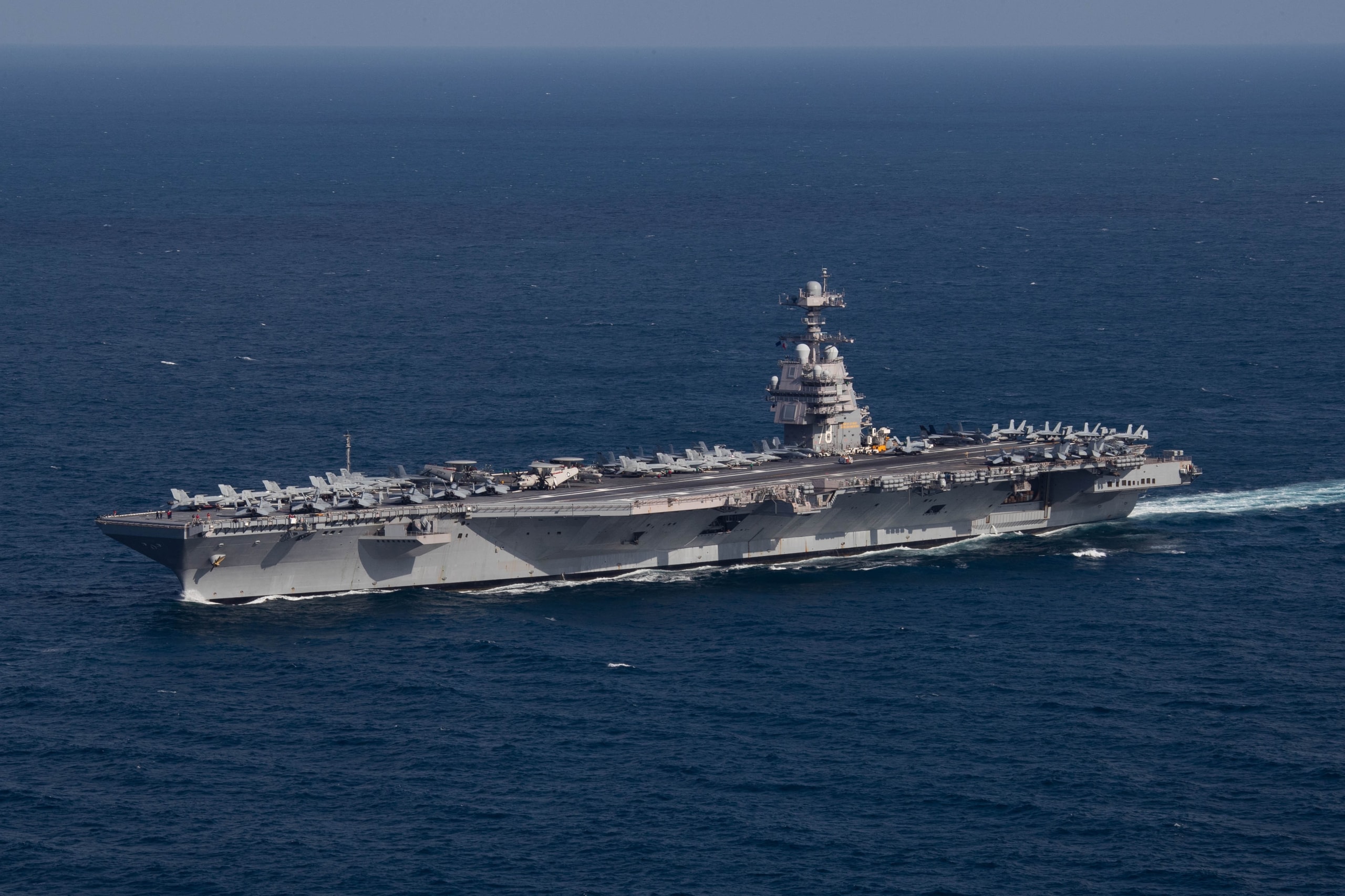
Electromagnetic aircraft launch, advanced arresting gear, redesigned weapons movement, and a higher sortie-generation architecture.
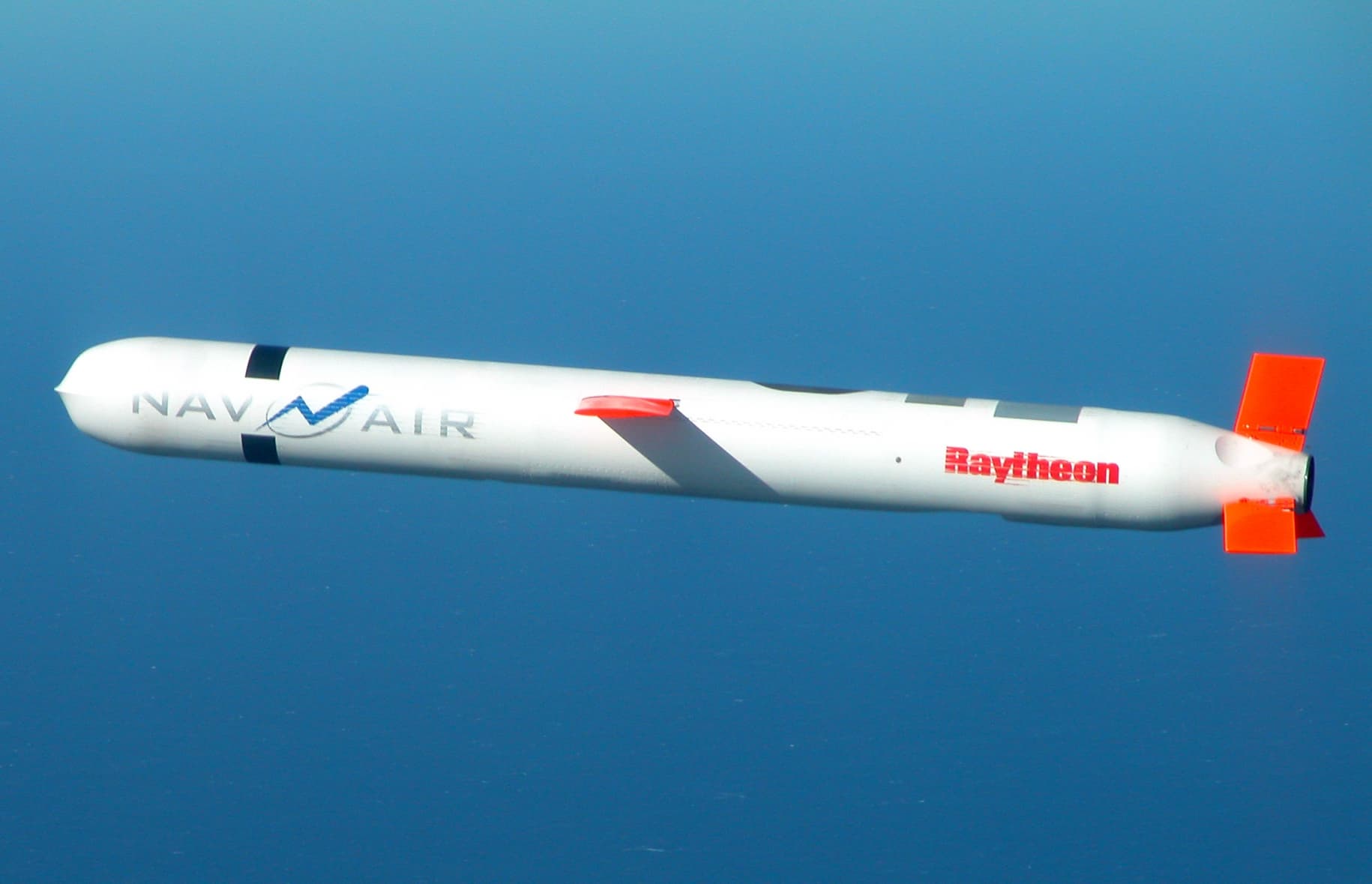
The fleet's offensive and defensive strike grid, ranging from long-range precision cruise missiles to autonomous point defense gatling systems.
The Navy's premier long-range precision strike weapon, launched from vertical launch systems (VLS) on destroyers, cruisers, and submarines to strike high-value land targets with extreme accuracy.
From the Revolution to global carrier dominance, the U.S. Navy has defined each era through innovation, courage, and permanent presence across every ocean on Earth.
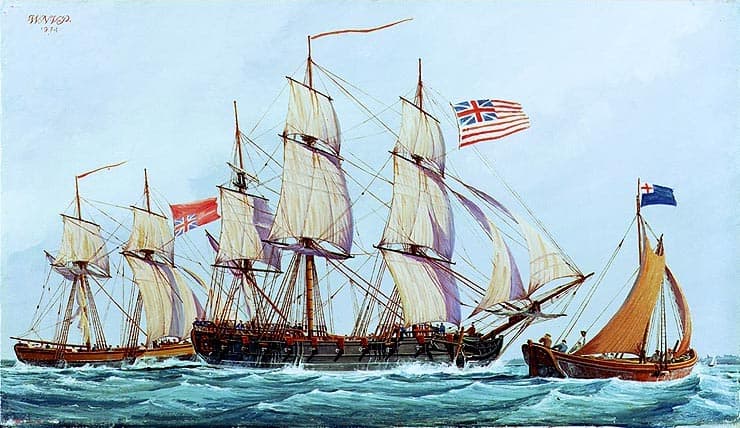
The Continental Congress establishes a naval force to intercept British supply ships during the American Revolution, planting the seed for permanent sea power.
The Continental Congress establishes a naval force to intercept British supply ships during the American Revolution, planting the seed for permanent sea power.
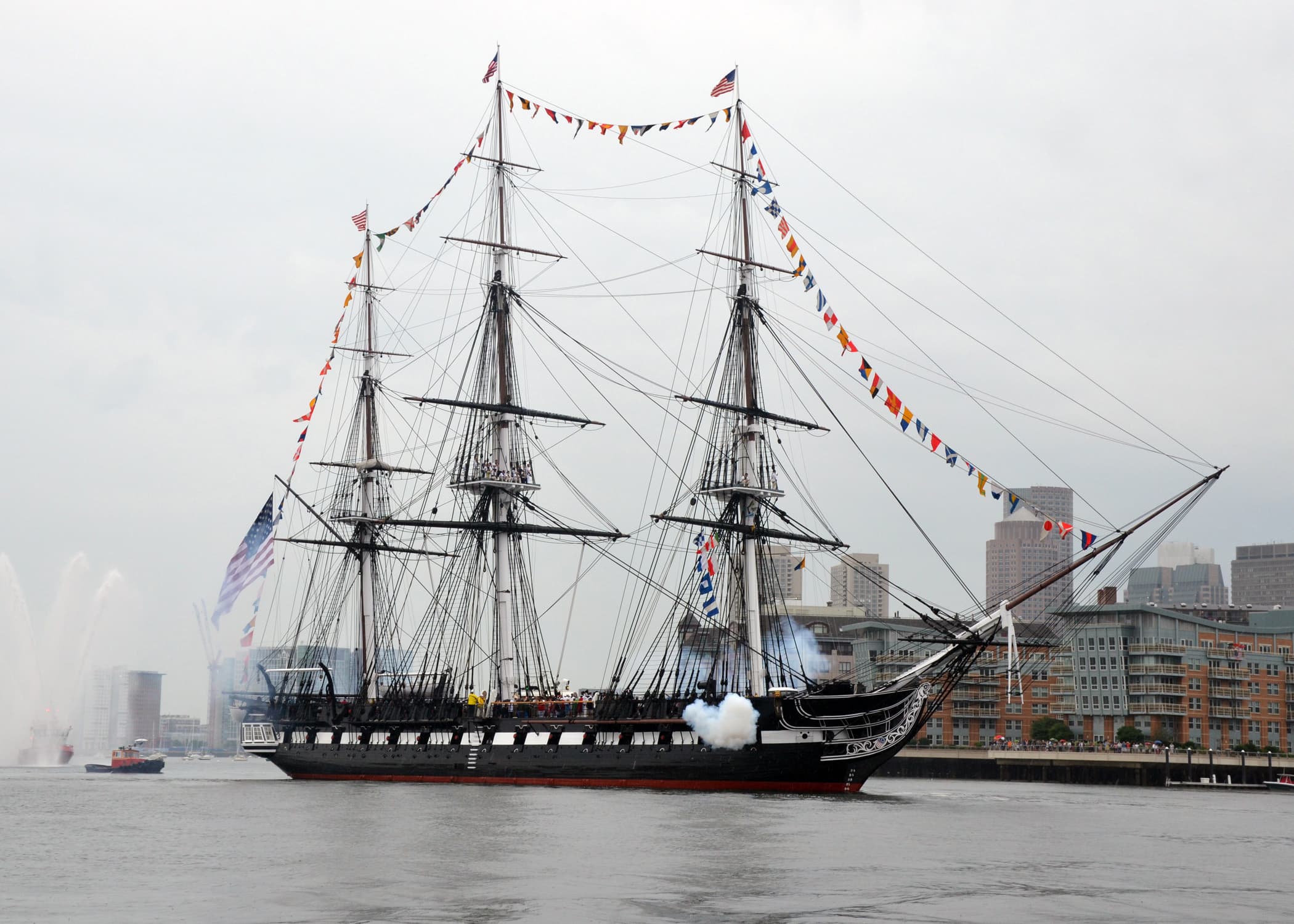
USS Constitution defeats HMS Guerriere, proving the young republic could challenge the Royal Navy and projecting American sovereignty across oceans.
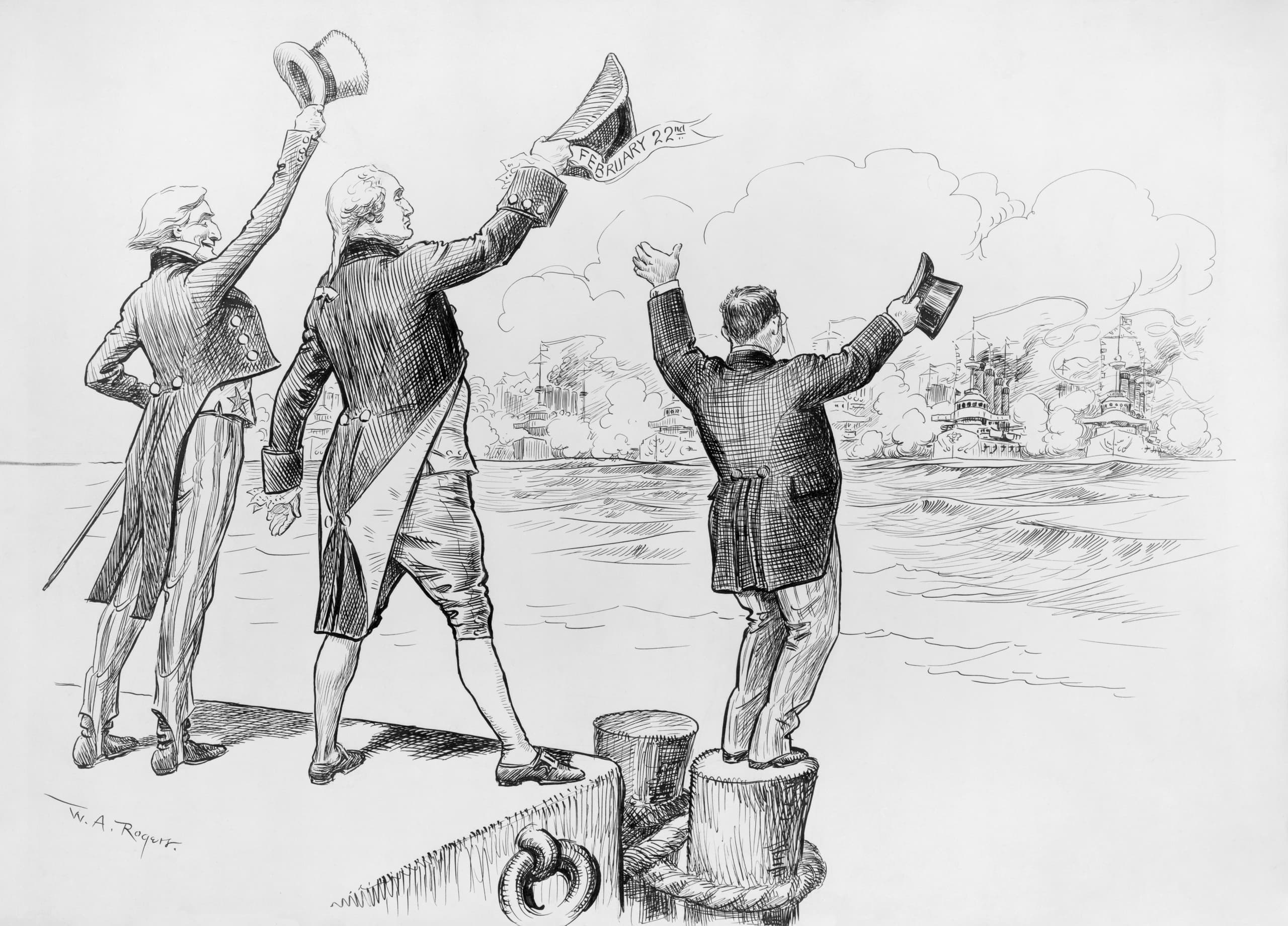
President Roosevelt sends 16 battleships around the world in 14 months, announcing America as a global naval power and establishing forward-deployment doctrine.
President Roosevelt sends 16 battleships around the world in 14 months, announcing America as a global naval power and establishing forward-deployment doctrine.
.10~.._7fnra0p.jpg&w=2560&q=75)
Four Japanese carriers sunk in a single engagement. The Battle of Midway proved that carrier aviation, not gun-line battleships, would dominate modern naval warfare.
_and_Metallurg_Anosov_during_Cuban_Missile_Crisis_1962.0hnonkjmu.rnx.jpg&w=2560&q=75)
The Navy's quarantine line around Cuba demonstrated that sea control could resolve nuclear brinkmanship without firing a shot. Deterrence through presence.
The Navy's quarantine line around Cuba demonstrated that sea control could resolve nuclear brinkmanship without firing a shot. Deterrence through presence.
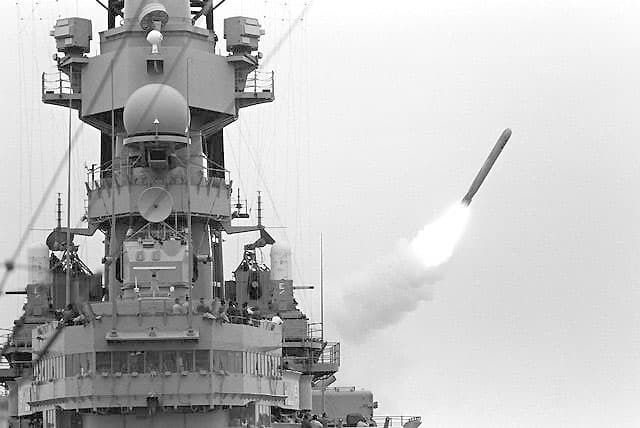
288 Tomahawk cruise missiles launched from ships and submarines in the opening hours of Desert Storm, introducing precision stand-off strike from the sea.
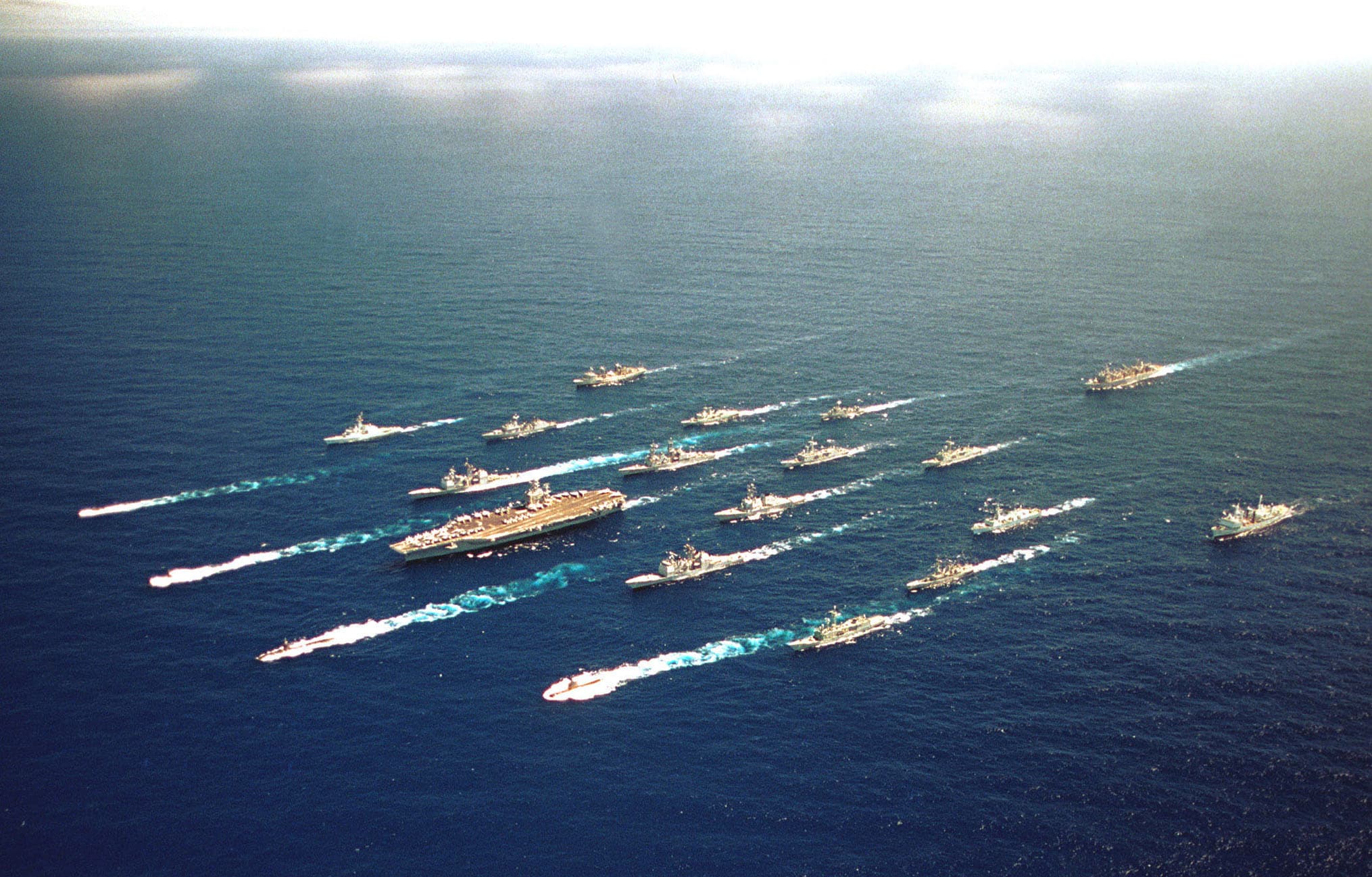
Carrier strike groups deploy continuously across the Indo-Pacific, Mediterranean, and Arabian Sea. The Navy is the first responder to every global crisis.
Carrier strike groups deploy continuously across the Indo-Pacific, Mediterranean, and Arabian Sea. The Navy is the first responder to every global crisis.
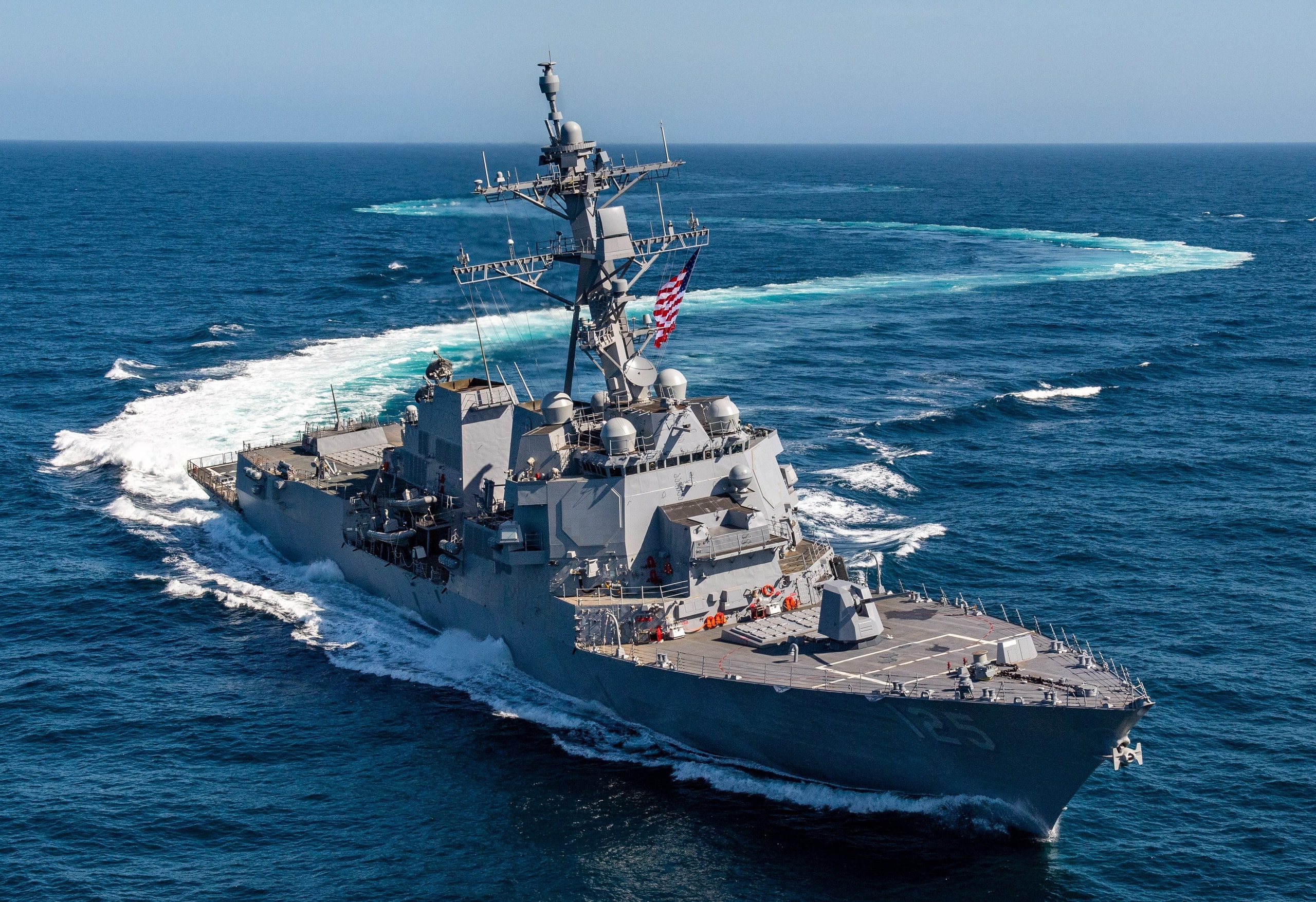
Destroyers, cruisers, submarines, aircraft, satellites, Marines, and logistics vessels operate as one adaptive machine.
The future Navy is less about one bigger ship and more about a distributed fleet: crewed and uncrewed systems, longer-range aviation, software-defined sensors, and resilient production.
Extends the reach of the carrier air wing and moves unmanned aviation directly into cyclic deck operations.
The Ohio replacement program is built to preserve the most survivable nuclear deterrent leg into the 2080s.
A scalable radar family for air and missile defense, designed around sensitivity, software growth, and fleet commonality.
Prototype vessels test autonomy, payload modularity, distributed sensing, and the tactics needed for mixed human-machine fleets.
Naval Special Warfare Command trains and deploys maritime special operations forces to conduct direct action, special reconnaissance, and unconventional warfare across maritime, littoral, and land environments.
The Navy's elite special operations force, trained to operate in any environment from deep ocean to landlocked mountains. SEAL teams conduct direct action, special reconnaissance, counter-terrorism, and unconventional warfare missions worldwide.
When disaster strikes, the Navy is often the first response. Hospital ships, amphibious groups, and Seabee construction battalions deliver aid at a scale no civilian organization can match.
After the Indian Ocean tsunami killed 230,000 people, the Navy deployed the USS Abraham Lincoln carrier strike group, helicopter squadrons, and Seabee construction battalions within 72 hours to deliver aid across Indonesia, Sri Lanka, and Thailand.
The Navy operates two 1,000-bed hospital ships: USNS Mercy (Pacific) and USNS Comfort (Atlantic). Converted from supertankers, these floating medical centers deploy to major natural disasters, providing surgeries, dental care, and medical training across developing nations.
The largest annual multinational humanitarian mission in the Indo-Pacific. Navy ships, medical teams, engineers, and allied partners provide healthcare, infrastructure improvements, and disaster preparedness training across Pacific Island nations.
After Hurricanes Irma and Maria devastated Puerto Rico and the U.S. Virgin Islands, the Navy deployed the USS Kearsarge amphibious group, USNS Comfort, and Seabee battalions to restore power, deliver water, and rebuild infrastructure.
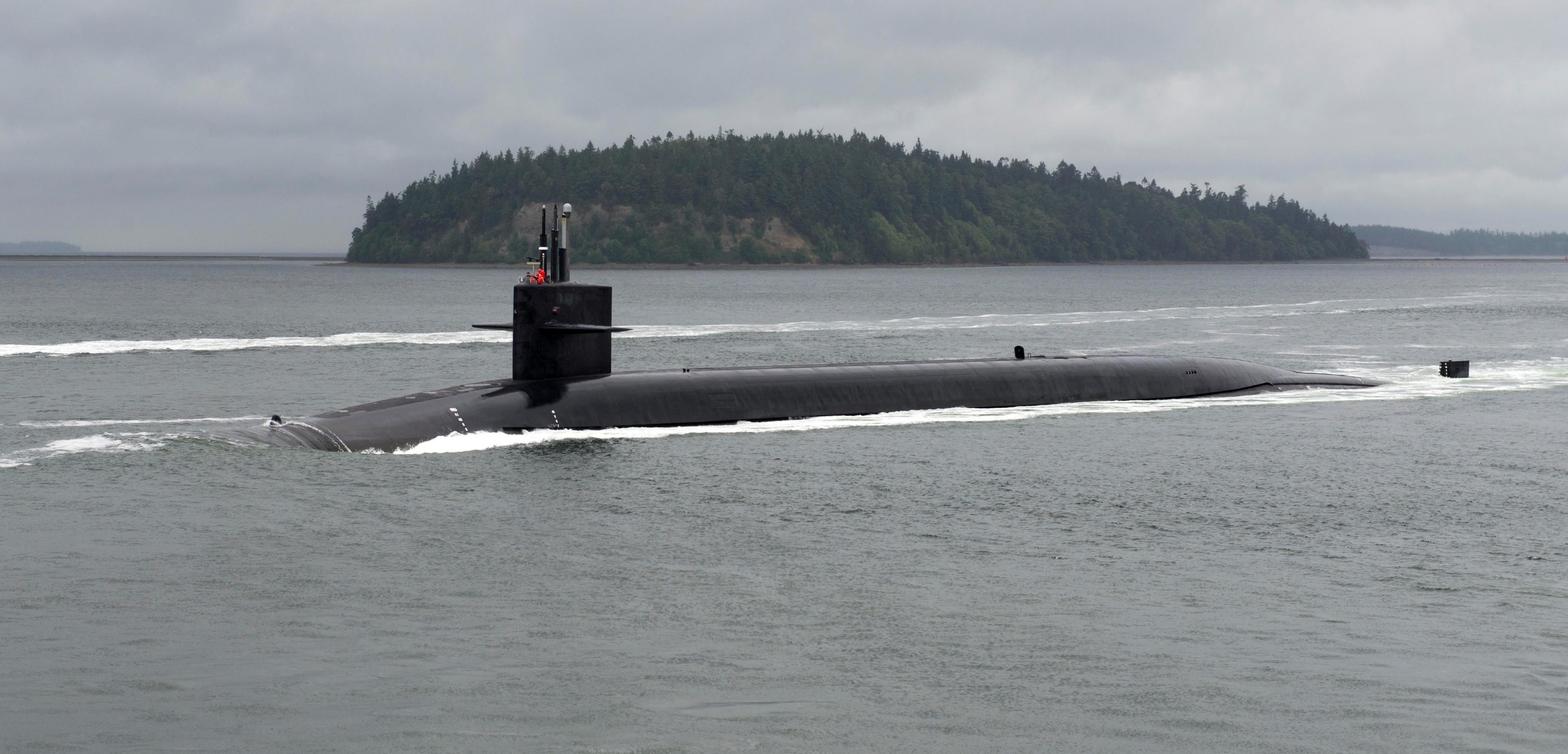
Sailing unseen beneath the waves, ballistic and guided-missile submarines maintain continuous strategic readiness, representing the most survivable leg of nuclear deterrence.
A Navy carrier group does not ask where the crisis is. It moves the runway, the command center, the missile shield, the logistics train, and the national signal into the theater.