RIVERS TAMED.CANYONS SPANNED.
When America wanted to grow, it poured concrete into the canyons of the West and strung steel across its bays. The result: structures so large they reseated rivers, lit up cities, and redefined what a nation could build.
The American Engineering Sublime
A dam stops a river that has run for a million years. A bridge holds a mile of steel in the air. America turned both into a form of public art.
In the Depression years, with a quarter of the nation out of work, the federal government answered with concrete. Hoover Dam, Grand Coulee, and dozens more put an army of men to work and electrified an entire West almost overnight.
The bridges came from the same nerve. Where a bay or a canyon said stop, engineers answered with steel cable and towers taller than anything around them. Many still hold their records today, nearly a century after the first footing was poured.
The Measure of the Ambition
Map of Engineering Landmarks
Locate the most famous dams and bridges across the United States. Hover or tap any marker on the map to reveal engineering facts and structural details.
Who Holds the Record
The nation's longest spans and tallest dams, ranked. Switch between the two to see just how far American engineers pushed the limit.
Red Steel Above the Fog
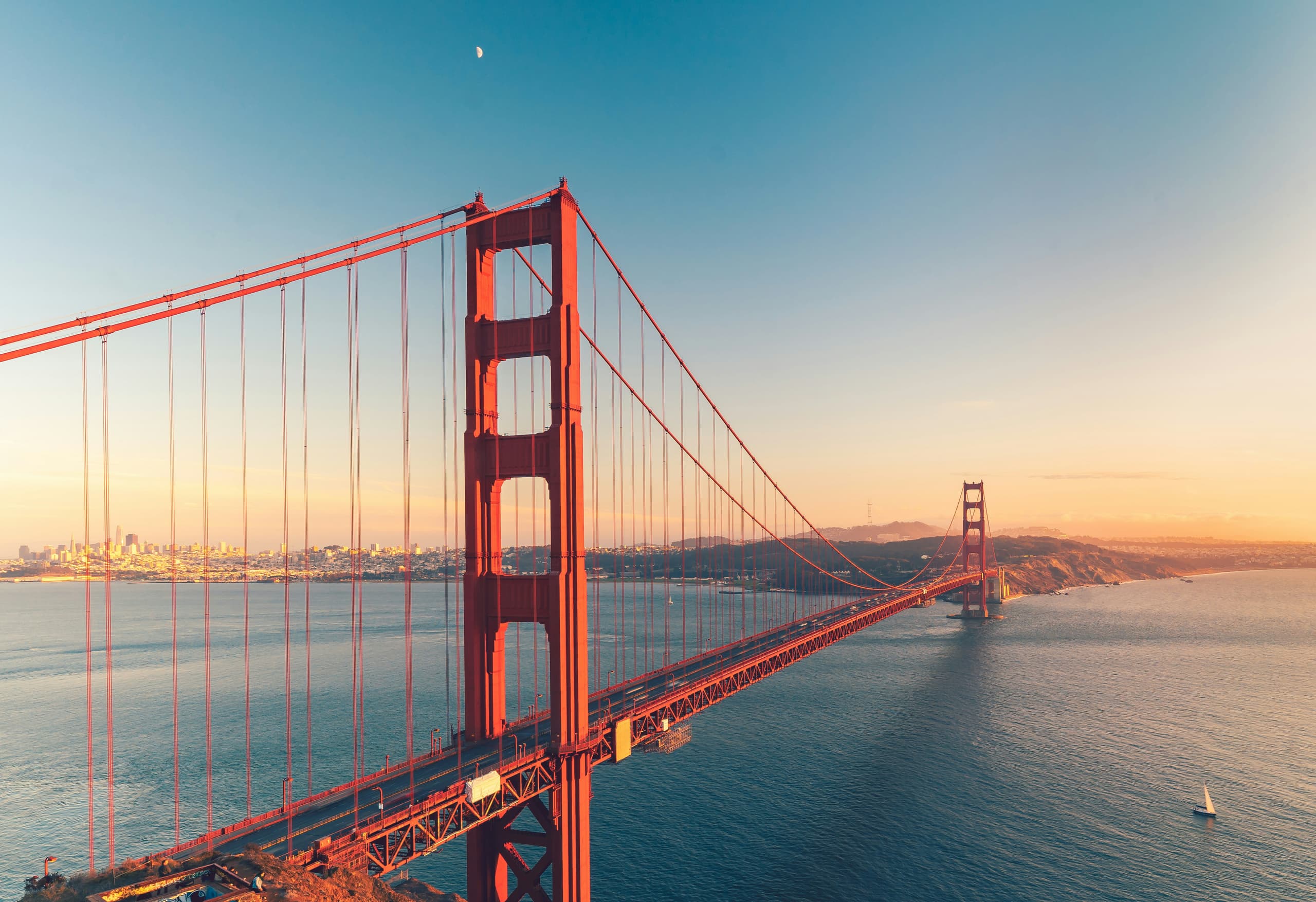
The Golden Gate Bridge was called impossible to build. Powerful currents, dense fog, and open ocean stood between the two shores of a 4,200-foot span.
Joseph Strauss strung the first construction safety net in history beneath the deck. It saved nineteen lives, and the men who fell into it called themselves the Halfway to Hell Club. The bridge opened in 1937 and stayed the longest span on Earth for twenty-seven years.
The Dams
The great concrete dams of the West did more than make power. They made whole cities possible where there had been only desert.
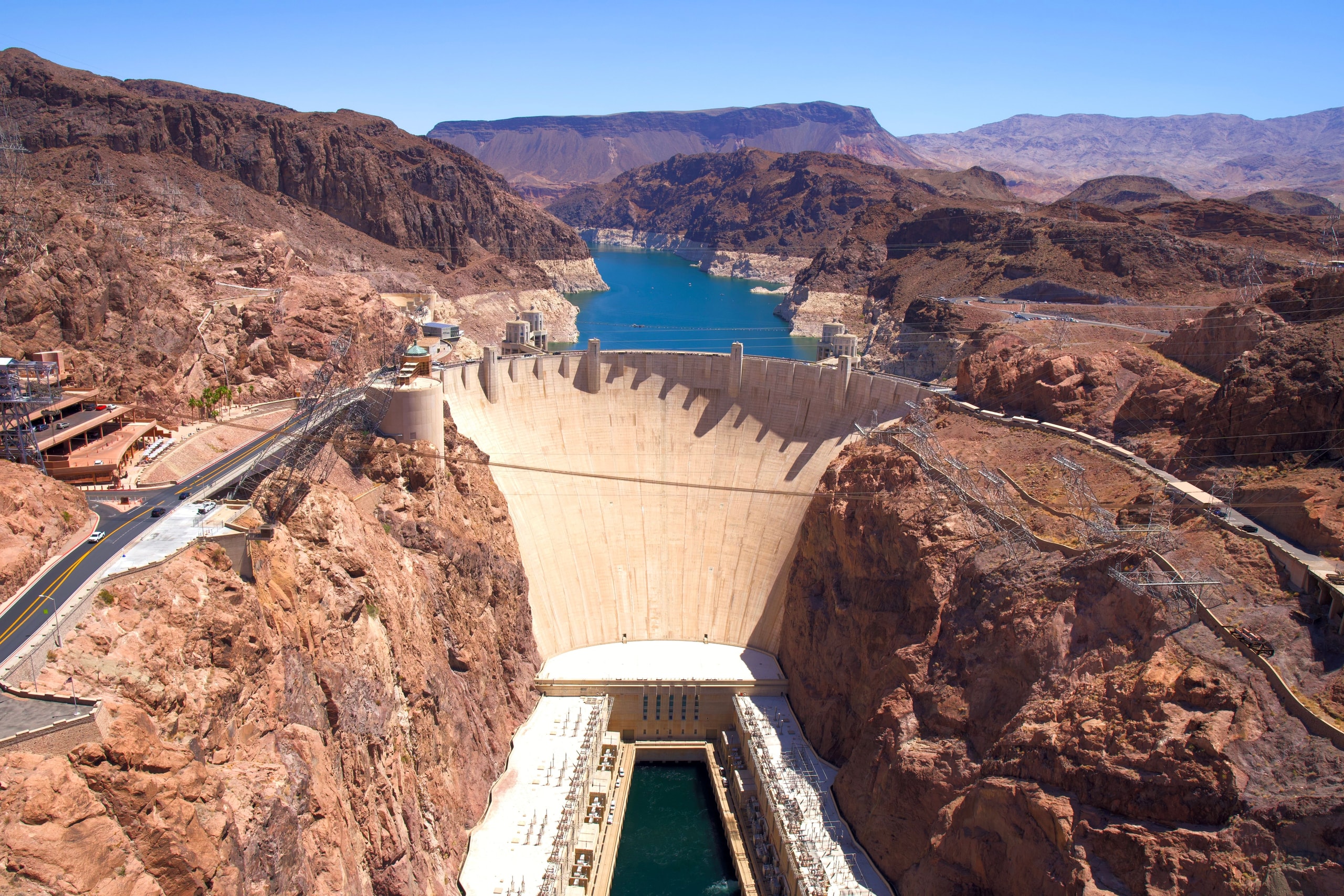
Hoover Dam was finished two years ahead of schedule.
Its concrete was poured in blocks cooled by miles of chilled-water pipe. Poured as one mass, it would not have finished cooling and curing for roughly 125 years.
Grand Coulee is the largest concrete structure in the U.S.
On the Columbia River in Washington, it remains the country's largest power producer, feeding the factories that built the aircraft of the Second World War.
Oroville is the tallest dam in the country, at 770 feet.
Its earthfill embankment in California edges out Hoover by nearly fifty feet, even if it never earned the same fame.
Glen Canyon Dam created Lake Powell.
In Arizona, its 710 feet hold back the country's second-largest reservoir, a flooded canyon more than 180 miles long.
The Bridges
From the first steel cable strung across the East River to the longest arch in the hemisphere, America's bridges are a catalogue of structural nerve.
Golden Gate Bridge
746-foot towers painted in International Orange. The longest suspension span on Earth for 27 years, and perhaps the most photographed bridge on the planet.
Brooklyn Bridge
The world's first steel-wire suspension bridge. John Roebling died of the work, his son was left an invalid, and Emily Roebling ran the completion for eleven years.
Verrazzano-Narrows Bridge
The longest suspension span in the United States. The curve of the Earth is so real at its scale that the tower tops stand nearly two inches farther apart than their bases.
Mackinac Bridge
The Mighty Mac links Michigan's two peninsulas across the strait where Lakes Michigan and Huron meet, one of the longest suspension crossings in the Western Hemisphere.
New River Gorge Bridge
The longest steel arch in the Western Hemisphere for decades. Once a year, on Bridge Day, people parachute off it, more than 850 feet above the river.
The Price That Was Paid
These structures were raised by men hung over voids, in the wind and the spray of the river. Ninety-six workers died at Hoover Dam, eleven at the Golden Gate. Every monument on this page is also a memorial to the men who never saw it finished.
"We built great things because we were a great people. Our dams and our bridges are the cathedrals of the republic."