CONQUERING THE DESERT.FLOATING A NATION.
From the historic Erie Canal that sparked the rise of New York to the engineering marvels of the California Aqueduct and the St. Lawrence Seaway, America's artificial rivers and inland waterways have moved water and commerce to forge a continental superpower.
The Lifelines of Commerce & Survival
Water built the great commercial hubs of the East. The redirection of water made survival and growth possible in the arid West.
In 1817, Governor DeWitt Clinton of New York championed a project critics ridiculed as 'Clinton's Ditch': a 363-mile canal dug through wilderness by hand and draft animals, linking the Hudson River to the Great Lakes. Completed in 1825, the Erie Canal slashed shipping costs by over 90% and transformed New York City into the financial capital of the Western Hemisphere, proving that infrastructure could unify and enrich a growing republic.
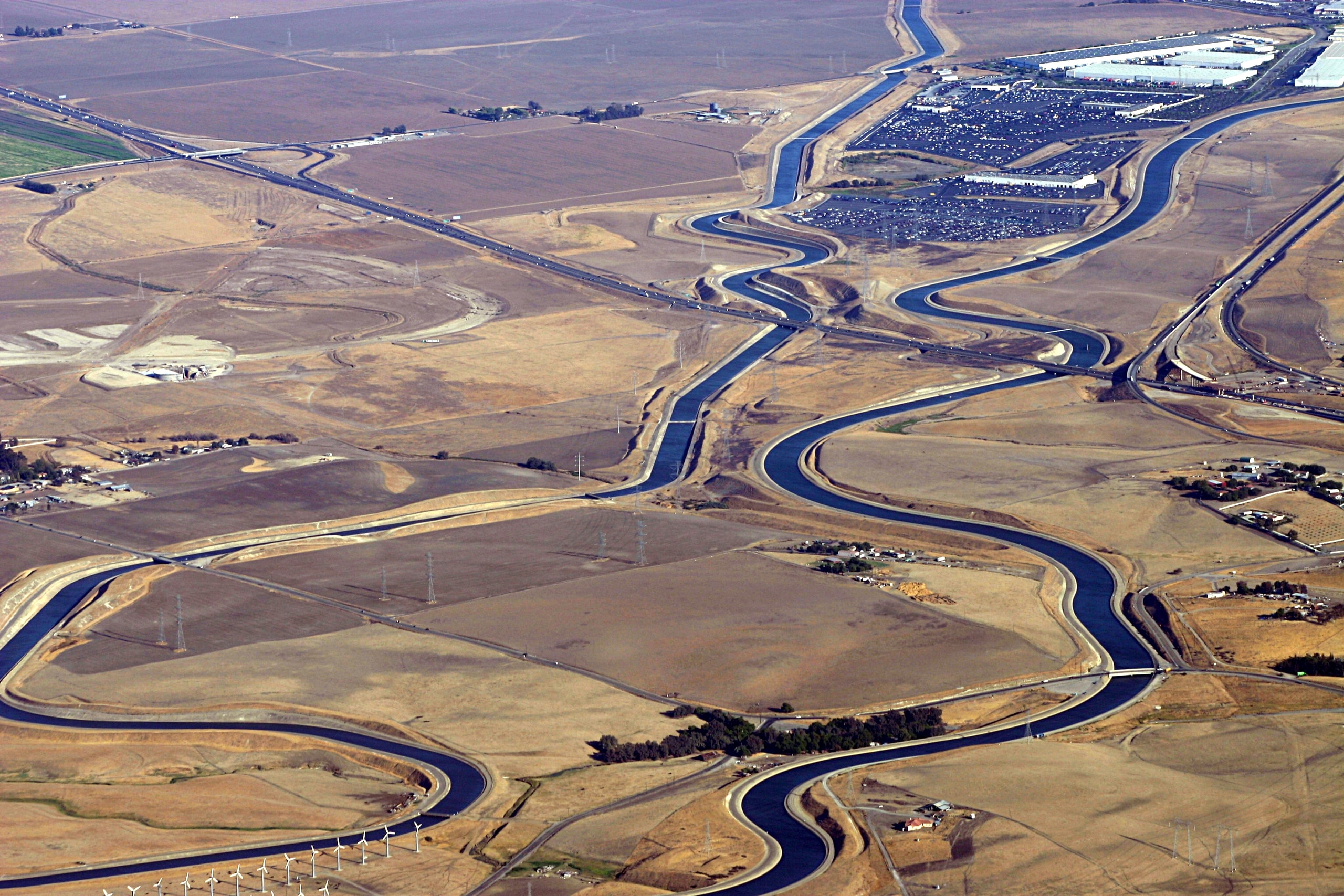
In the arid West, survival demanded engineering on an even grander scale. Built under the vision of William Mulholland, the 233-mile Los Angeles Aqueduct opened in 1913, carrying water from the Owens Valley entirely by gravity to transform a dusty coastal town into a global metropolis. Decades later, federal and state projects like the Central Arizona Project and the California State Water Project created massive artificial rivers, lifting millions of acre-feet of water over mountain ranges and across burning deserts to sustain tens of millions of lives and feed the nation's most productive agricultural valleys.
WATER IS GOLD.
The guiding principle of Western water management. Without these colossal channels, the agricultural bounty of California's Central Valley and the neon skylines of the desert Southwest could not exist.
Continental Aqueducts & Waterways
The interactive map of America's major water conveyance systems and inland commercial channels. Hover or tap a line for length, role, and details.
Ctrl + scroll to zoom · drag to pan
Ctrl + scroll to zoom · drag to pan
Hover a line for its details
Comparing the Giants
Explore the scale of America's water infrastructure. Toggle below to compare the lengths of the major municipal and agricultural aqueducts, and the critical commercial waterways.
The Mississippi & Intracoastal Waterway System
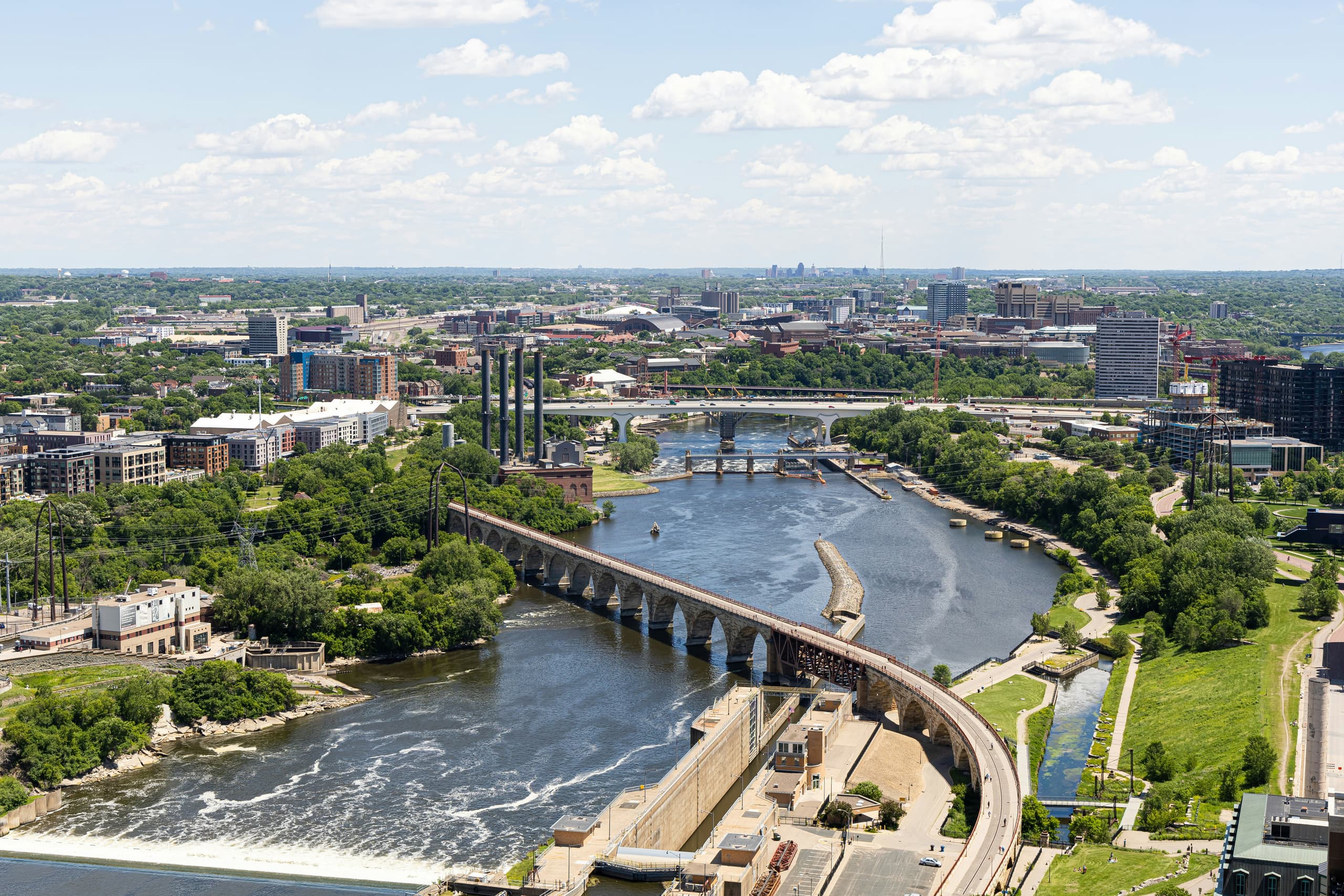
The Mississippi River basin, combined with the Intracoastal Waterway, forms the most expansive protected water transport network in the world. Stretching over 3,000 miles, the Intracoastal Waterway provides a safe, inland route for commercial barges to transport petroleum, coal, and agricultural goods along the Atlantic and Gulf coasts without facing the hazards of the open sea.
Integrated with the Great Lakes via the Chicago Sanitary and Ship Canal, this system binds the industrial heartland to global trade routes, facilitating cheap and efficient bulk cargo transport to ocean ports.
Engineering the Flows
The Delaware Aqueduct: World's Longest Tunnel
Completed in 1945, the Delaware Aqueduct is a continuous 85-mile circular concrete tunnel carved through solid bedrock at depths up to 2,500 feet below the surface. Delivering half of New York City's clean drinking water entirely by gravity, it remains the longest continuous underground tunnel on Earth.
Reversing the Chicago River
Faced with a waterborne typhoid epidemic in the late 19th century, Chicago engineers achieved the unthinkable in 1900. By cutting the Chicago Sanitary and Ship Canal, they reversed the flow of the Chicago River away from Lake Michigan, sending the city's effluent down toward the Mississippi and protecting the city's drinking water in one of history's greatest feats of sanitary engineering.
"Along the Erie Canal, a nation's resources flowed, and with them, the spirit of a united, continental republic."