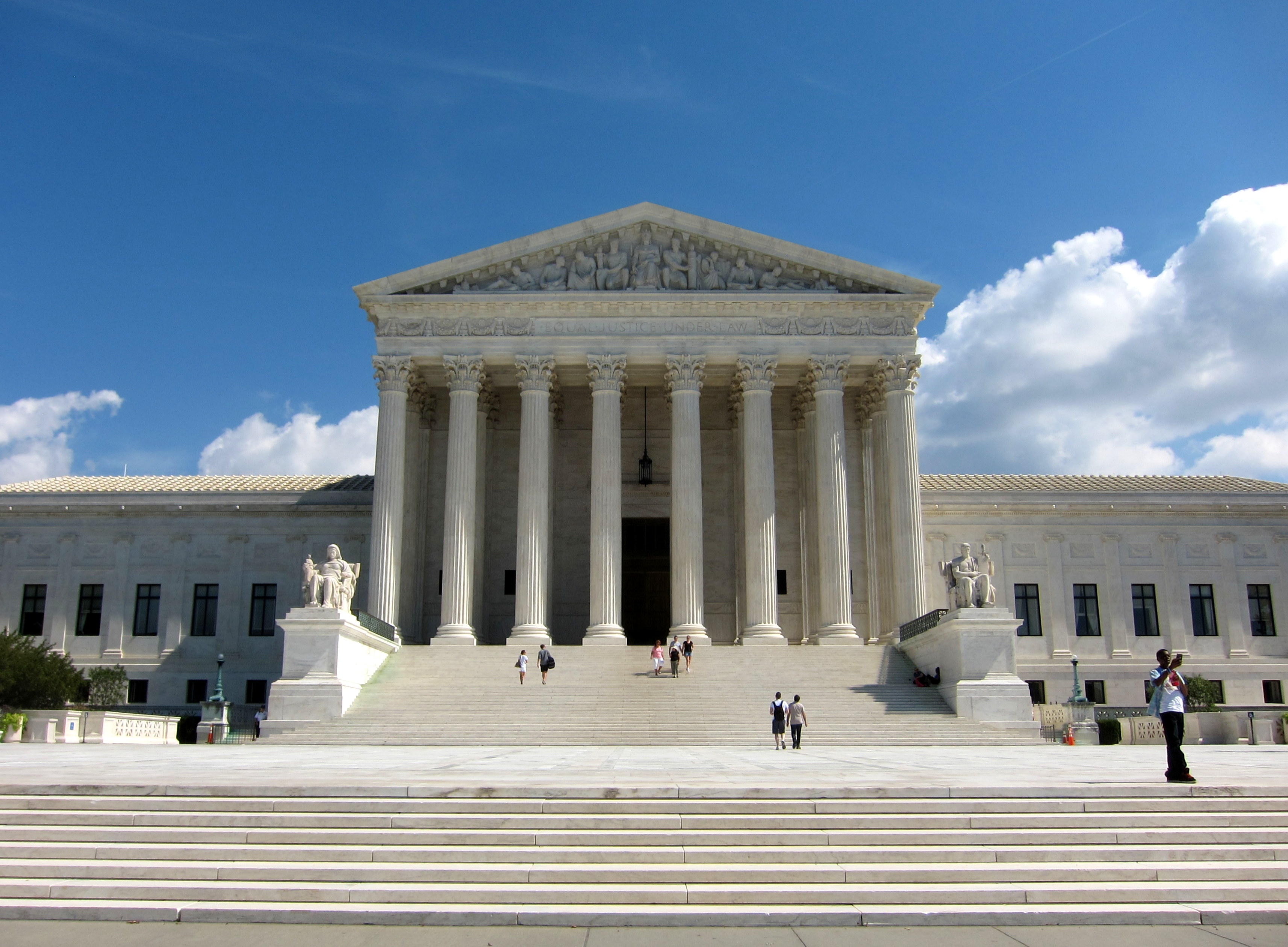
Amendment II
27 WORDS.THE MOST CONTESTED AMENDMENT.
The most actively litigated amendment post-2022. Bruen changed the rules. Dozens of laws are now challenged. Legal doctrine is being rebuilt in real time.
Original Text, Amendment II, Ratified December 15, 1791
“A well regulated Militia, being necessary to the security of a free State, the right of the people to keep and bear Arms, shall not be infringed.”
The Core Debate
Individual Right View
The phrase 'the right of the people to keep and bear Arms' is clearly an individual right, just as 'the right of the people' in the First and Fourth Amendments. The militia preamble describes a motivation, not a limitation. The Founders believed armed citizens are the ultimate check on tyranny.
Majority in: Heller (2008), McDonald (2010), Bruen (2022)
Collective / Militia-Linked View
The prefatory clause, 'A well regulated Militia, being necessary to the security of a free State', conditions the right. The amendment protects the right to bear arms in connection with militia service, not individual ownership for personal self-defense.
Dissent in: Heller, McDonald, Bruen (Stevens dissent)
Landmark Cases
1939
United States v. Miller
The 2nd Amendment protects weapons with 'reasonable relationship to militia service'
The only major 2nd Amendment case before Heller. Lower courts read it to authorize broad gun regulation. The Heller majority later rejected this reading.
2008
District of Columbia v. Heller
The 2nd Amendment protects an individual right to possess firearms in the home for self-defense
5-4 decision written by Scalia. Struck down DC's handgun ban. Established for the first time that the 2nd Amendment protects individual gun ownership beyond collective militia service. Also said some regulations (felon prohibitions, sensitive places) are presumptively lawful.
2010
McDonald v. City of Chicago
The 2nd Amendment applies to state and local governments
5-4. Incorporated the 2nd Amendment through the 14th. Cities like Chicago can no longer ban handguns. Every state must respect the Heller individual right. The federal right became a universal American right.
2016
Caetano v. Massachusetts
Stun guns and other arms not in common use in 1791 may still be protected
Per curiam reversal. The Court rejected a Massachusetts decision that stun guns were not protected because they weren't in common use in 1791. The 2nd Amendment extends to arms that weren't contemplated by the Founders.
2022
New York State Rifle & Pistol Assoc. v. Bruen
Gun regulations must be consistent with historical tradition rather than simple rational basis review
6-3 written by Thomas. Replaced the two-step 'means-end scrutiny' test used by lower courts with a purely historical test: does the regulation have a historical analogue? Overturned New York's 'proper cause' requirement for concealed carry permits. Has been used to challenge bump stock bans, domestic violence restrictions, marijuana user prohibitions, and dozens of other laws.
2024
United States v. Rahimi
Federal law prohibiting domestic abusers subject to restraining orders from possessing guns is constitutional
8-1. The Court applied Bruen's historical test and found sufficient historical analogs for disarming dangerous individuals. First major limitation on Bruen's reach. Set the framework for how courts evaluate regulations that don't have exact historical matches.
The Post-Bruen Landscape (2022–present)
Bruen triggered a wave of litigation. Laws that had operated for decades were suddenly challenged. Here is what is being contested:
Gun bans for drug users
Bump stock restrictions
Bans for domestic abusers with restraining orders
Ghost gun regulations (unserialized firearms)
Large-capacity magazine restrictions
Safe storage requirements
Minimum age laws for firearm purchases
Sensitive places carry prohibitions
Legal doctrine is in maximum flux. Federal circuits are producing contradictory rulings. The Supreme Court will need to intervene again.
""A right guaranteed by the Constitution cannot be submitted to a vote. If the Constitution guarantees it, it exists, regardless of how unpopular it may be to a majority.""
The Visual Record
The Visual Record
From the Minutemen to Heller, the arms, people, and moments behind the Second Amendment.
The Minuteman Statue in Concord, Massachusetts1875
Daniel Chester French's Minute Man honors the armed citizen-soldiers who fired the Revolution's first shots.
Charlton Heston at the NRA Convention2000
Heston's 'from my cold, dead hands' became a rallying cry for gun-rights advocates.
Armed Korean-American Store Owners During the L.A. Riots1992
'Rooftop Koreans' defending their shops became a vivid case study in armed self-defense.
A Classic Winchester Model 1873 Lever-Action Rifle1873
'The Gun That Won the West,' the Winchester 1873 is an icon of American firearms history.
The Battle of Athens, Tennessee1946
Armed WWII veterans overturned a corrupt local political machine, an episode often cited in Second Amendment debates.
Dick Heller on the Steps of the Supreme Court2008
District of Columbia v. Heller affirmed an individual right to keep and bear arms.
The “Come and Take It” Flag at the Battle of Gonzales1835
The defiant Gonzales flag launched the Texas Revolution and endures as a symbol of armed resistance.
Annie Oakley Performing with a Lever-Action Riflec. 1890s
Sharpshooter Annie Oakley made marksmanship a beloved part of American popular culture.