
ARCHITECTURE · STEEL AND AMBITION
THE SKYSCRAPERREVOLUTION
The skyscraper is the one major building type America genuinely invented. It began in Chicago in 1885, and the country has never stopped building taller since.
The height race, to scale
Nine buildings that each, in their moment, redefined how tall an American structure could be. Every silhouette below is drawn in proportion to its real height. Click any of them.
Every bar is to scale · click a building

One World Trade Center
1,776 feet, chosen for the year, not the structure: a building whose height is an argument. It rose on the site of the towers destroyed in 2001 and is the tallest building in the Western Hemisphere. The height race that began in Chicago in 1885 ends, for now, on a number that means something.
The 21st-Century Supertall Era
A new generation of ultra-slender, engineering marvels pushing New York and Chicago past 1,400 feet.
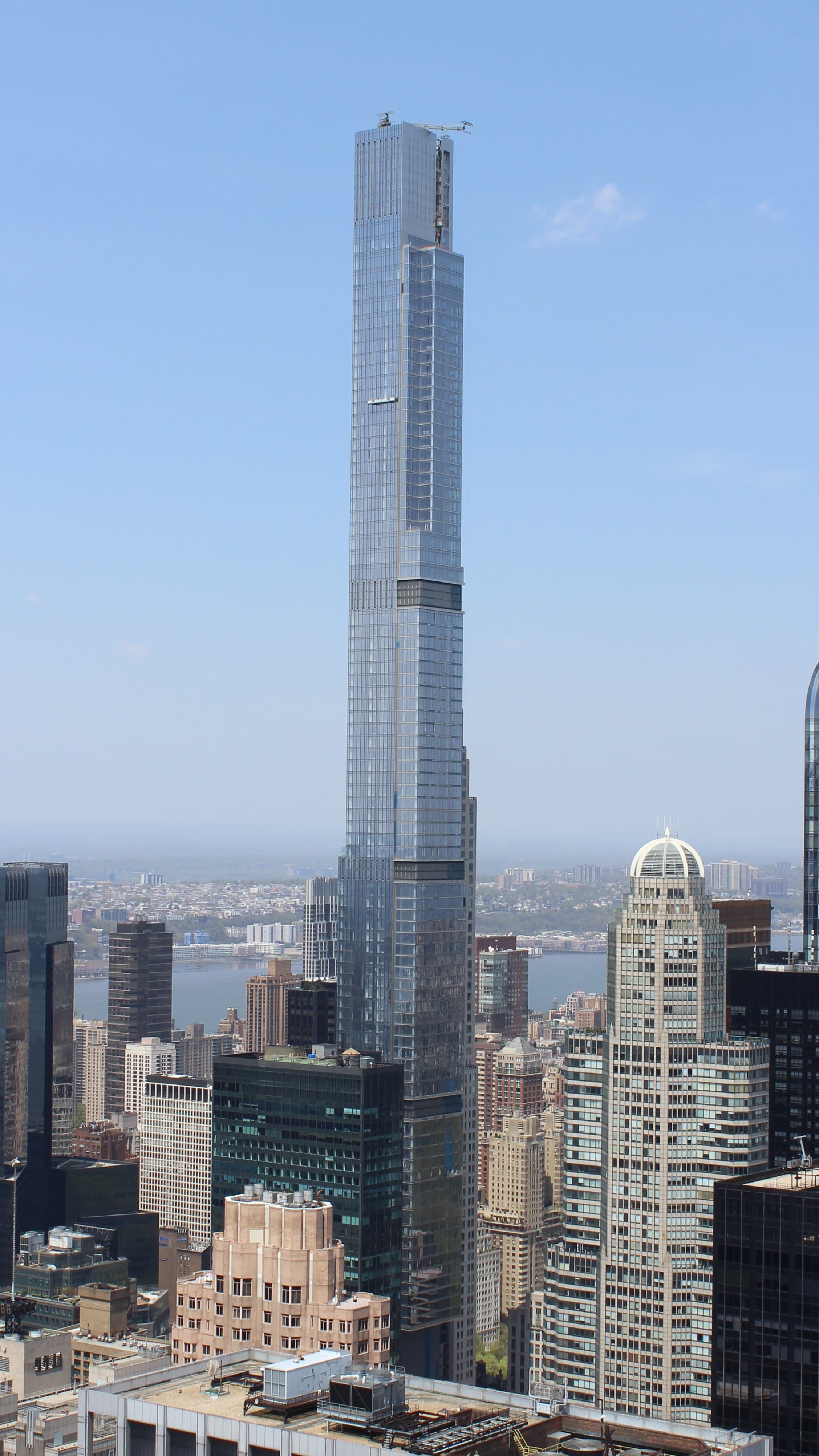
Central Park Tower
The tallest residential building on Earth, soaring above Central Park.
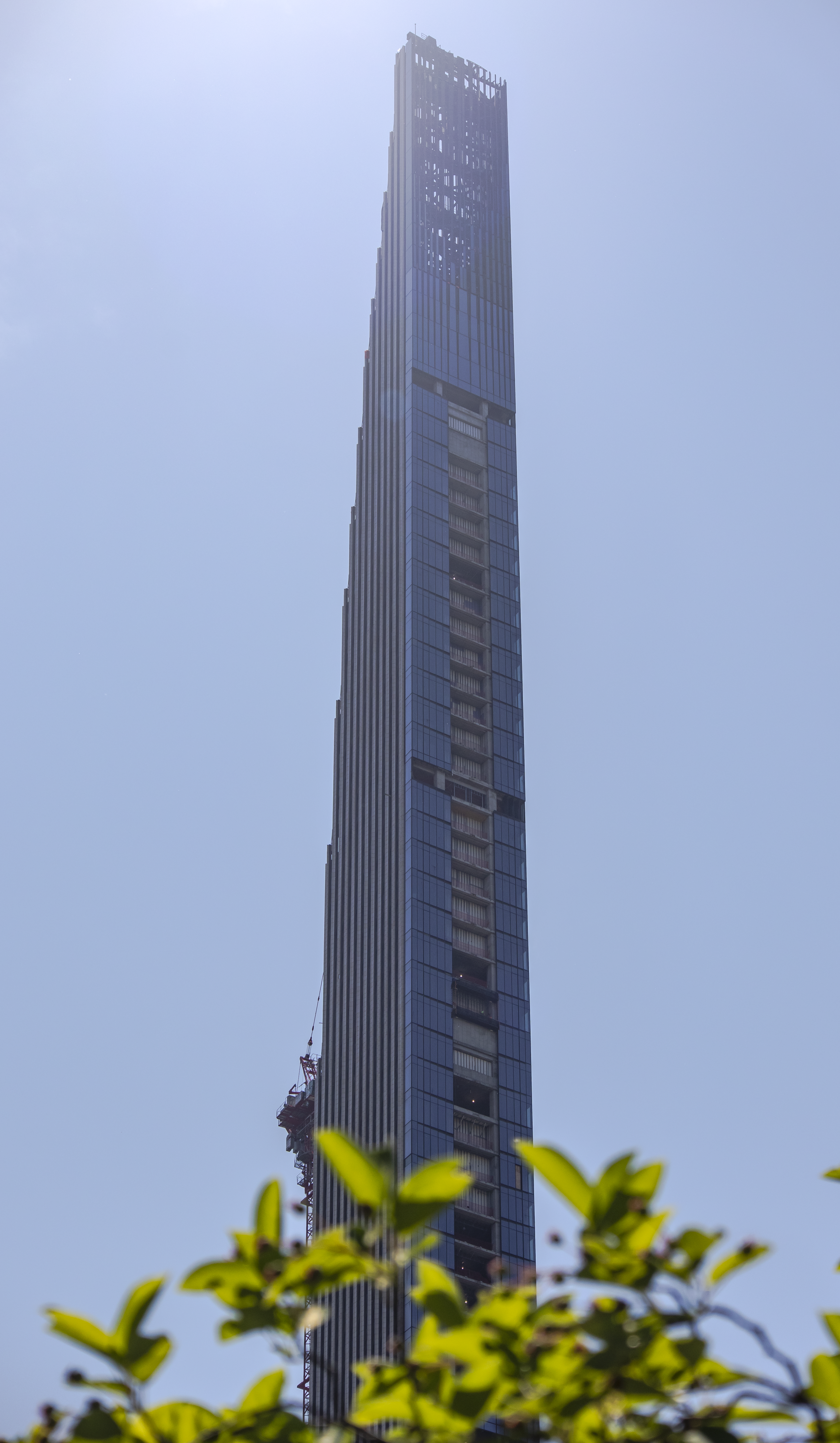
111 West 57th Street
Steinway Tower: the world's most slender skyscraper with a 1:24 ratio.
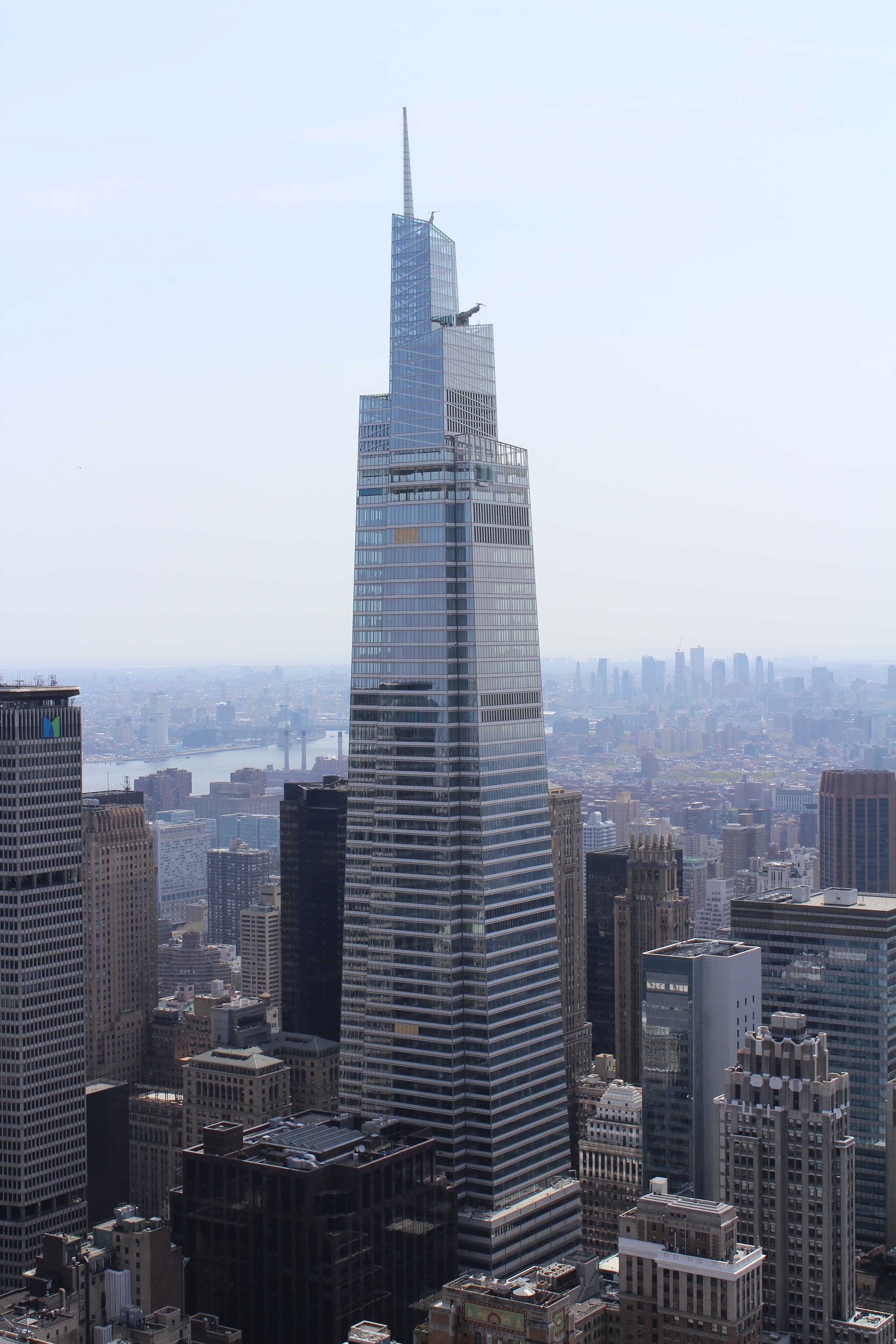
One Vanderbilt
Grand Central's modern companion, piercing Midtown Manhattan with glass and steel.

270 Park Avenue
JPMorgan Chase headquarters: an all-electric supertall designed by Foster + Partners.
.05g0w5a60hw0k.jpg&w=2560&q=75)
432 Park Avenue
Rafael Viñoly's grid supertall that helped define 57th Street.
_(30_Hudson_Yards).16lmneo-dz4o4.jpg&w=2560&q=75)
30 Hudson Yards
Anchor of Hudson Yards featuring the highest outdoor skydeck in the West.
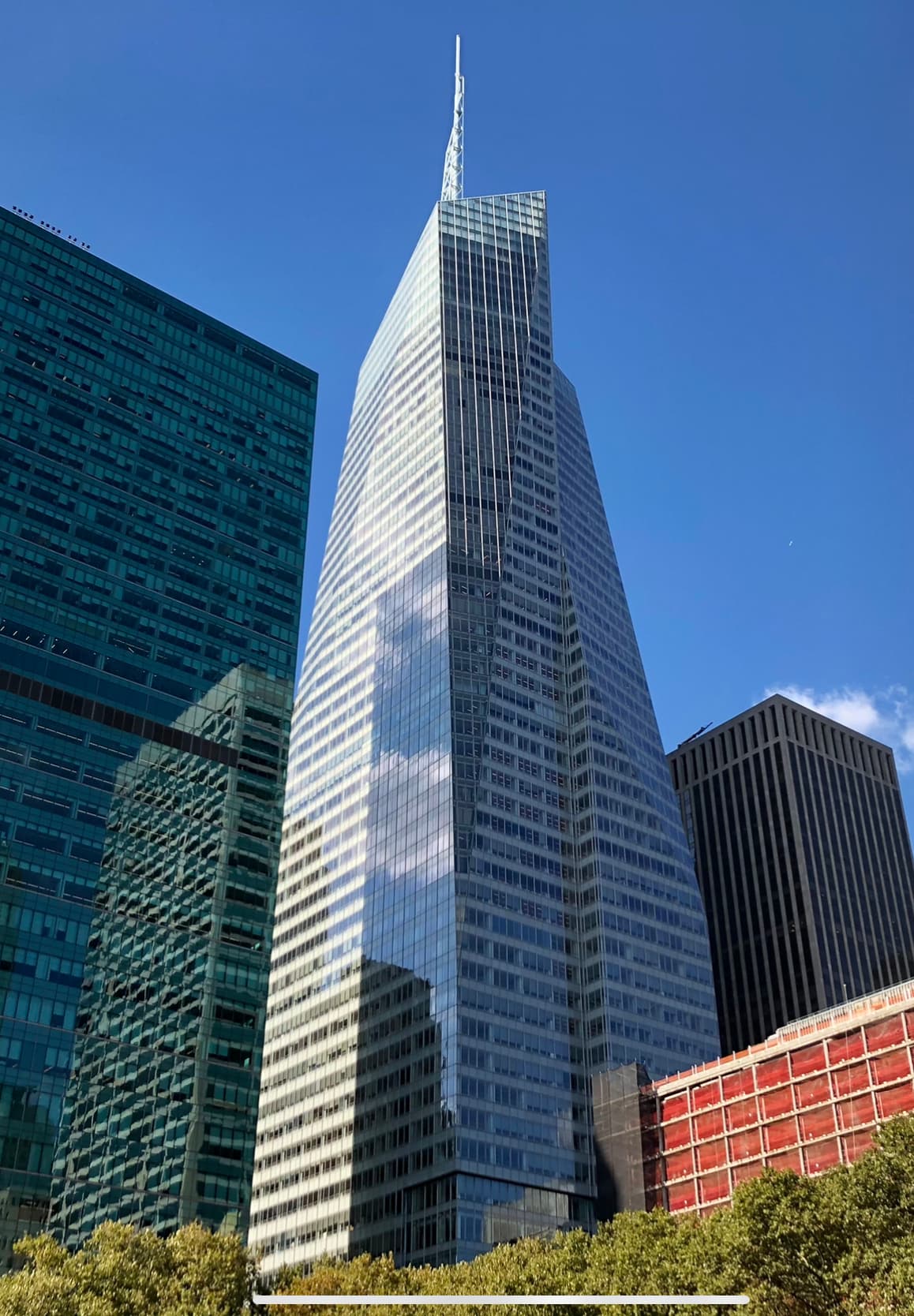
Bank of America Tower
One Bryant Park: a model of sustainable high-performance architecture.

Trump Tower Chicago
Adrian Smith's curving stainless steel spire along the Chicago River.
Architectural Data & Visualizations
Engineering, Cities & Ambition
The United States is home to over 800 towers exceeding 150m (492ft). The leaderboard below compares America's top skyline capitals.
New York City, NY
Chicago, IL
Miami, FL
Houston, TX
Los Angeles, CA
San Francisco, CA
Seattle, WA
Interactive Architectural Scale Comparison
Proportional Height Scale Visualizer
Select towers to compare:
1776 FT
541 m
One World Trade
2013 · New York

1450 FT
442 m
Willis Tower
1973 · Chicago
1250 FT
381 m
Empire State
1931 · New York
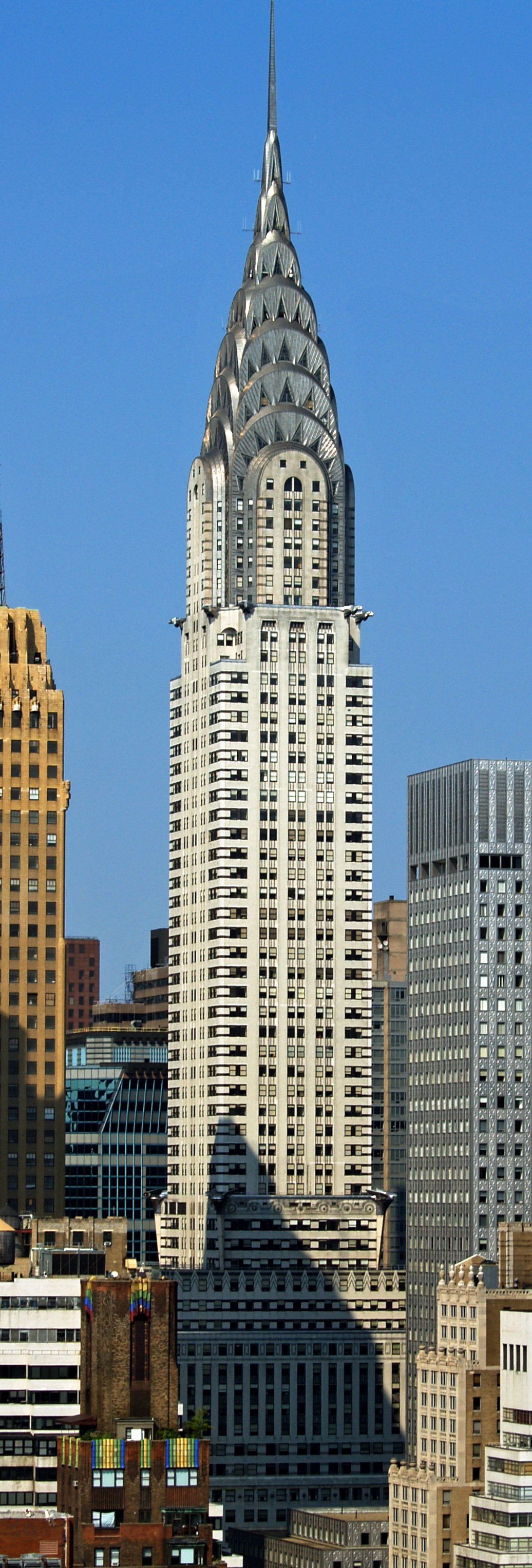
1046 FT
319 m
Chrysler Building
1930 · New York
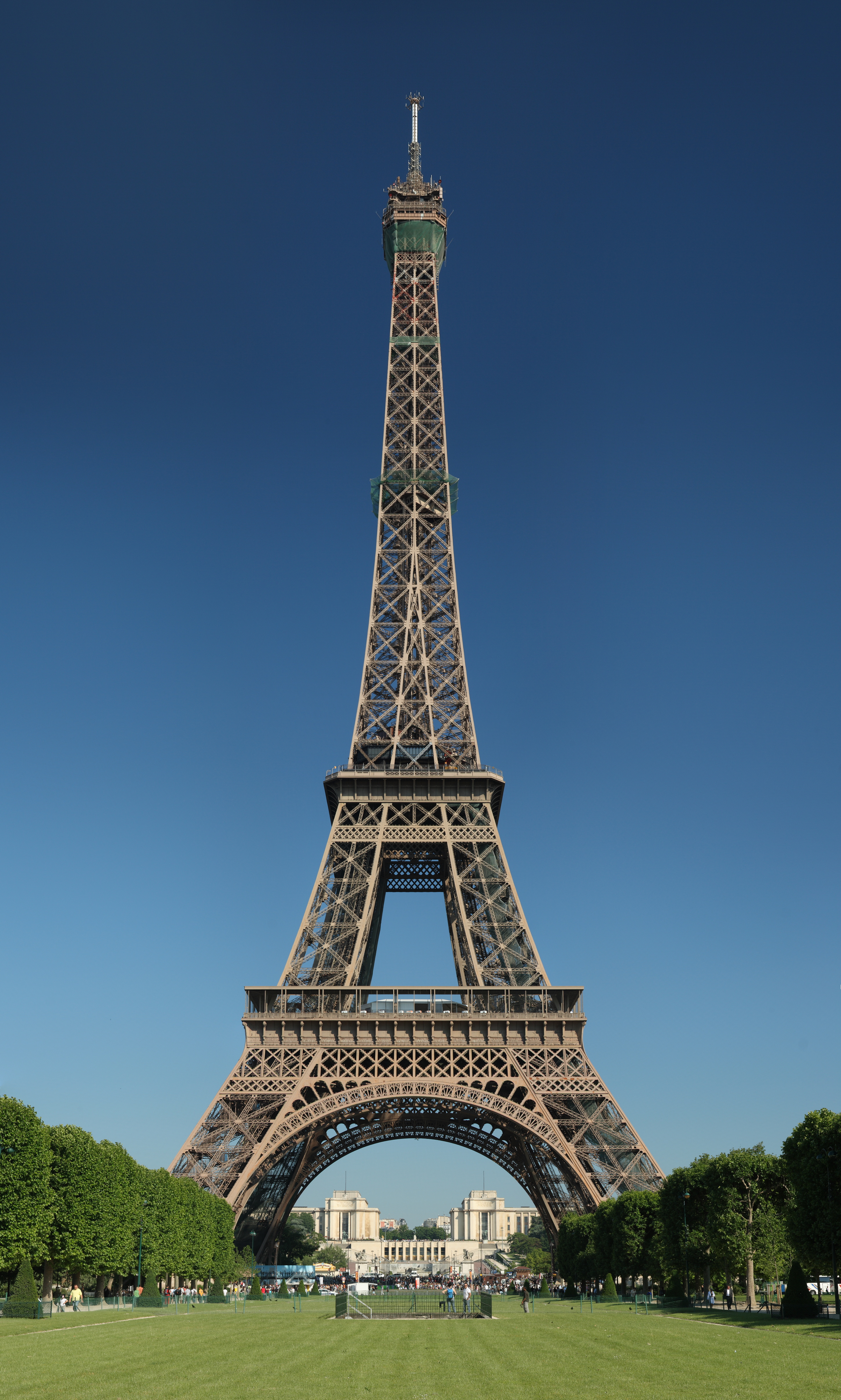
1083 FT
330 m
Eiffel Tower (Ref)
1889 · Paris
“A tall building must be every inch a proud and soaring thing, rising in sheer exultation from bottom to top without a single dissenting line.”
: Louis Sullivan, 1896
Three inventions, one building
The skyscraper was not one idea but three that arrived together. Take any one away and the tall building is impossible again.
The steel frame
Before 1885 a building carried its own weight through ever-thicker walls: at ten storeys the ground floor would have been almost solid stone. The steel frame moved the load onto an internal skeleton and turned the walls into a mere skin. Height stopped being a question of mass.
The safety elevator
Elisha Otis solved not the elevator but the fear of it: a mechanism that locks the car in place if the cable snaps. Without it nobody would willingly ride to the fortieth floor. The skyscraper is as much Otis's invention as any architect's.
The curtain wall
Once the frame carried the weight, the outer wall could be anything: including floor-to-ceiling glass hung like a curtain across the building's face. The Seagram Building made that a style, and the glass corporate tower became the default image of American power.

Chicago: where it began, 1885
Imagery: stored locally in /IMAGES/Architecture.
← All art and architecture topics