PARIS TO NEW YORK · 1930–1990
Modern
& Pop.
The century American art led the world: from Regionalism to Abstract Expressionism to Pop Art.
For centuries the capital of art was Paris. Then, after 1945, it moved to New York.
World War II drove a generation of European artists to New York and left the city rich, confident, and without a rival. For the first time, America no longer imported the avant-garde, it made it. In forty years it ran through three revolutions: the American Scene, Abstract Expressionism, and Pop Art.
THE PRELUDE · THE AMERICAN SCENE
Before abstraction
Before New York led the world, American art looked inward. Regionalism and Realism painted the rural heartland and the lonely city, insisting that America deserved its own myths.
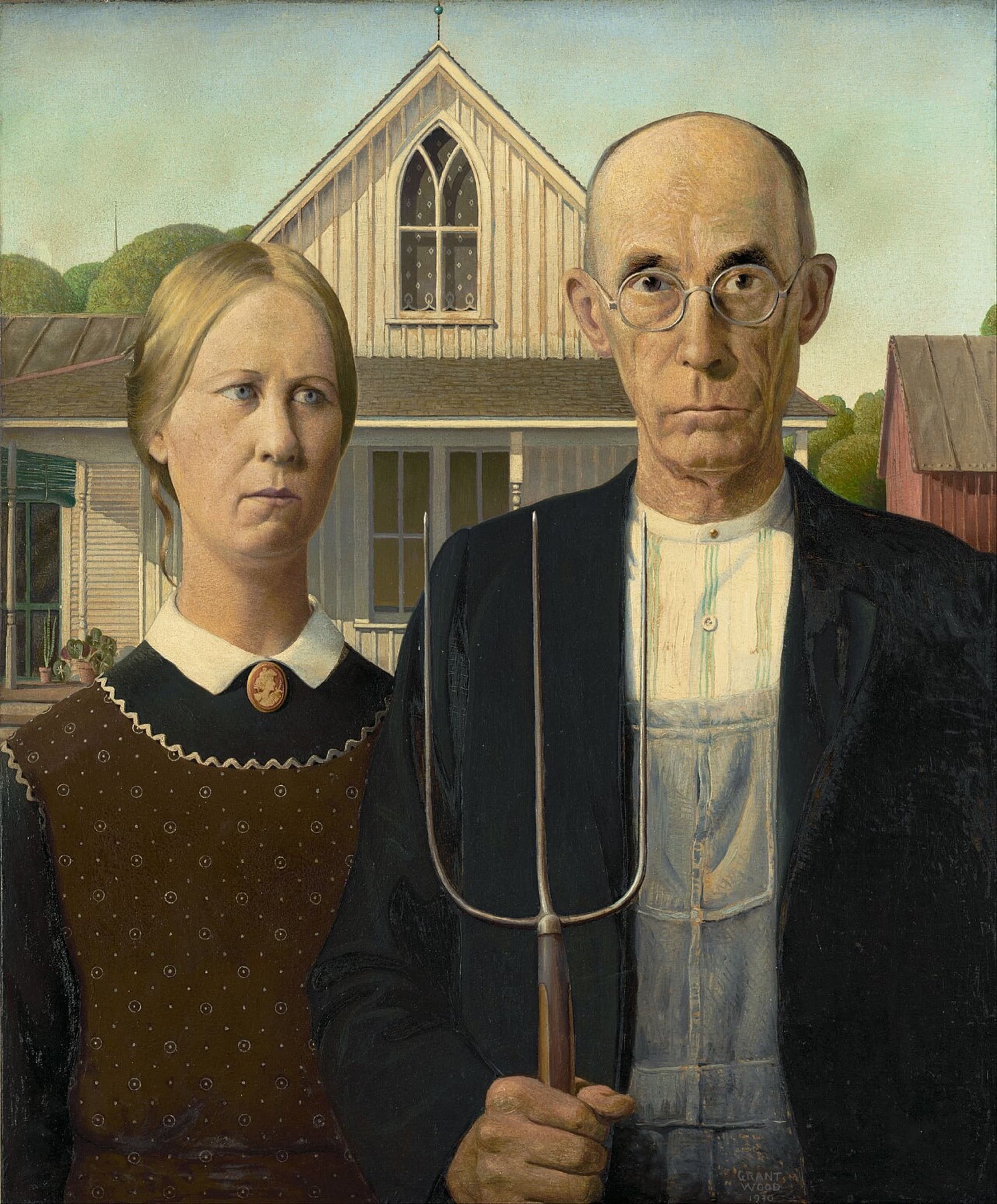
A stern farmer and his daughter before a plain Iowa house, the most parodied painting in America. Regionalism answered European abstraction by insisting the true American subject was the rural heartland.
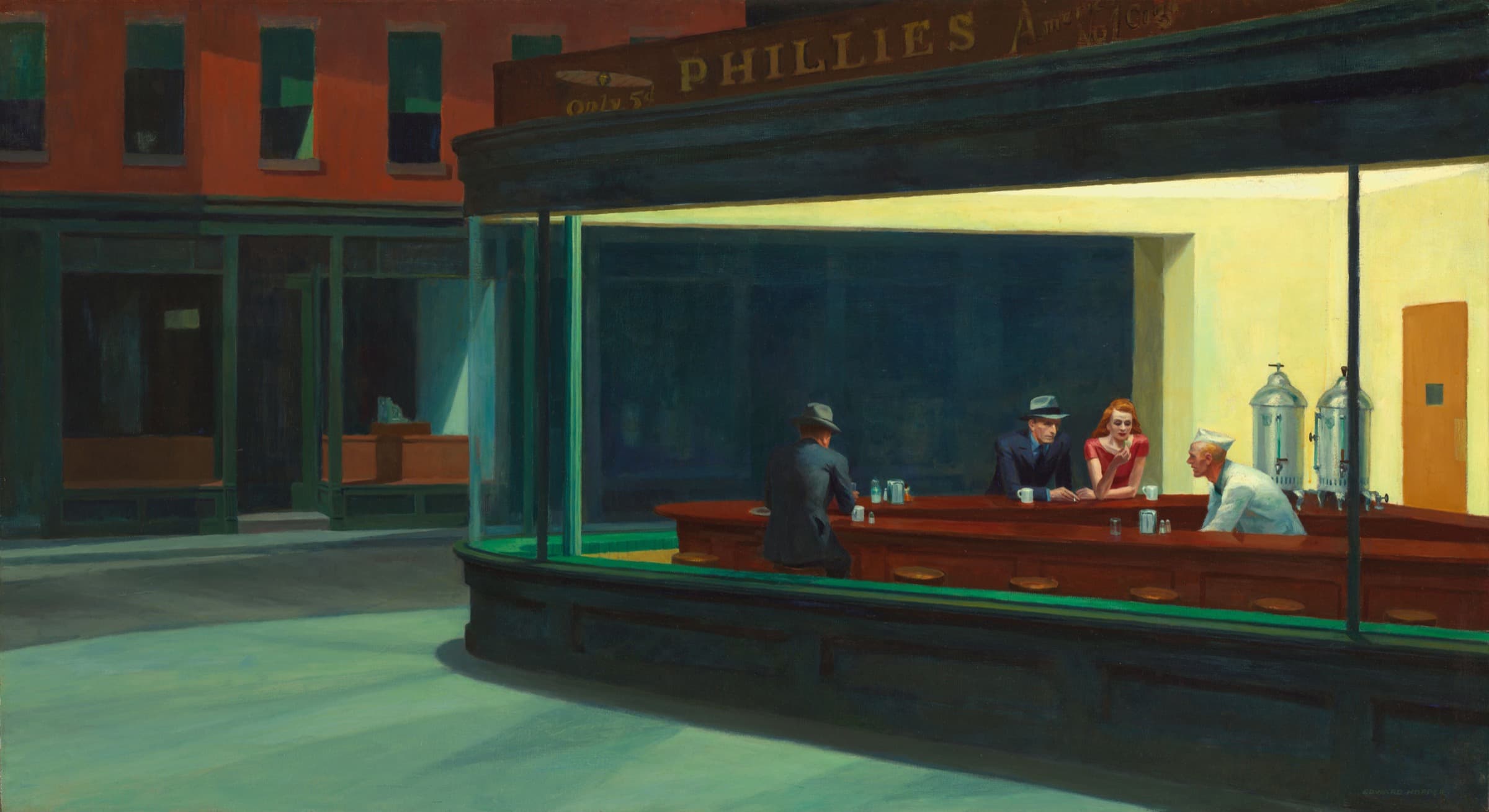
Four figures in an all-night diner, sealed behind glass in the empty city. Hopper made American realism a study of solitude, light and silence, the loneliness inside a crowd.
ABSTRACT EXPRESSIONISM · THE NEW YORK SCHOOL
The first movement to lead the world
In the late 1940s a group of New York painters abandoned subject matter entirely. The canvas became an arena for gesture, color, and pure scale, and for the first time the world looked to America to see what came next in art.
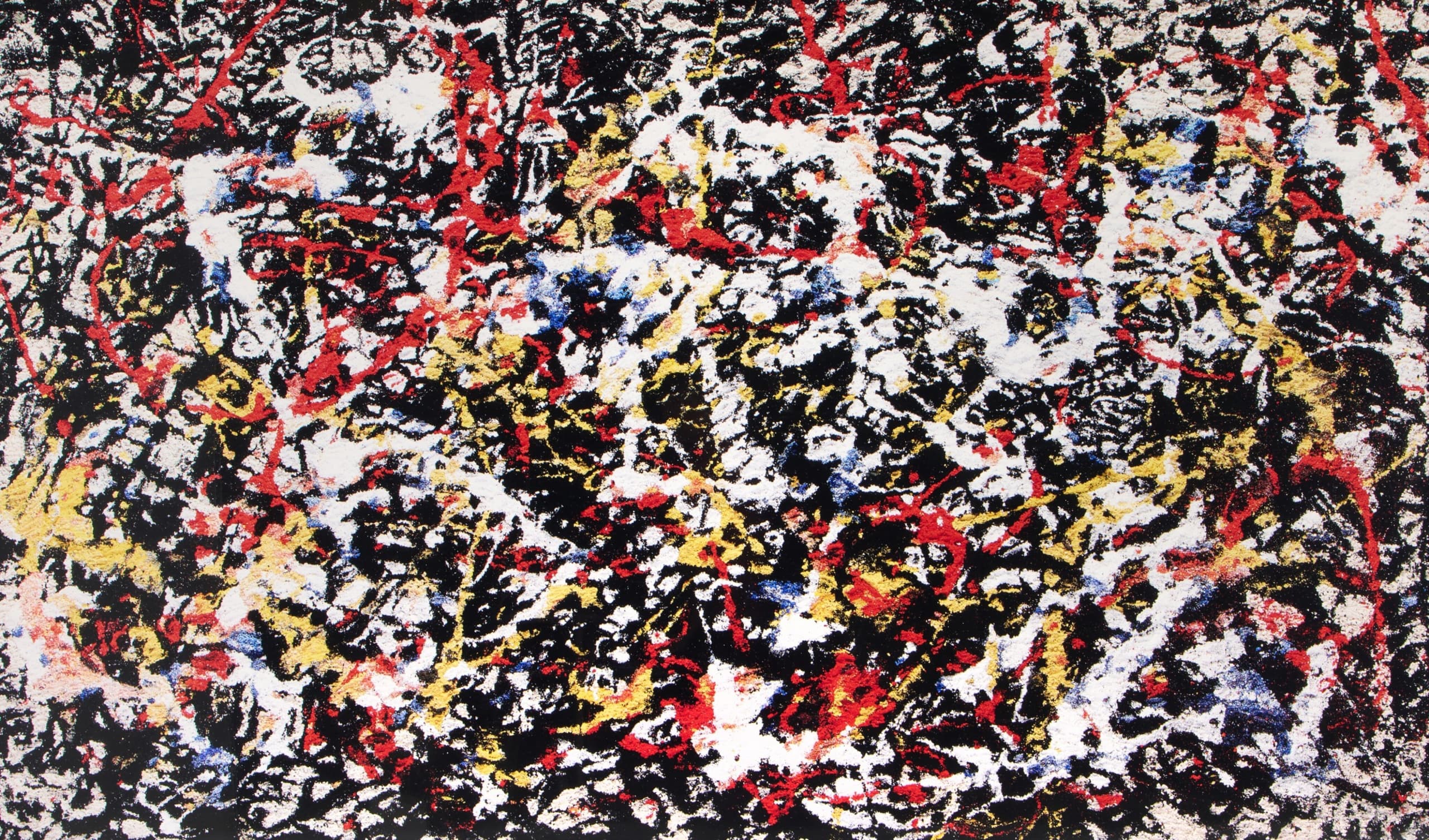
Pollock laid the canvas on the floor and flung paint from above, moving around and inside the work. "Action painting" made the record of the artist's body the subject, and made New York the center of the art world.
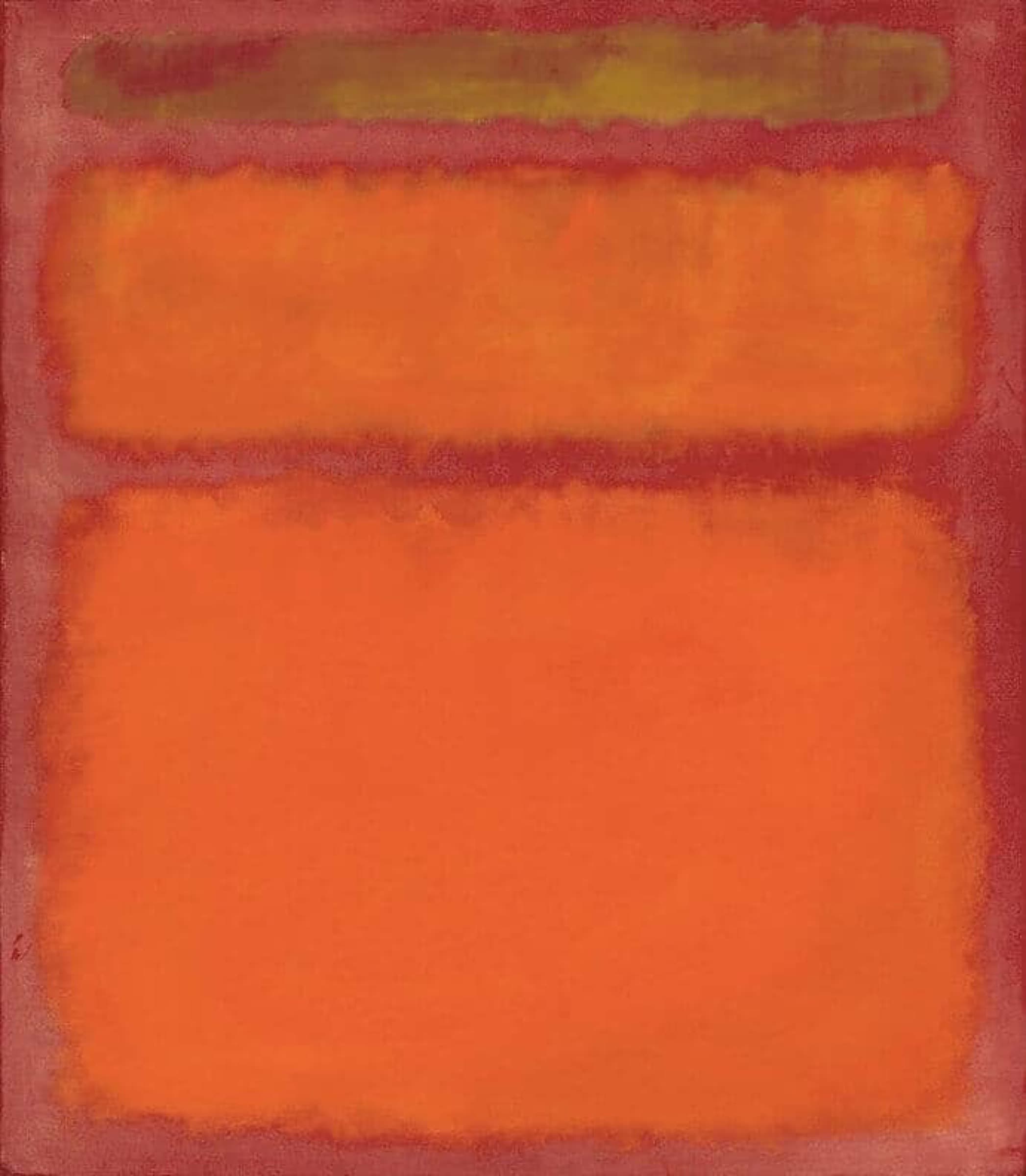
Soft rectangles of pure color that hover and breathe. Rothko wanted them seen up close, filling your vision, a wordless sublime reaching for the same awe the Hudson River painters found in mountains.
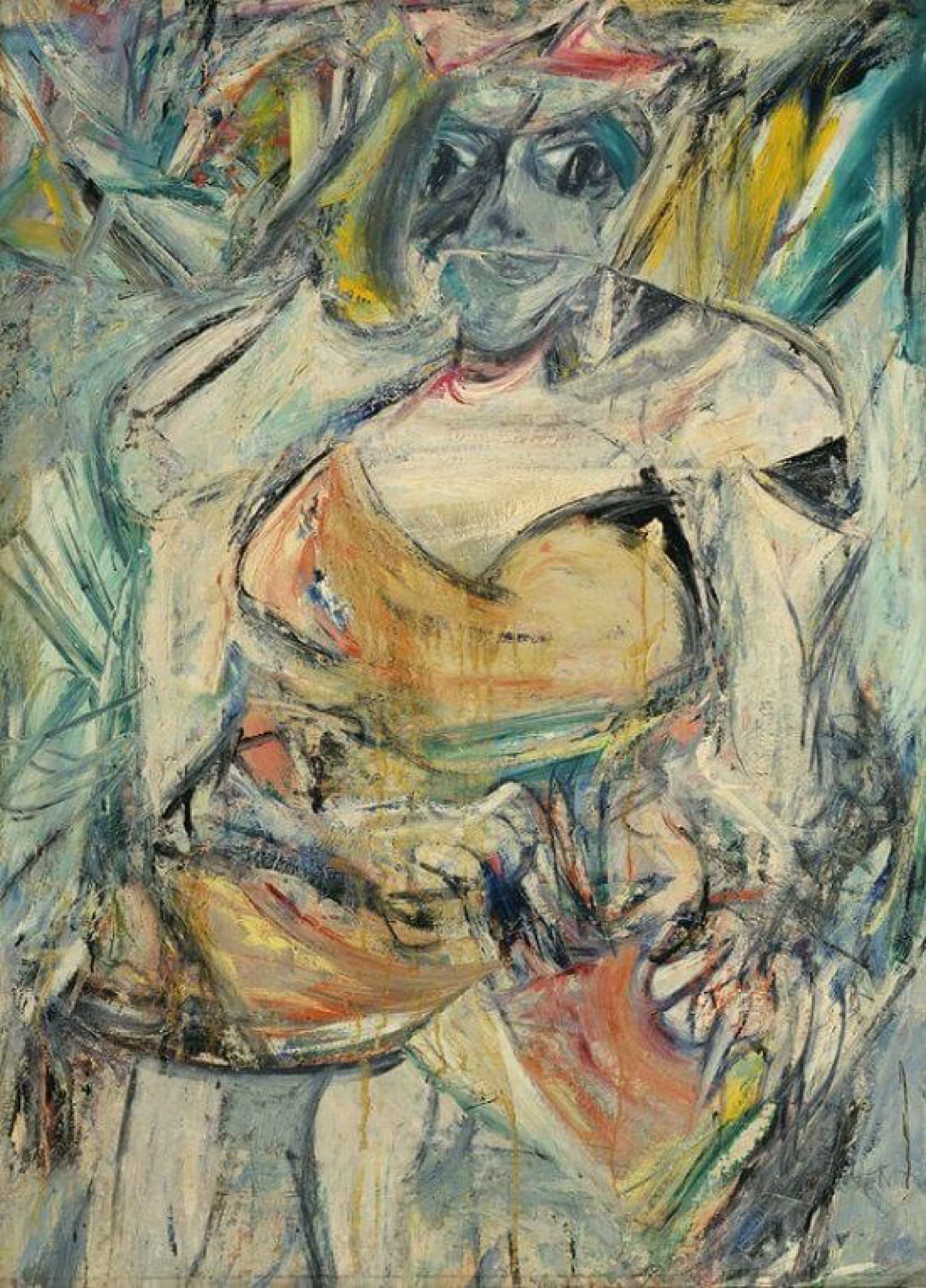
A ferocious, half-abstract figure clawed out of the paint over two years. While others abandoned the figure, de Kooning kept it, wielding the gesture of Abstract Expressionism against the human body itself.
“I don't paint nature. I am nature.”
POP ART
Mass culture enters the museum
If Abstract Expressionism was solemn and inward, Pop Art was bright, cool, and outward. Warhol, Lichtenstein, Johns, and Wesselmann took the soup cans, comic strips, flags, and advertisements, the raw material of American life, and hung them on the gallery wall.
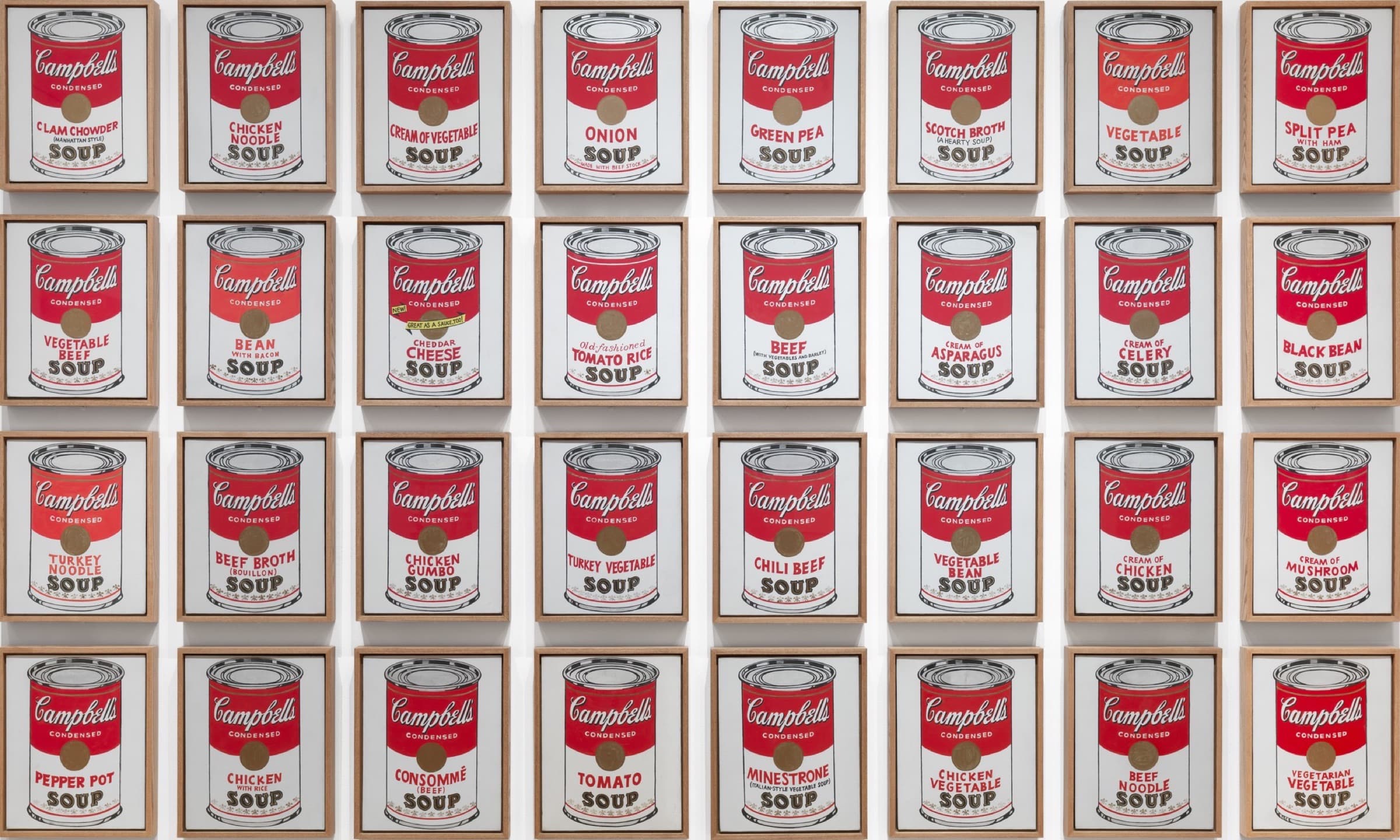
Thirty-two canvases, one per soup variety, hung like grocery shelves. Warhol took the most banal object in the supermarket and made it art, deadpan and mechanical, and the boundary between commerce and culture never recovered.
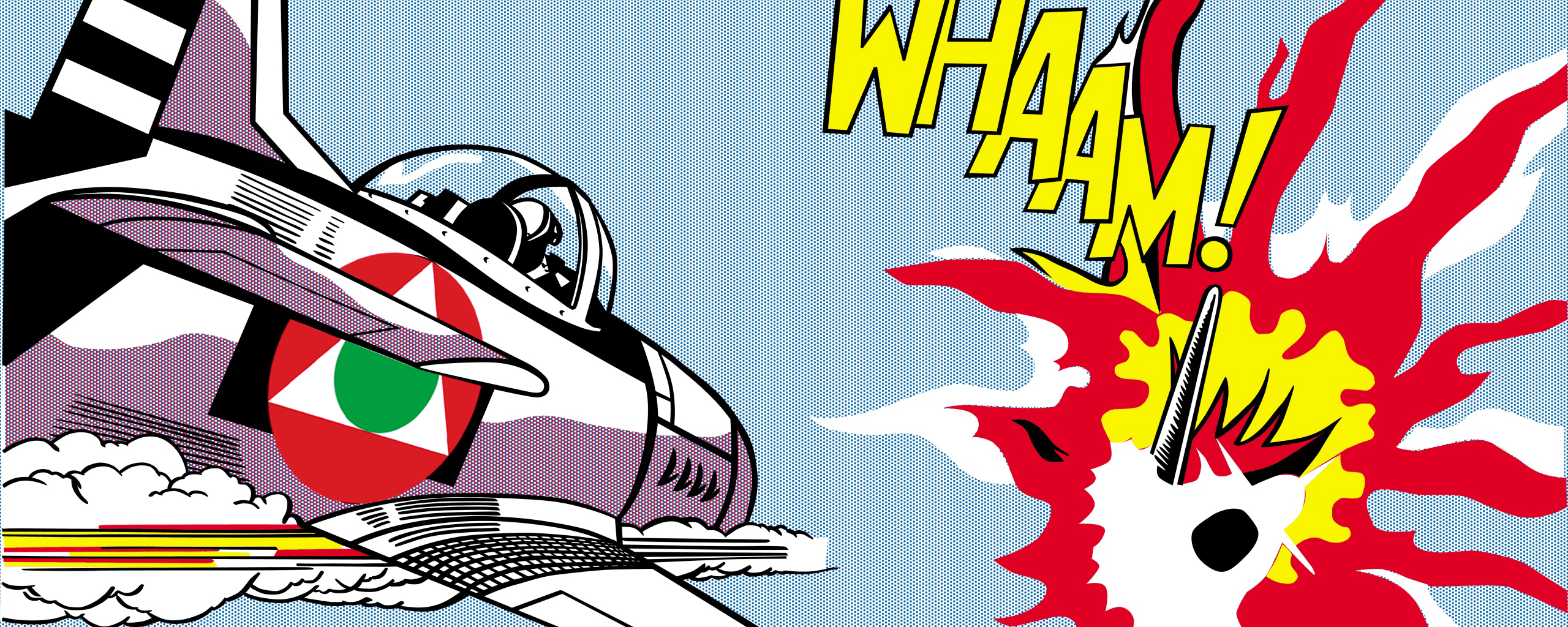
A comic-book panel blown up to mural scale, complete with hand-painted Ben-Day dots and a sound-effect caption. Lichtenstein borrowed the lowest visual language in America and framed it as high art.
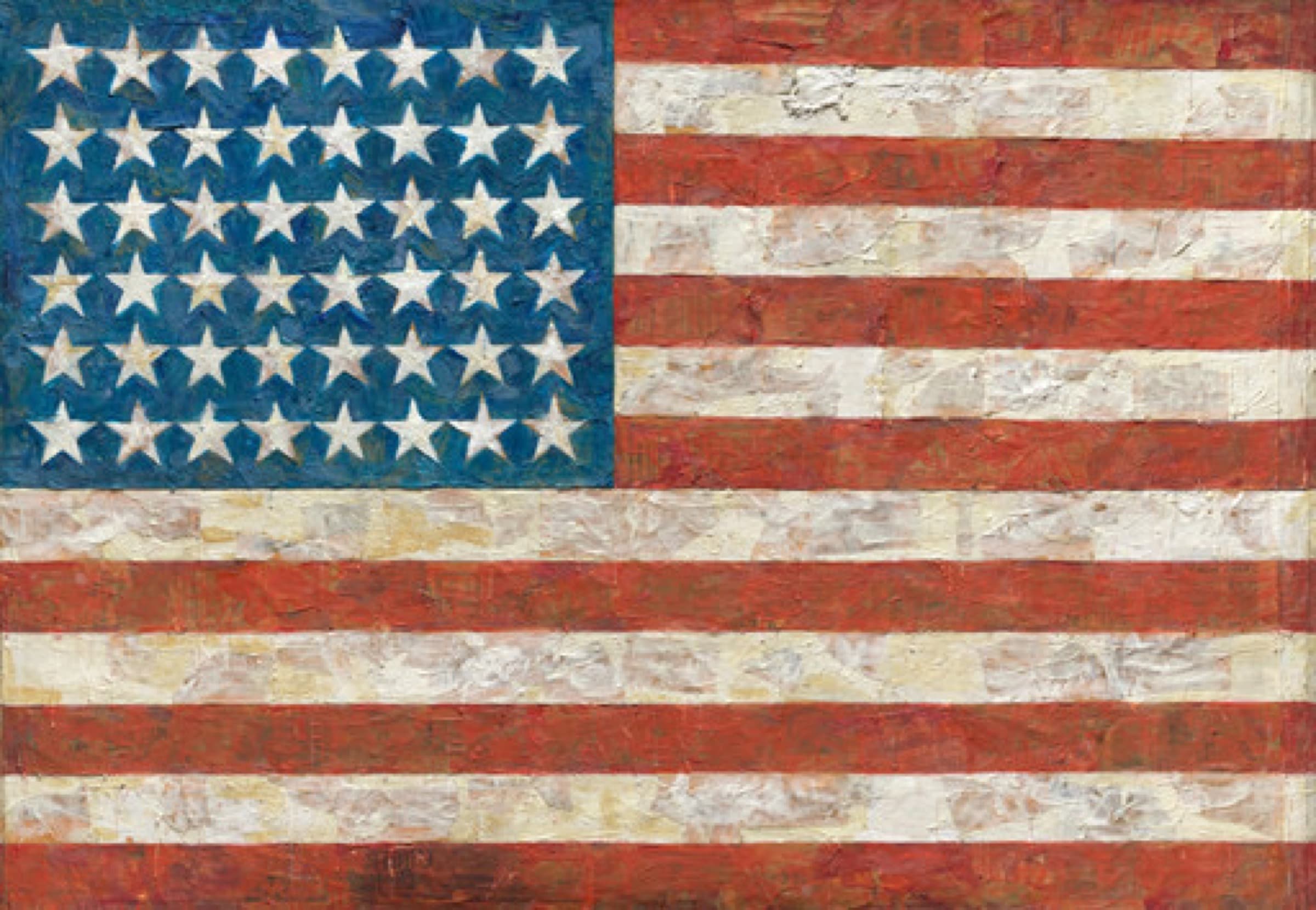
The American flag, painted in thick encaustic over newspaper, exactly life-size. Is it a flag or a painting of a flag? Johns chose "things the mind already knows" and turned the most loaded symbol into a plain object.
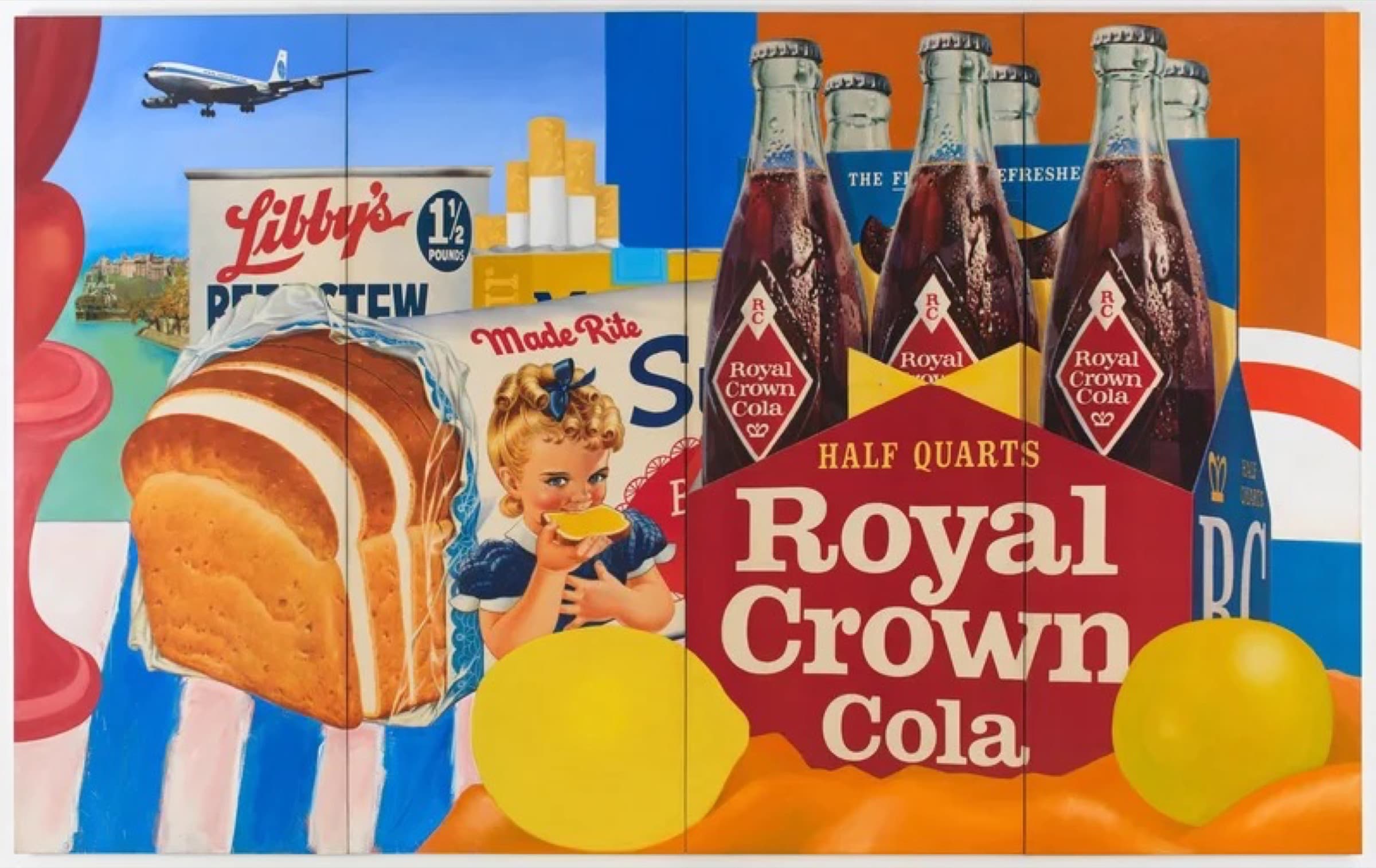
A billboard-scale collage of brand-name products, glossy and loud. Wesselmann rebuilt the old still life out of advertising, the fruit bowl replaced by the logos of the American kitchen.
1980s
What came next: the street
In the 1980s the energy came down from the gallery into the street. Jean-Michel Basquiat's neo-expressionism and Keith Haring's public line took American art in a new direction, raw, urban, and young, proof that the avant-garde America had built kept reinventing itself.
The Ask America Oracle
Ask the AI Oracle about Jackson Pollock's action painting, why the art world moved from Paris to New York, Warhol's Factory, or Jasper Johns and the American flag.