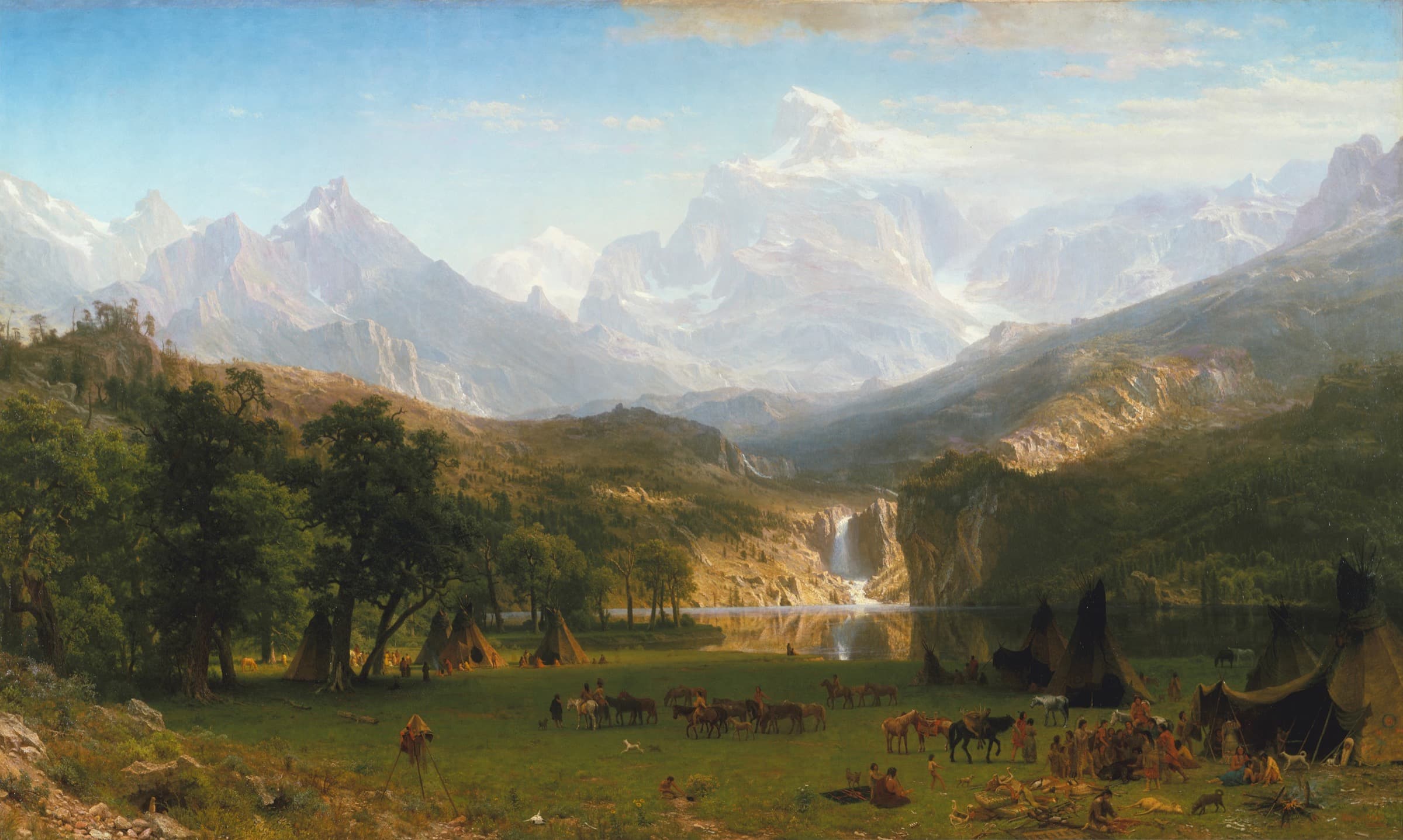
THE FIRST AMERICAN SCHOOL · 1825–1875
The Hudson River Painters
America's first native art movement, which cast the wilderness as a new Eden and a national scripture.
Before the Hudson River School, America borrowed Europe's forms.
Then, around 1825, a generation of painters decided that the American landscape itself, wild, vast, and untouched, was the subject worthy of a new nation. They turned mountains and forests into cathedrals of light and made nature the carrier of national identity. For half a century, American art meant, before anything else, the American land itself.
THE FOUNDER
Thomas Cole, the moralist
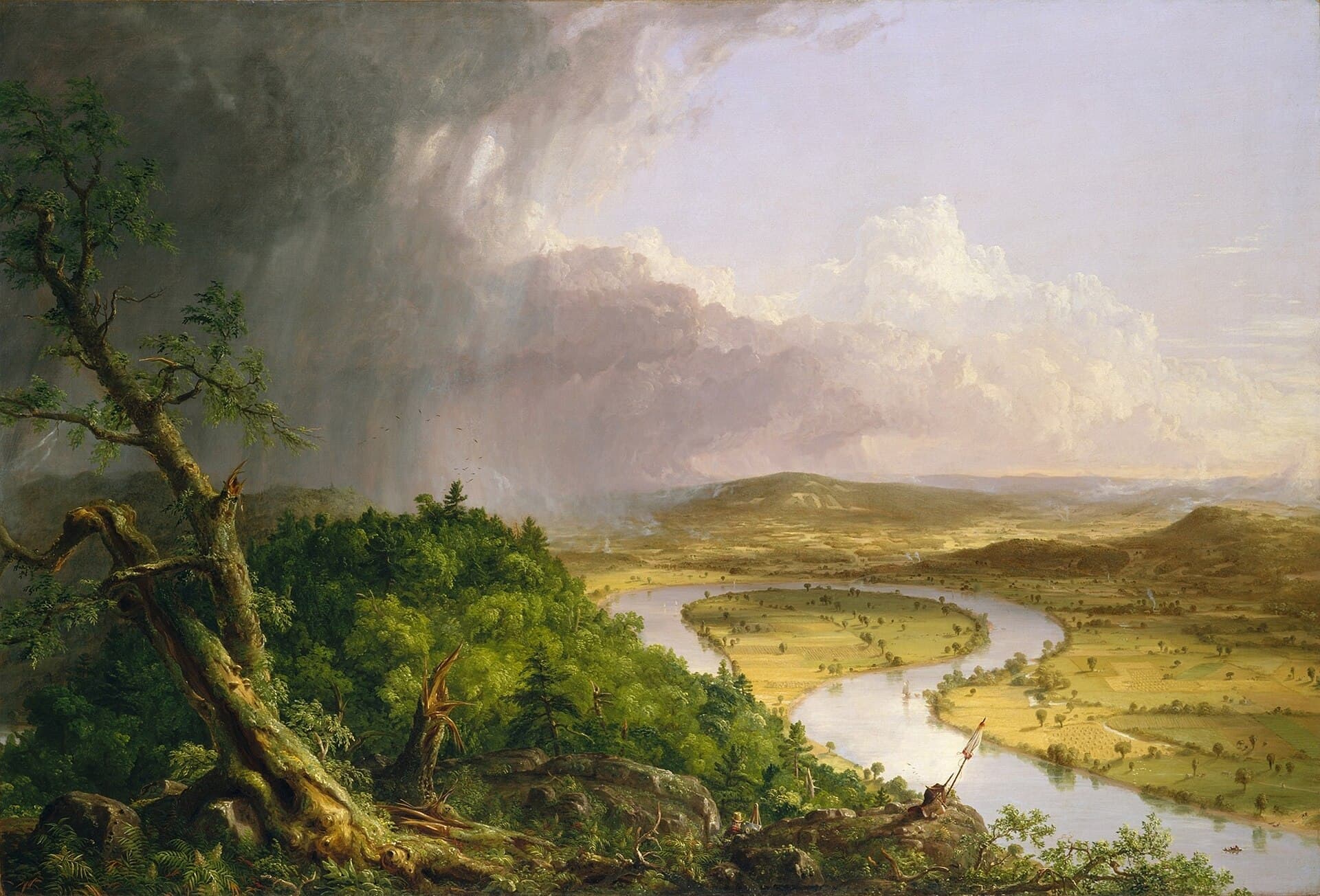
An English immigrant who traveled up the Hudson in 1825 and found a calling. Cole founded the movement and insisted that a landscape should say something, about providence, about ambition, about the fate of empires. His founding canvas, The Oxbow, sets wild forest on one side and cultivated field on the other, with the tiny artist between them.
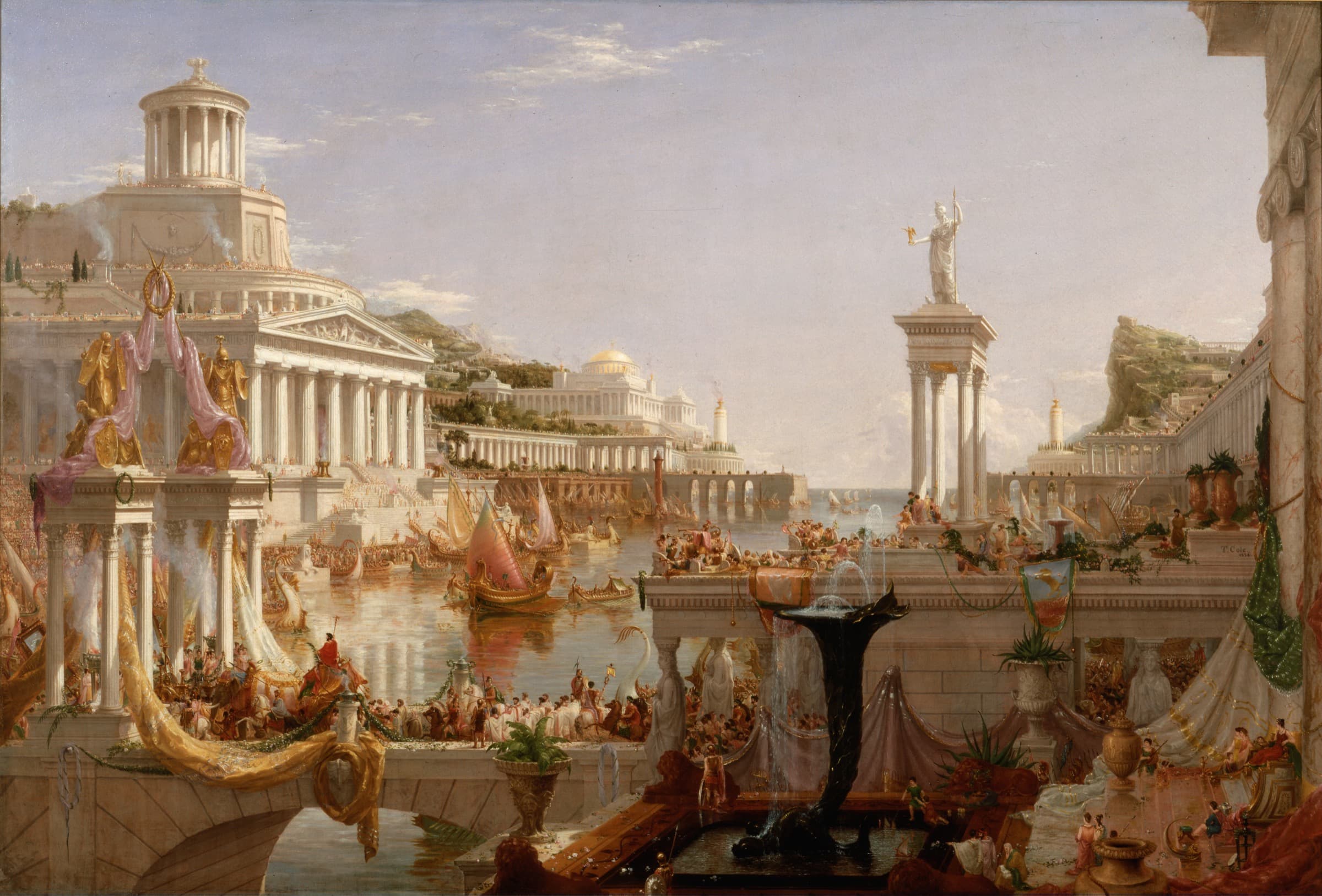
The centerpiece of Cole's five-part allegory The Course of Empire, tracing a civilization from wilderness to imperial splendor to ruin. Cole made his landscapes carry moral weight, a warning to a young republic tempted by wealth and expansion.
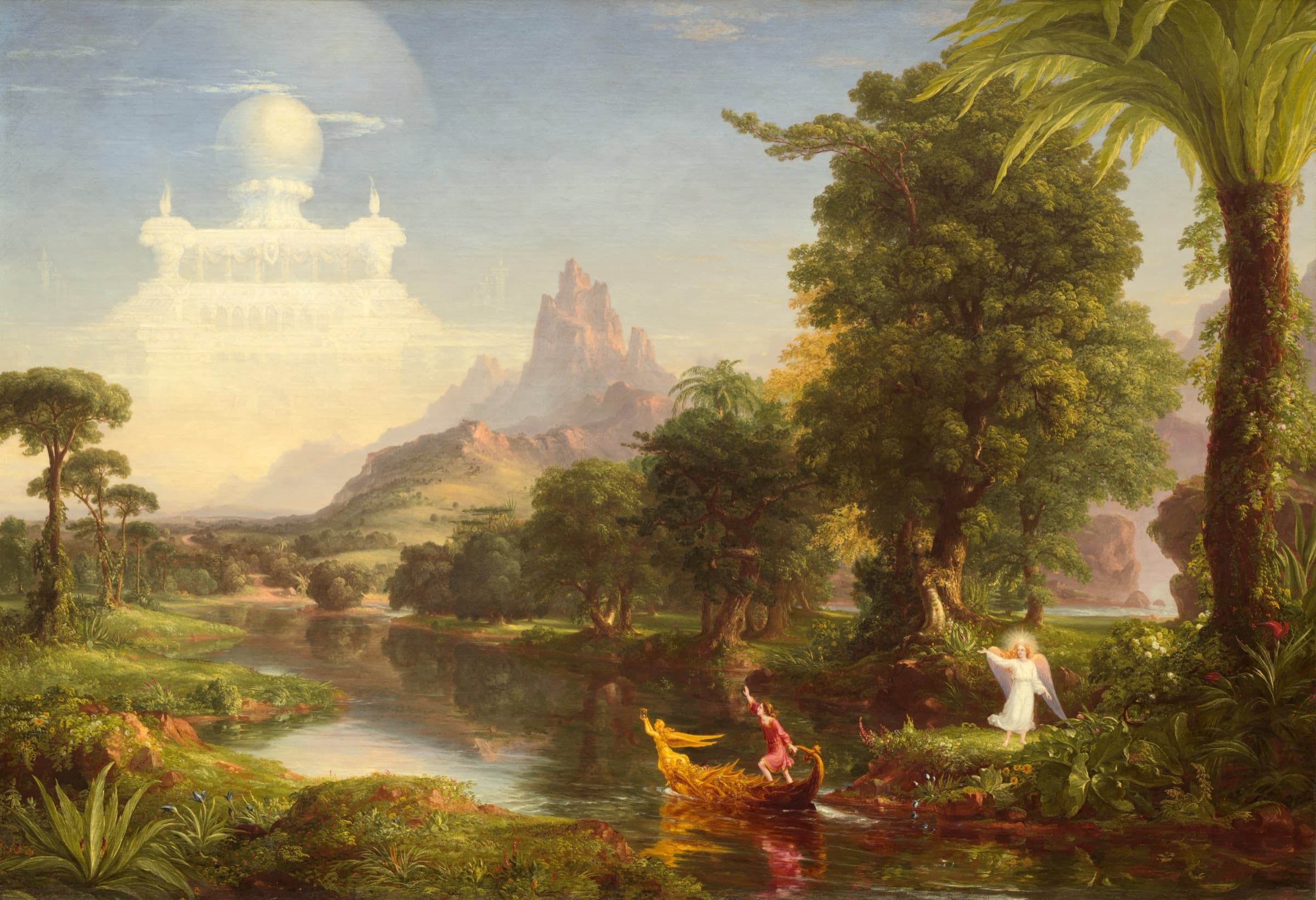
From another allegorical cycle: a figure sails the river of life toward a shining castle in the clouds. Cole's landscapes were sermons in paint, fusing the American scene with Christian and classical meaning.
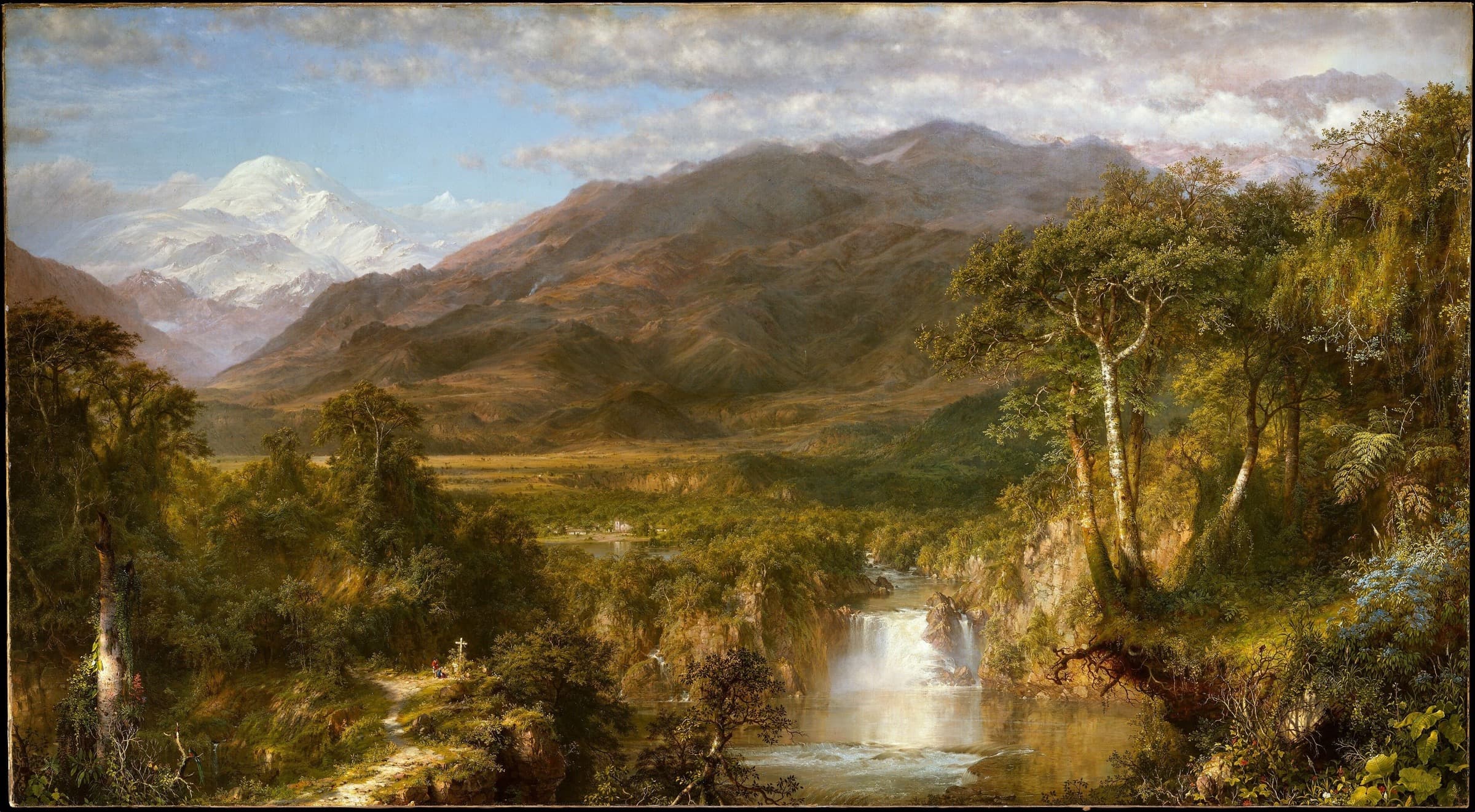
The Heart of the Andes, 1859: unveiled in a darkened gallery with gas jets and potted plants, studied by thousands through opera glasses.
THE MANIFESTO
Kindred Spirits
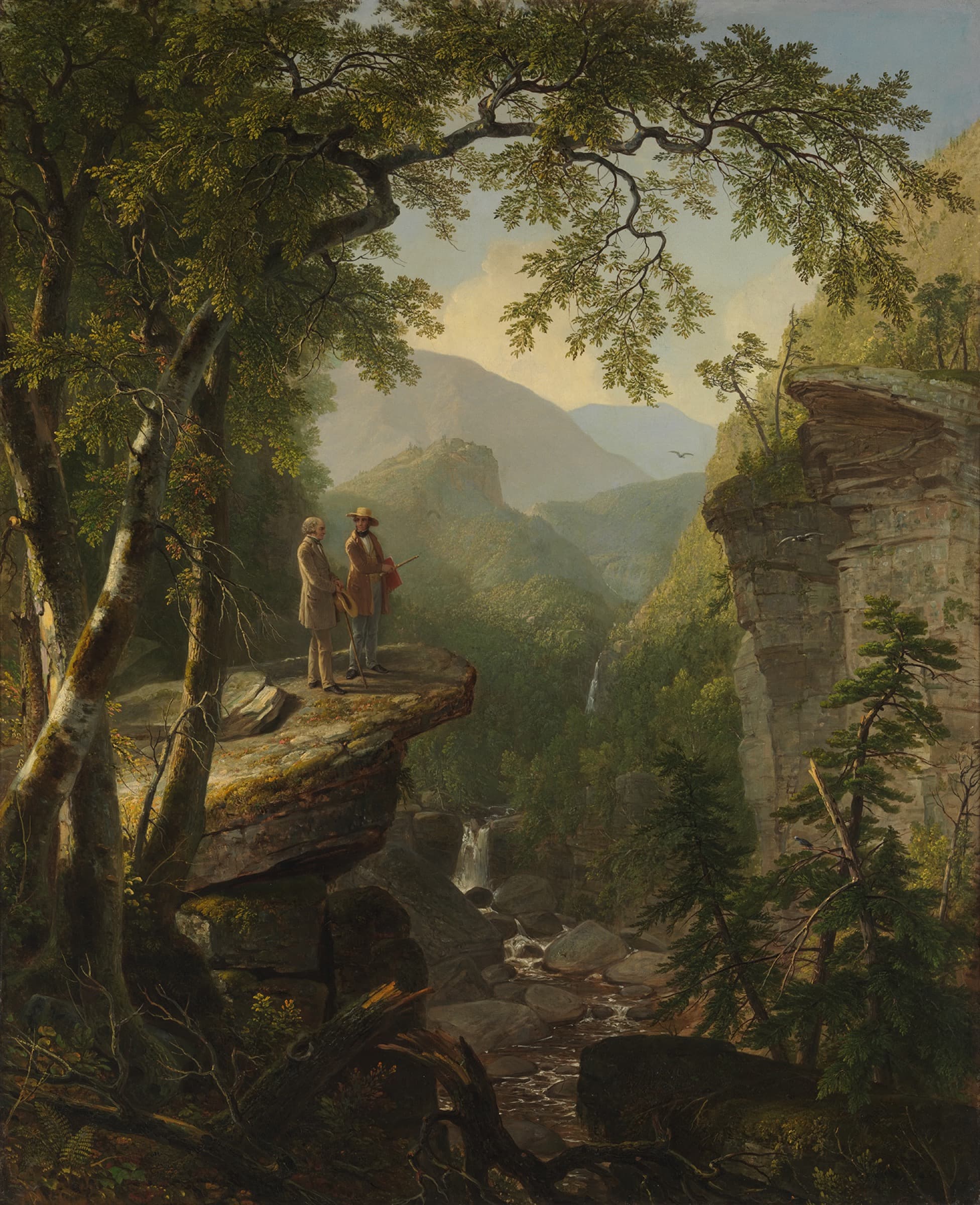
When Cole died in 1848, Asher B. Durand painted him standing on a Catskill ledge beside the poet William Cullen Bryant. Kindred Spirits became the movement's manifesto: the painter and the poet, contemplating nature together as the source of truth. The title is borrowed from Keats, and the picture was a gift to Bryant after his eulogy for Cole.
THE SUPERSTAR
Frederic Church and the blockbuster painting
Cole's pupil took the movement to its peak. Church painted enormous panoramas and exhibited them as ticketed events, single canvases that crowds paid to study through opera glasses, in a darkened gallery, framed like windows onto another world.
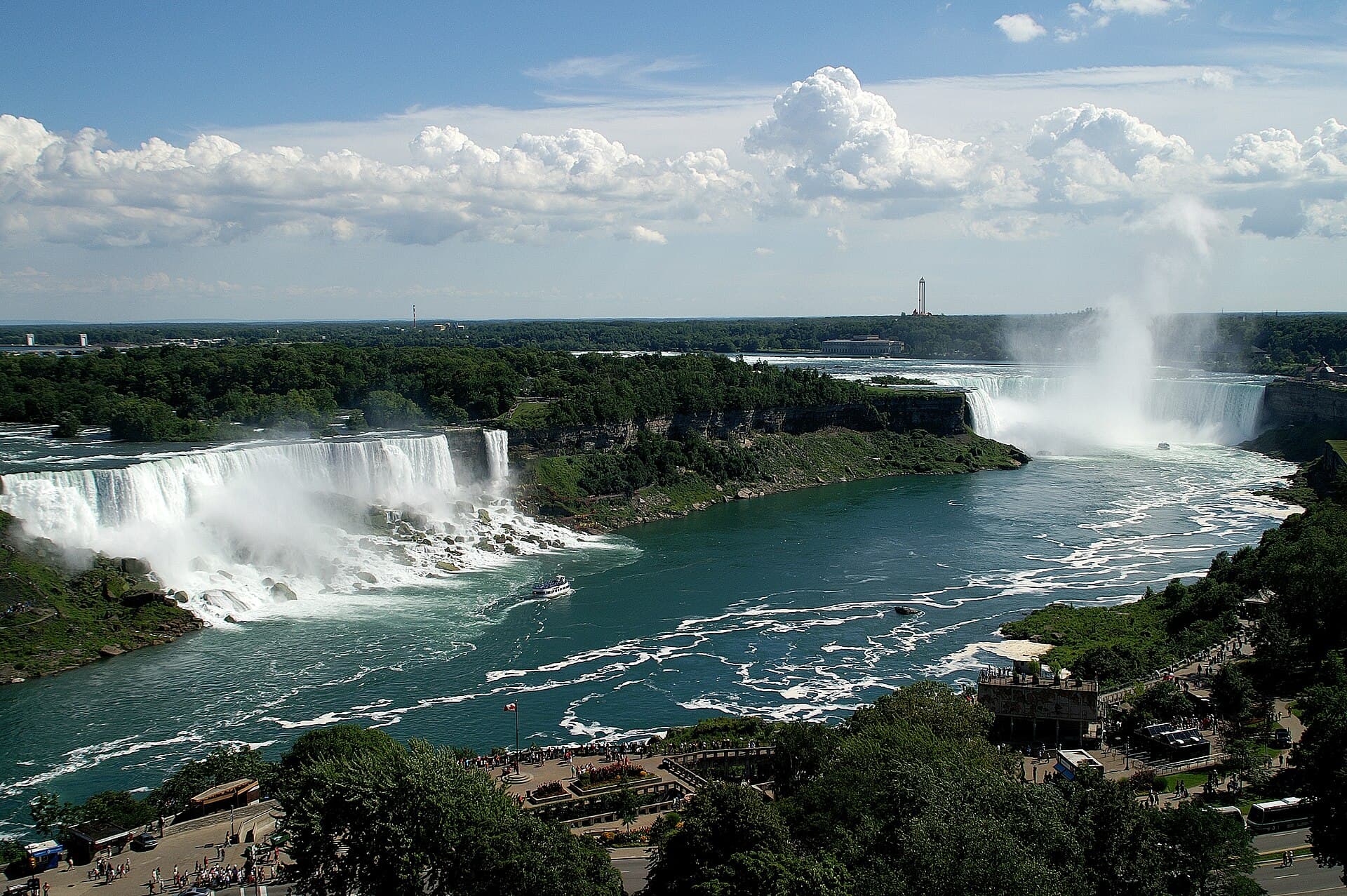
Church, Cole's only pupil, became the most famous painter in America. His Niagara set the viewer on the very brink of the falls with no shoreline for safety, and toured as a ticketed attraction: a single painting people paid to see.
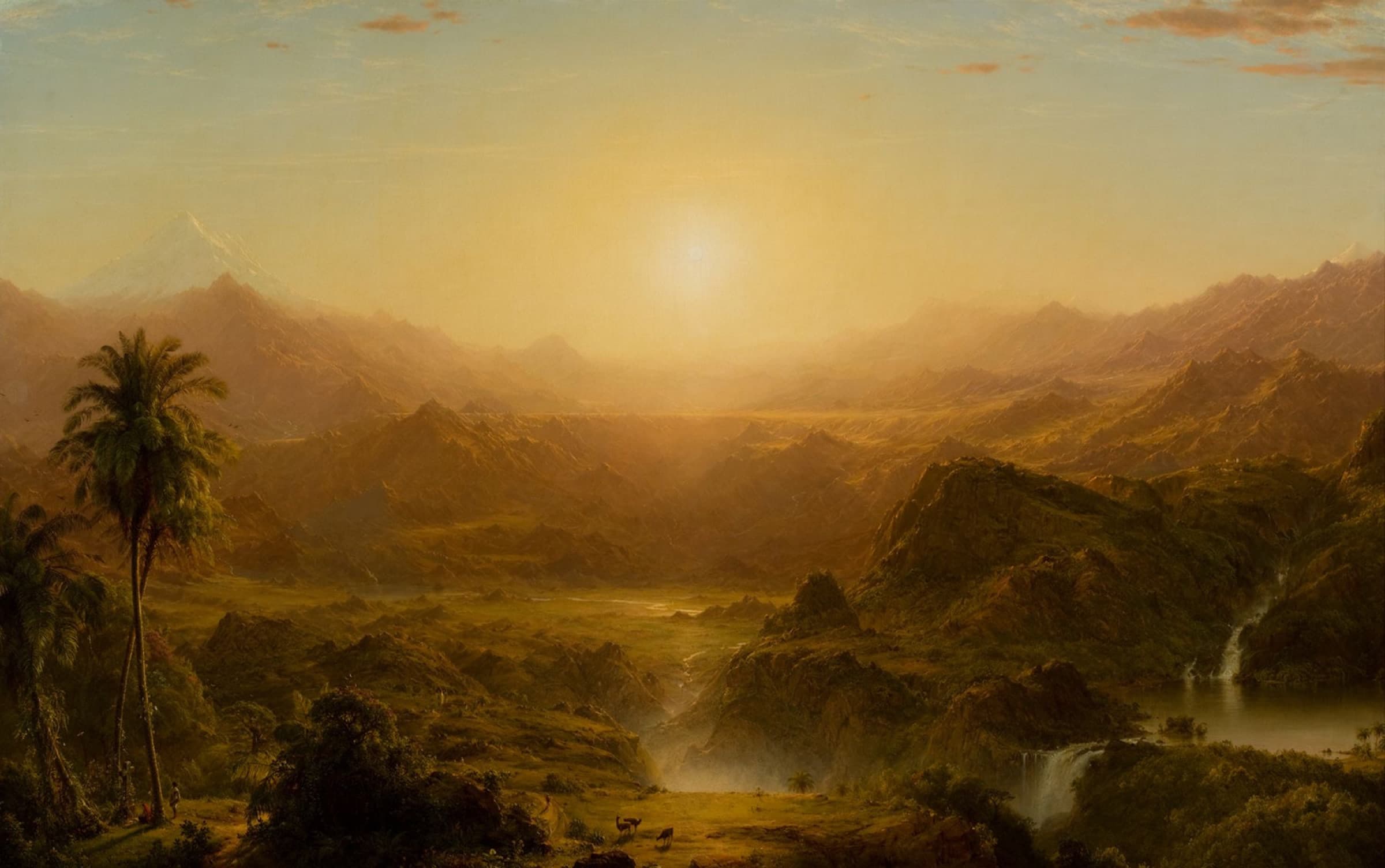
Church followed the naturalist Alexander von Humboldt to the equator, painting the Andes with a botanist's precision and a believer's awe. Light itself is the subject, pouring through toward a radiant, hazed horizon.
LUMINISM
The silent light
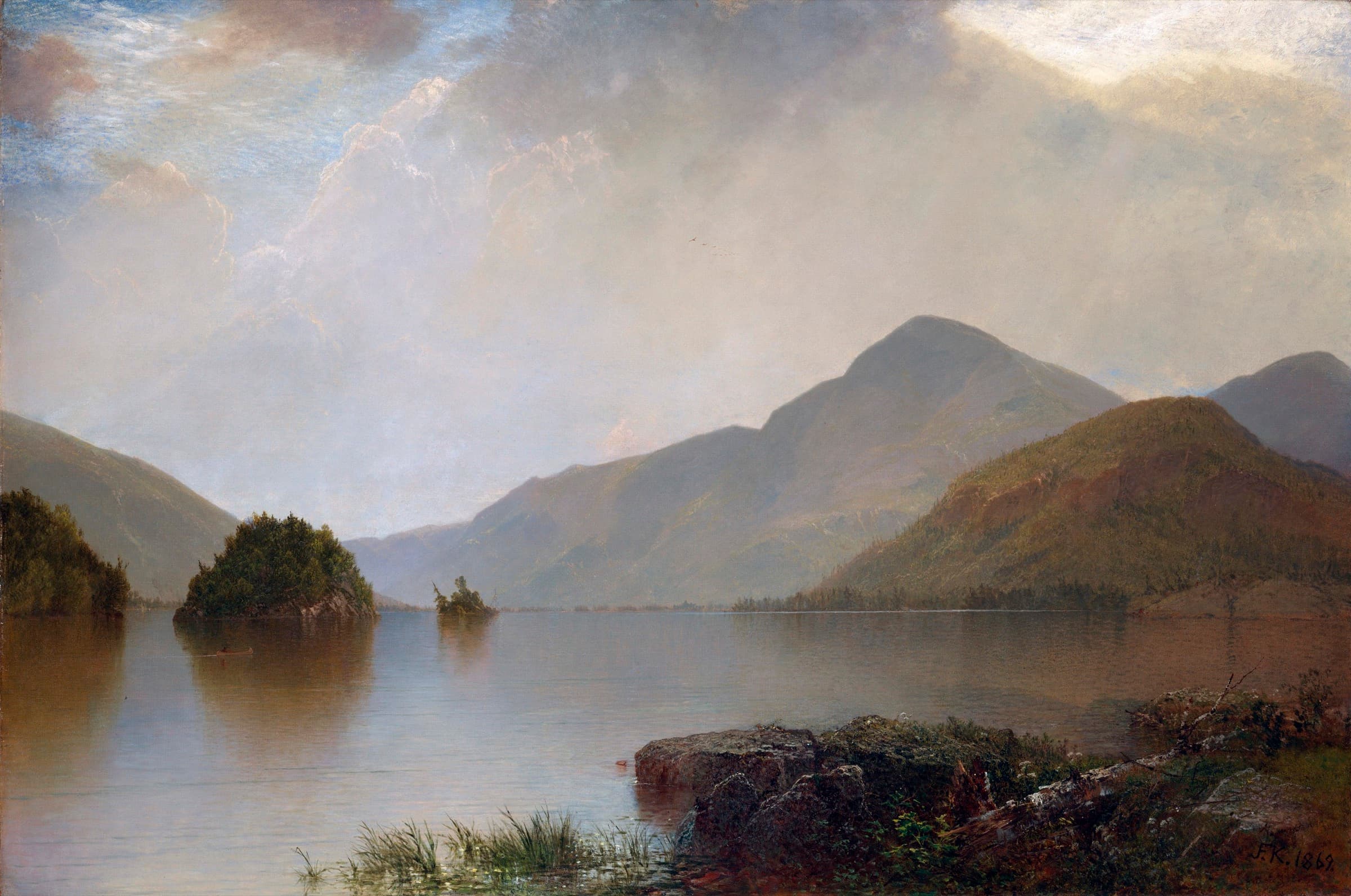
A quieter branch of the school, Luminism, traded drama for a still, clear light. John Frederick Kensett's Lake George is air and water with almost no gesture, a contemplation of silence, where the horizon dissolves into an even glow.
“The wilderness is yet a fitting place to speak of God.”
GOING WEST
Bierstadt, Moran, and the birth of the parks
As the nation pushed west, the painters followed. The glowing canvases of Bierstadt and Moran did not merely record the West, they helped protect it.
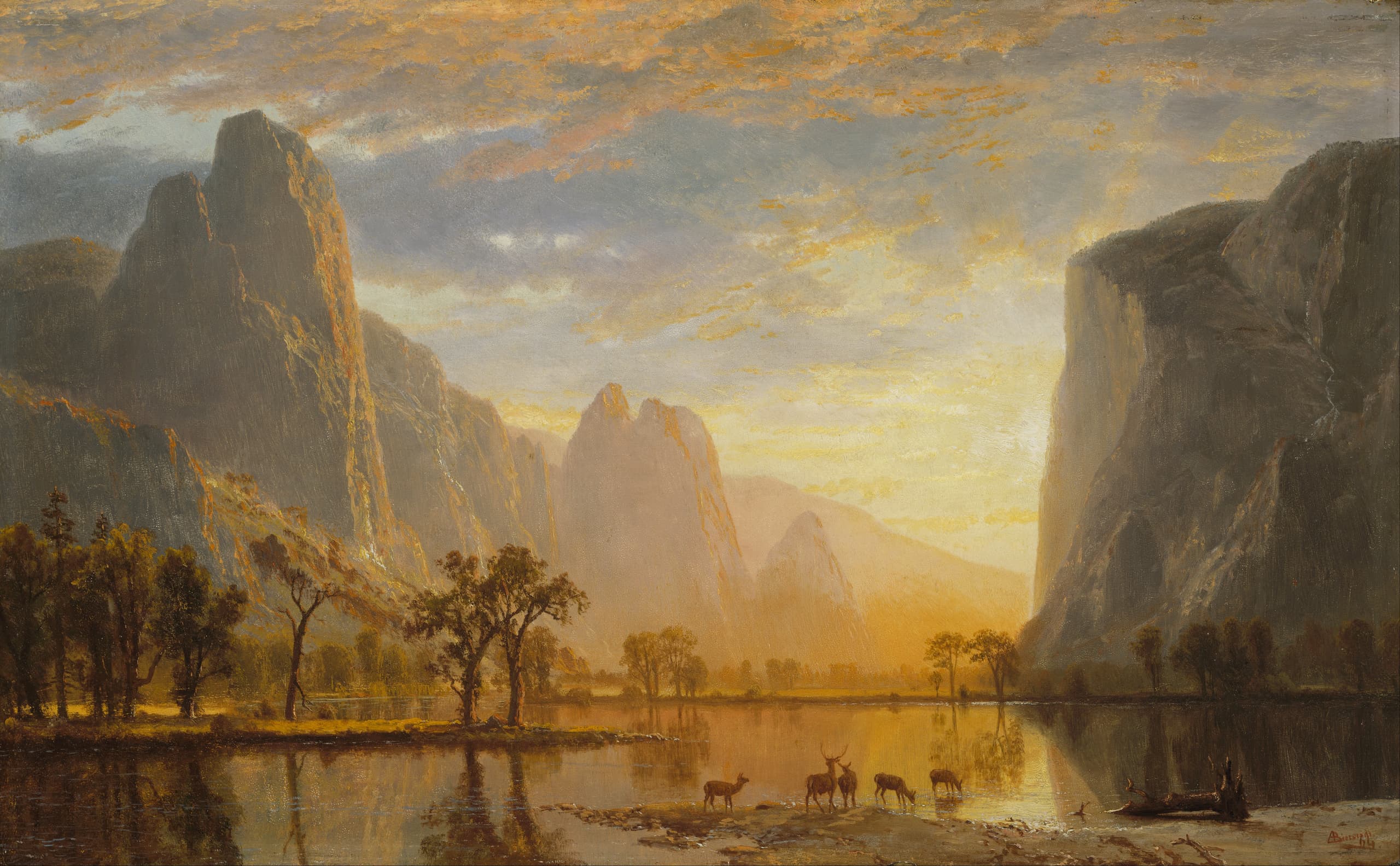
Bierstadt bathed Yosemite in golden, theatrical light. His canvases were shown back east as evidence of a wonder worth protecting, part of the argument that led to the Yosemite Grant of 1864.
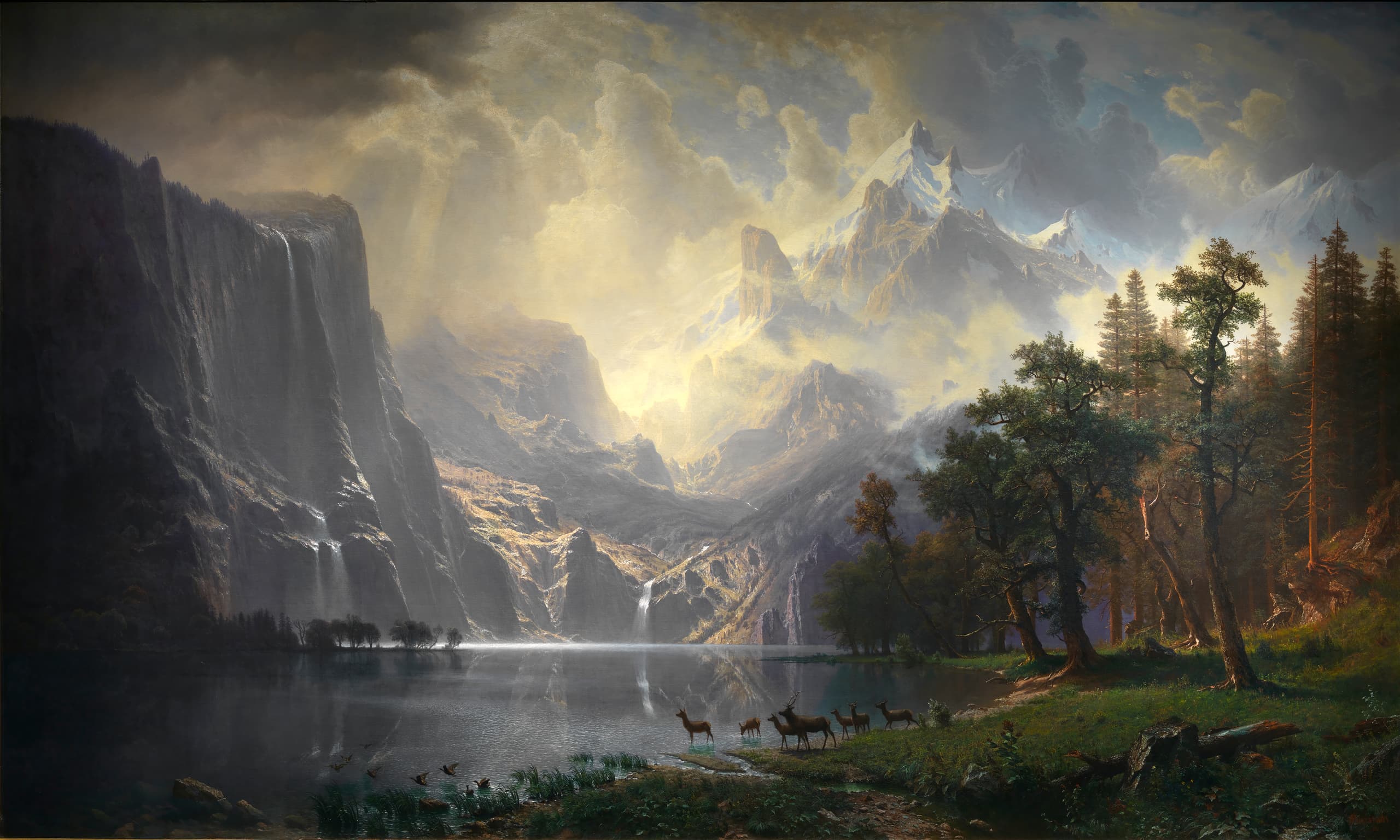
Painted in Rome for a European audience, this idealized Sierra scene made the American wilderness a sublime cathedral of light: deer at the water, mist rising to peaks lit like an altarpiece.
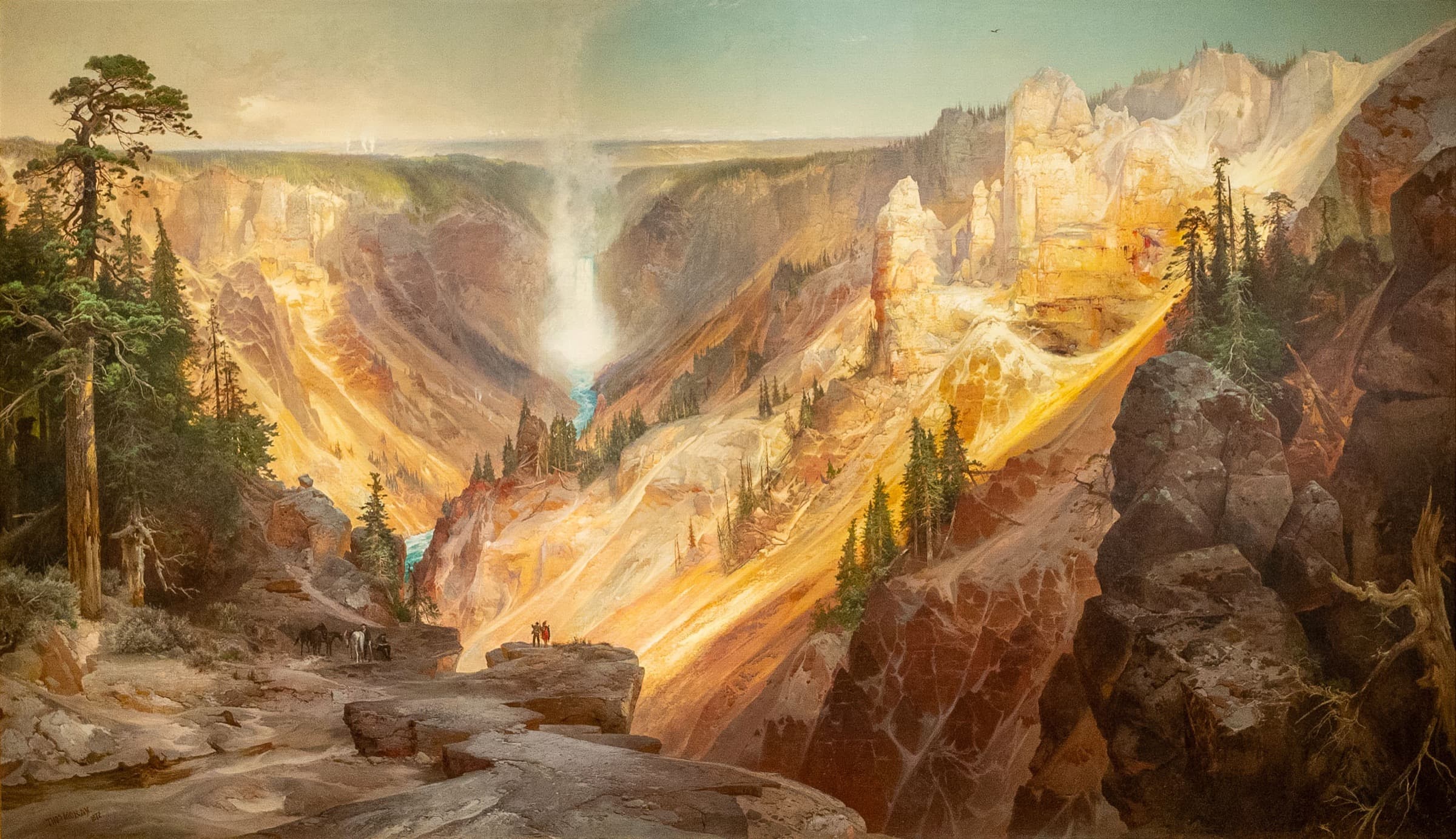
The Grand Canyon of the Yellowstone, Thomas Moran, 1872: the canvas that helped create the world's first national park.
When painting became conservation
Moran traveled with the 1871 Hayden survey. His watercolors and his monumental canvas helped persuade Congress to make Yellowstone the world's first national park in 1872. Landscape was no longer merely beautiful; it had become an argument, and the school that painted the land helped save it.
The Ask America Oracle
Ask the AI Oracle about Thomas Cole's Course of Empire, Frederic Church's blockbuster exhibitions, Luminism, or how Thomas Moran's paintings helped create Yellowstone.