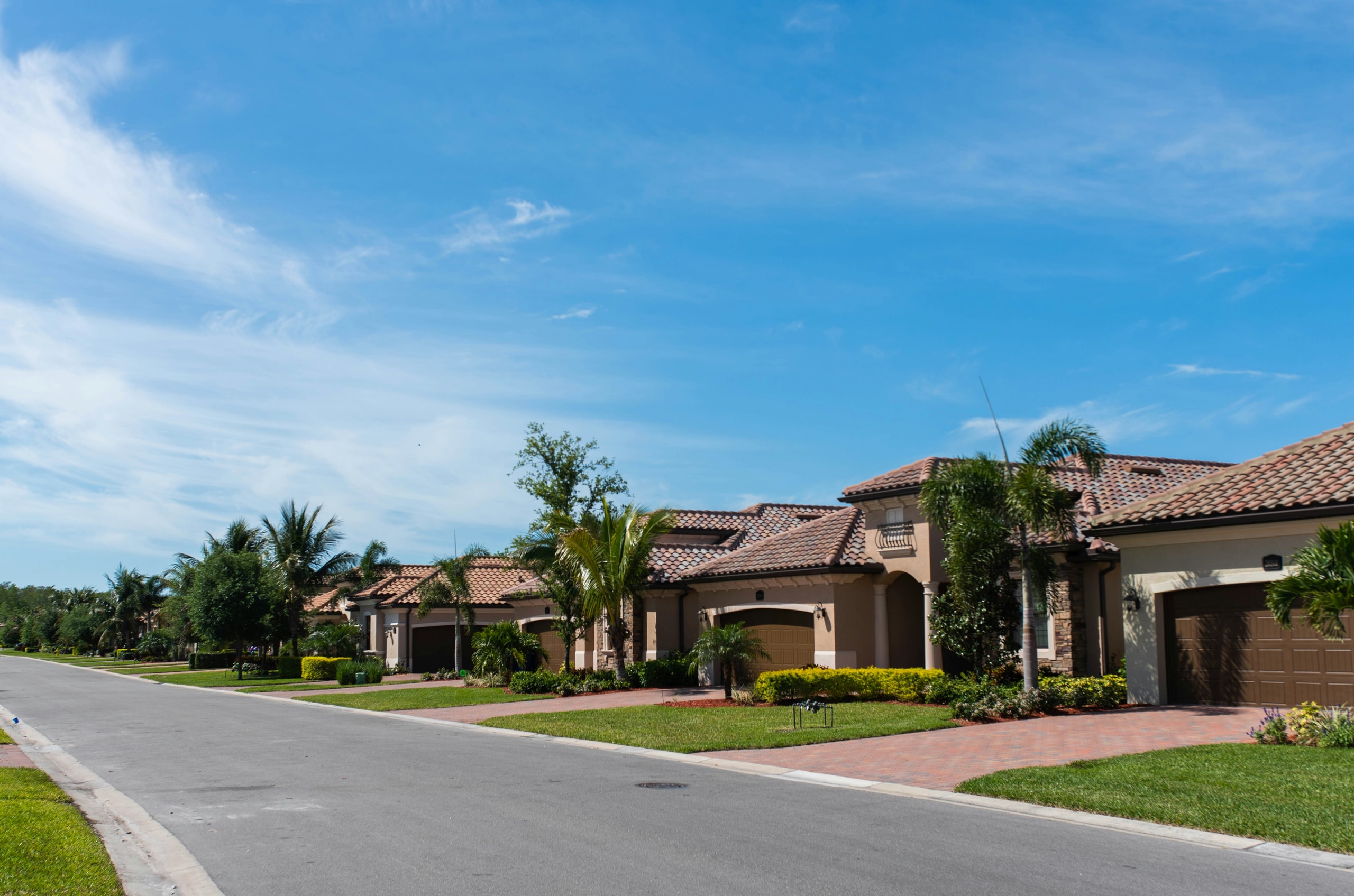
THE WORLD'S MOSTSPACIOUS HOMES
A constitutional property rights tradition, deep capital markets, and a unique 30-year mortgage instrument have made single-family homeownership the engine of American middle-class wealth.
Property Rights as a Foundation of Prosperity
American homes are the largest in the world by floor space per person, roughly double the size of a German home and triple that of a Japanese one. This is the statistical median for the American working and middle class, not a luxury reserved for the wealthy. The US housing market sits atop deep capital markets, government-sponsored secondary mortgage entities (Fannie Mae, Freddie Mac), and a uniquely American financial instrument: the 30-year fixed-rate mortgage.
In virtually every other country, homebuyers face variable-rate or short-duration loans that expose them to interest-rate volatility. In the United States, buyers can lock a rate for 30 years, converting a home from a risky leveraged asset into a predictable, appreciating wealth vehicle. The combination of large living space, price-to-income ratios that remain competitive globally, and a constitutional tradition of fee simple ownership makes American real estate uniquely powerful for wealth accumulation.
Housing by the Numbers
2,301
Sq Ft Average Home
The average new single-family home in the US is 2,301 sq ft, making it the largest in the world. Germany averages ~1,170 sq ft; Japan averages ~1,023 sq ft.
#2
Global Housing Affordability
Numbeo's 2026 Property Price-to-Income Index ranks the US #2 most affordable in the world. Real sq ft is 2–4× cheaper than in Europe and 3–6× cheaper than in Asia.
65.6%
Homeownership Rate
Nearly two-thirds of American households own their homes: a rate that has held steady for decades, spanning a wide cross-section of income levels and regions.
~90%
Fixed-Rate Mortgage Share
Approximately 90% of US mortgages are 30-year fixed-rate loans: a product that barely exists outside the United States and shields borrowers from rate-shock.
America in Global Context
On nearly every measure of living space, the United States sits at the top of the developed world: bigger homes, more rooms per person, and one of the lowest housing cost burdens anywhere.
Average floor space of new homes (m²)
Source: Policy Exchange · CABE · US Census Bureau
Rooms per person
Source: OECD Better Life Index
Median dwelling size (sq ft)
Source: US Census Bureau · OECD · national statistics
Housing expenditure (% of income): lower is better
Share of gross adjusted disposable income spent on housing.
Source: OECD
Four Pillars of American Housing Strength
The 30-Year Fixed Mortgage: A Global Anomaly
Most countries offer only adjustable-rate or 5–10-year fixed mortgages. When rates rise, European and Asian homeowners see their monthly payments reset upward. American homeowners locked into a 30-year fixed rate are completely insulated. This instrument, backed by Fannie Mae and Freddie Mac through the secondary mortgage market, transfers the long-term interest-rate risk from homeowners to capital markets, creating the single most powerful residential wealth-building tool in history.
Size, Space, and Suburban Scale
The American single-family home averages over 2,300 sq ft, featuring multiple bedrooms, a 2-car garage, a backyard, and often a finished basement or attic. The suburbs that house the majority of Americans are a product of the Interstate Highway System, cheap land, and a legal tradition of fee-simple ownership (full private title with no feudal legacy). This spatial abundance is the product of policy, infrastructure, and cultural preference working in alignment.
Real Estate as a Wealth Vehicle
Over the past 30 years, US residential real estate has been a primary engine of middle-class wealth accumulation. Home equity constitutes the largest single asset for most American families. The deductibility of mortgage interest (for itemizers), the $250,000/$500,000 capital gains exclusion on primary residence sales, and the 1031 exchange for investment properties layer tax advantages directly onto the housing asset: a framework unique in scale and generosity.
Constitutional Property Rights
The Fifth Amendment's Takings Clause: 'nor shall private property be taken for public use, without just compensation': enshrines private property ownership at the constitutional level. This foundational protection, combined with state homestead exemptions that shield primary residence equity from creditors in many states, creates a property rights environment unmatched in depth and enforcement. American land titles are among the most secure in the world.
Additional Housing Facts
The Home Improvement Market: $534 Billion
The US home improvement market was valued at $534.57 billion in 2024. Home Depot ($140B+ revenue) and Lowe's ($85B+) exist precisely because American homeowners are active investors in their properties: an industry the size of a major nation's GDP generated by private citizens upgrading their own assets.
Market Data Forecast 2024 ↗10.7 Million Swimming Pools
There are approximately 10.7 million swimming pools in the United States (10.4M residential, 309k public). A private in-ground pool: a luxury item in any other country: is a standard middle-class feature across the Sunbelt. Florida has 1.59 million residential pools (1 for every 14 residents).
Pool Research 2024 ↗24.5 Sq Ft of Retail Per Capita
The US has 24.5 sq ft of retail space per person, compared to an average of just 4.5 sq ft in Europe: a physical expression of the consumer infrastructure that surrounds the American home and enables the suburban lifestyle.
Statista Retail Space Report ↗The Ask America Oracle
Ask the AI Oracle about the 30-year fixed mortgage, American home sizes vs. Europe, homeownership rates, or the constitutional basis for property rights.