WHERE MIDDLE CLASSLOOKS LIKE LUXURY
Air conditioning in 90% of homes. 800 cars per 1,000 people. 17 million recreational boats. 10.7 million swimming pools. The American consumer economy produces a standard of living with no peer.
Democratized Luxury at Scale
When economists talk about living standards, they reach for GDP per capita or wage data. But those abstractions fail to capture what daily American life actually looks like in physical terms. The right lens is the density of consumer goods: the tangible objects that define comfort, mobility, and freedom in everyday life. By that measure, the United States stands utterly apart from any other society in human history.
Private swimming pools. Personal aircraft. Recreational boats. In-unit washer-dryer. Central air conditioning in August. Full-size garage refrigerator. A second car. A self-storage unit for the overflow. These are not descriptions of a wealthy American's lifestyle: they describe the median American household, particularly in the Sun Belt and South. The American consumer economy has industrialized luxury and democratized it to a degree that no other civilization has approached.
Consumer Abundance by the Numbers
90%+
Homes with AC
Over 90% of US homes have air conditioning. In Europe, fewer than 10–20% of homes have AC. Climate control is a baseline American expectation, not a luxury.
800
Vehicles per 1,000 People
The US has ~800 vehicles per 1,000 people: among the highest densities in the world, enabling the suburban lifestyle and continent-spanning personal mobility.
17M
Recreational Boats
Approximately 17 million recreational boats are owned by 15 million American households: more than any other nation by a wide margin.
10.7M
Swimming Pools
The US has approximately 10.7 million swimming pools (10.4M residential). In Florida, that is 1 pool for every 14 residents.
THE AMERICAN SHELF
Abundance at the Grocery Store
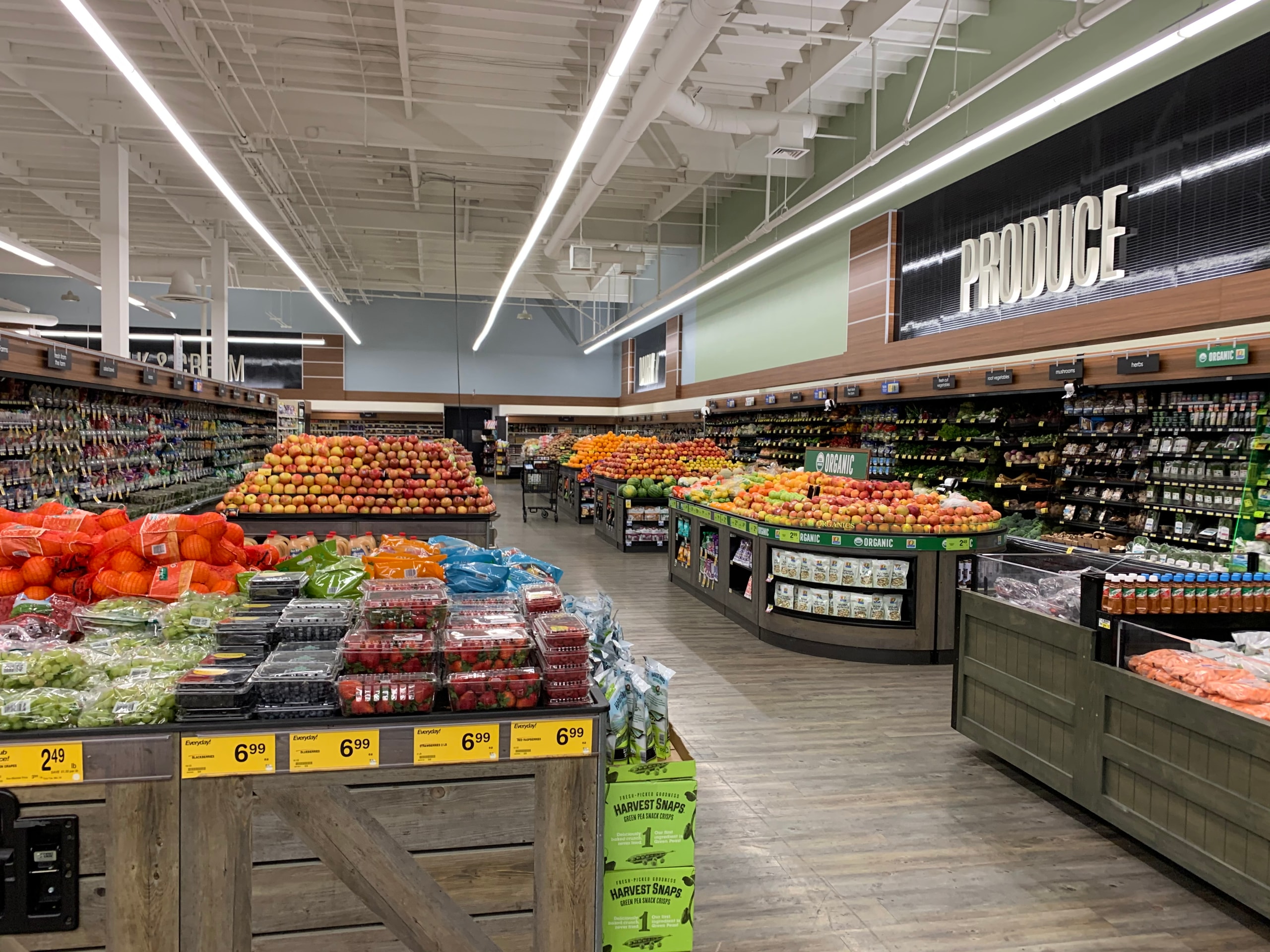
The American supermarket is a vivid expression of mass abundance: year-round fresh produce, tens of thousands of SKUs, low prices, and stores open around the clock, a normalcy much of the world would consider luxury.
Safeway · Foster City, CA
A produce department stocked with fresh fruit and vegetables year-round: the baseline of any American supermarket.
Kroger Marketplace · Athens, GA
Kroger runs nearly 2,800 stores; its produce section is a showcase of American agricultural abundance.
Costco · Ocean Township, NJ
The American warehouse-club model: bulk quantities at rock-bottom prices, now copied worldwide.
Walmart Supercenter · Bloomsburg, PA
Walmart is the world's largest retailer; a typical Supercenter carries 100,000+ items under one roof.
Walmart · Action Alley
Rollback displays pallet after pallet: the everyday-low-price promise, under the American flag.
Thanksgiving Shopping
Carts piled high before the holidays: a ritual of abundance accessible to the middle class.
Categories of Consumer Dominance
Climate Control & Home Appliances
Air Conditioning: 90%+ of Homes
Roughly 90% of US homes are equipped with air conditioning, making sweltering summers entirely manageable. By contrast, only 10–20% of European homes have AC. This gap is not explained by climate alone: northern US states with mild summers have nearly universal AC adoption. Cheap electricity from the shale energy revolution makes year-round climate control a standard expectation rather than a luxury.
Full-Size Appliances as Standard
Massive multi-door refrigerators, built-in dishwashers, garbage disposals, full-size washers and dryers in-unit, and chest freezers in the garage are baseline expectations even in working-class US apartments. In Europe, space and energy constraints mean appliances are smaller, shared laundry rooms are common, and dedicated clothes dryers are treated as an unusual luxury.
Personal Mobility
800 Vehicles per 1,000 People
With ~800 vehicles per 1,000 people, cheap fuel, and the Interstate Highway System: 47,000 miles of limited-access freeway built and maintained by the federal government: Americans enjoy unmatched personal freedom of movement. This enables suburban living at low cost, makes labor highly mobile across the continent, and is the backbone of the American retail and logistics economy.
42% of the Global General Aviation Fleet
The US civil aviation fleet has 220,000 registered aircraft: 42% of the global total, dwarfing China (5,366) and Canada (4,888). Over 90% are general aviation (private/business), and over 80% of the 609,000 certified pilots fly GA, landing at over 5,000 public-use airports. The personal airplane: a middle-class asset in rural America: is effectively nonexistent as a civilian vehicle in any other country.

Recreation & Outdoor Assets
17 Million Recreational Boats
America leads globally in boat ownership. Approximately 17 million recreational boats and yachts are owned by 15 million US households. China registers fewer than 120,000 boats despite having 4× the population. US middle-class families access millions of navigable freshwater lakes, rivers, and coastal zones. Boat ramps, marinas, and public waterway access infrastructure is a nationwide given.
10.7 Million Swimming Pools
There are approximately 10.7 million swimming pools in the United States (10.4M residential, 309k public). In Florida: 1 pool per 14 residents. Arizona: 1 per 13 residents. Germany has only 1.5 million pools; France 3.2 million: both with much lower population-adjusted rates. A private in-ground pool is a middle-class feature in the American Sunbelt and a near-unattainable luxury item almost everywhere else.
The Overflow Economy
The Self-Storage Civilization: 90% of Global Share
The US holds a 90% share of global self-storage inventory, with over 50,000 facilities, more locations than McDonald's, Starbucks, and Subway combined. Generating $40B+ in annual revenue, this industry is a physical ledger of American material abundance. Self-storage exists at scale in the United States because American households consistently accumulate more goods than their already-large homes can contain.
$150 Billion Pet Economy
Total US pet industry sales reached $150.6 billion in 2024, representing 40% of the global market. Americans spend more on their pets annually than the entire GDP of dozens of sovereign nations. Advanced veterinary medicine, including MRIs, oncologists, and cardiologists for animals, represents a standard-of-living data point unique to the US, where middle-class pet owners routinely access specialist veterinary care.
24.5 Sq Ft of Retail Space Per Capita
The US has 24.5 sq ft of retail space per person, compared to an average of just 4.5 sq ft in Europe. This massive infrastructure of big-box stores, strip malls, and shopping centers creates permanent price competition and consumer abundance. The American consumer goods ecosystem, anchored by Walmart, Costco, Target, Home Depot, and Amazon warehouses, represents a supply-chain and retail density without precedent.
The Ask America Oracle
Ask the AI Oracle about air conditioning rates in American homes, car ownership density, recreational boating statistics, or the American self-storage industry.