Alaska
THE LASTFRONTIER
Spanning 663,268 square miles of Arctic wilderness, towering glaciers, and unique wildlife, Alaska represents a vast, distinct realm.
0K mi²
Total Area
0 ft
Denali Elevation
0K+
Glaciers
0M+
Lakes
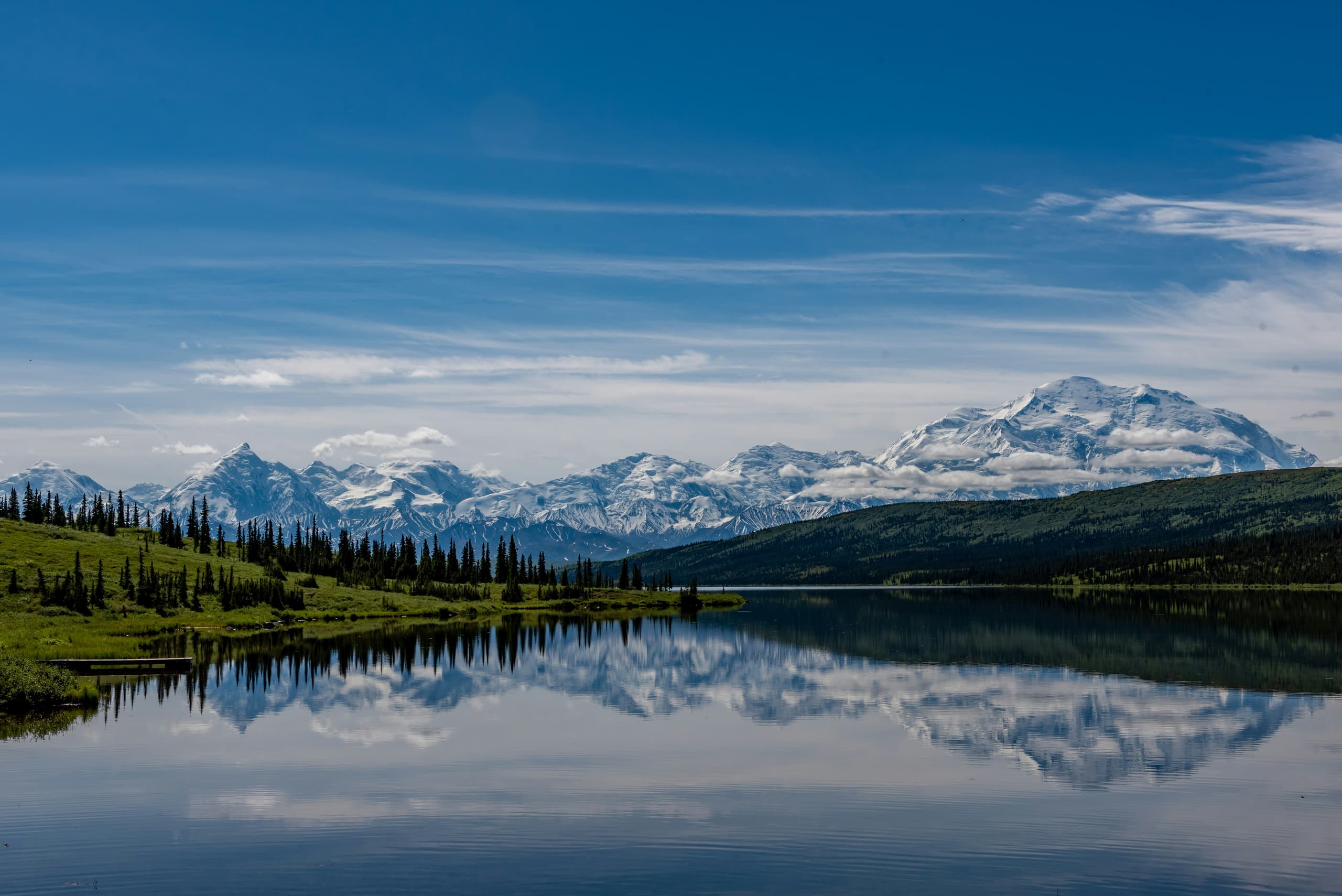
Denali: Highest Peak
At 20,310 feet above sea level, Denali is the highest peak in North America. From Alaska's interior plains, the mountain rises nearly 18,000 feet above the surrounding terrain, more than Everest above the Tibetan plateau.
Denali National Park, at 6 million acres, surrounds the mountain in a wilderness larger than the entire state of New Hampshire. A single 92-mile road ventures into the park, a deliberate decision to keep the wilderness untamed.
Alaska's Wildlife
Alaska harbors concentrations of wildlife that no longer exist anywhere else in the modern world: a glimpse of what North America looked like thousands of years ago.
| Animal | Population |
|---|---|
| Brown / Grizzly Bears | 30,000+ |
| Caribou | 750,000+ |
| Moose | 175,000+ |
| Black Bears | 100,000+ |
| Wolves | 7,000–11,000 |
| Bald Eagles | 30,000+ |
| Nesting Seabirds | 50M+ |
100,000
Glaciers covering 5% of Alaska's surface
More glacial ice than the rest of the world outside the polar caps
In Detail
Alaska is 2.5× the size of Texas, and twice the size of any other US state
At 663,268 square miles, Alaska is so large that if it were a country, it would be the 18th largest in the world: bigger than France, Germany, and the UK combined.
Alaska contains more glacial ice than the rest of the world outside the polar caps
Approximately 100,000 glaciers cover 5% of Alaska's land surface, about 28,800 square miles of ice. The Hubbard Glacier alone is 76 miles long and still growing.
Alaska has 500 species of wildlife including the largest brown bear population on Earth
Alaska is home to 30,000+ brown bears (70% of all US brown bears), 750,000 caribou, 12,000 grizzlies, one million moose, and 50 million seabirds nesting annually.
Denali rises 18,000 ft above its surrounding terrain: more than Everest above its base
While Everest is taller in absolute elevation, Denali's base-to-summit rise of ~18,000 feet makes it arguably the most dramatic rise of any mountain on Earth.
Alaska has more coastline than the rest of the US combined
Alaska's 33,904 miles of tidal shoreline represent more coastal length than all other US states combined: fjords, sea stacks, glacial inlets, and remote beaches.
Fairbanks receives 22 hours of daylight on the summer solstice
Above the Arctic Circle, the sun doesn't set for weeks in summer. At Barrow (Utqiaġvik), the sun doesn't set for 82 consecutive days. In winter, the same areas experience weeks of polar night.
Alaska's North Slope is one of the largest oil fields in N. American history
Prudhoe Bay has produced over 13 billion barrels since 1968, connected to the lower 48 via the 800-mile Trans-Alaska Pipeline, an engineering marvel across permafrost and three mountain ranges.
Alaska holds 8 national parks, over half of all NPS acreage in the US
Denali, Wrangell–St. Elias (larger than Switzerland), Kenai Fjords, Glacier Bay, Katmai, Lake Clark, Gates of the Arctic, and Kobuk Valley form the greatest wilderness park system on Earth.
Fairbanks is one of the world's premier aurora borealis destinations
Located directly under the auroral oval, Fairbanks offers some of the most reliable Northern Lights viewing. Aurora season runs August through April with displays visible up to 200 nights per year.
Alaska is larger than TX + CA + MT combined: by 83,000 square miles
Texas (268,596 mi²) + California (163,696 mi²) + Montana (147,040 mi²) = 579,332 mi². Alaska at 663,268 mi² beats all three combined, placing it in a category entirely its own.
“Alaska is not a place on the edge of anywhere. Alaska is the center of everything: the last great wilderness, the last frontier of the last great country.”
: Joe Vogler