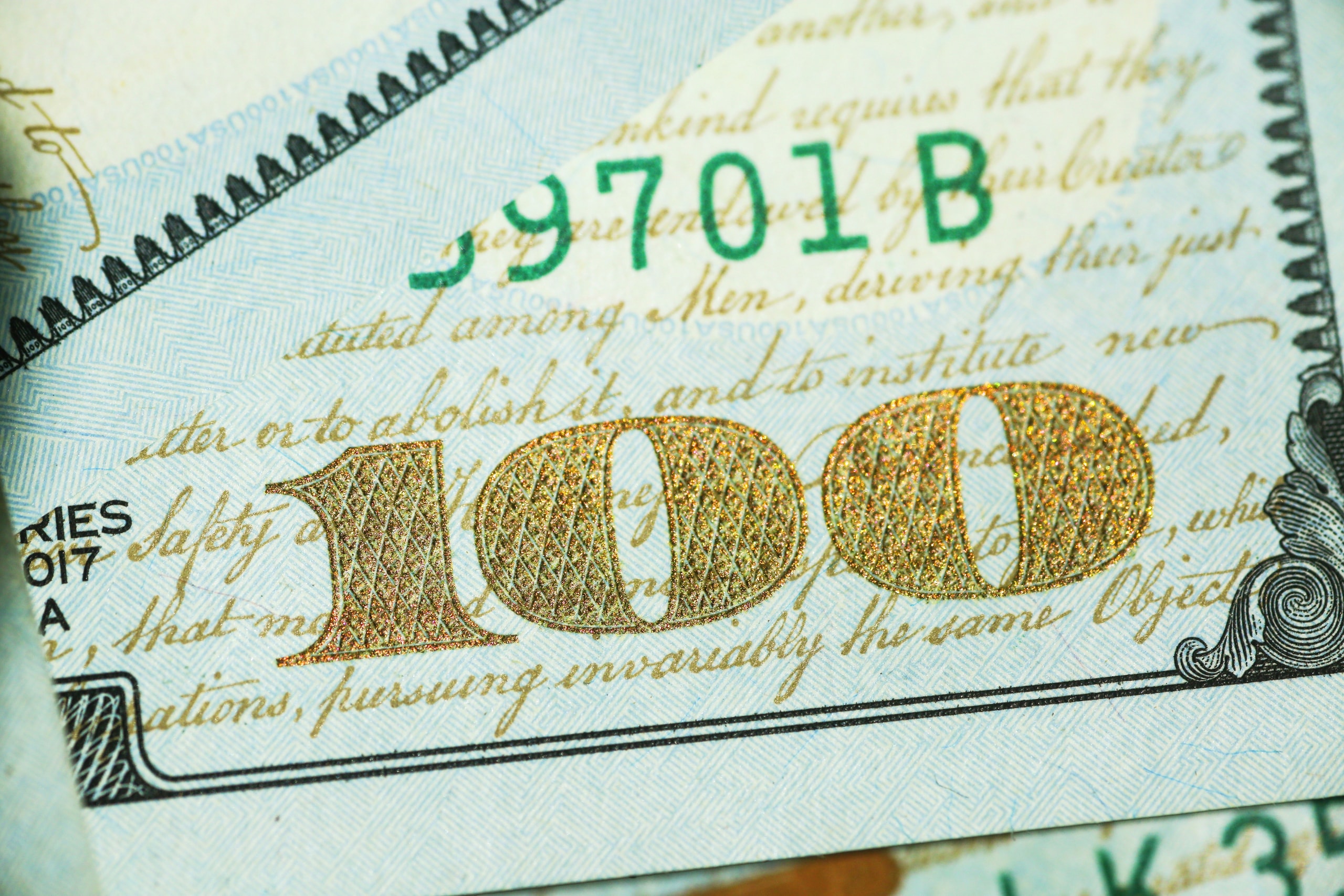
THE WORLD'SRESERVE CURRENCY
The US dollar functions as the central operating currency of global finance, accounting for 56.8% of official FX reserves and over 40% of international trade.
The Exorbitant Privilege
The US dollar serves as the operating system of global finance, functioning as the primary reserve currency and medium of exchange. Developed through the [Bretton Woods system](#deep-dive-Bretton_Woods_system) and petrodollar agreements, this status allows the United States to access competitive global borrowing rates.
Today, 56.8% of global foreign exchange reserves are held in US dollars, and over 40% of international trade is invoiced in USD. Major commodities including global oil markets remain denominated in dollars, embedding structural demand into international banking.
Global Foreign Exchange Reserves by Currency (Q4 2025)
Source: IMF COFER, Q4 2025: allocated reserves
Reserve Allocations and Market Value
While the dollar's share of allocated global FX reserves moved from 71% in 2000 to 56.8% today, total global reserves expanded significantly. The IMF attributed 92% of recent quarterly fluctuations to exchange-rate valuation changes rather than reserve sales.
The nominal broad dollar index, since 2006
Trade-weighted against America's trading partners; January 2006 = 100
Source: Federal Reserve Board (DTWEXBGS)
Historical Development of Dollar Reserve Status
The dollar's reserve status developed through international financial agreements, capital market liquidity, and trade flows over eight decades.
Bretton Woods Agreement
Allied nations agree to peg their currencies to the US dollar, and the dollar to gold at $35/oz. The dollar becomes the cornerstone of the post-war financial order.
Nixon Closes the Gold Window
President Nixon ends dollar-gold convertibility. Rather than weaken the dollar's position, the move ushers in the era of the pure fiat dollar, which has only grown stronger.
Petrodollar System Established
The US negotiates with Saudi Arabia: oil is priced and sold exclusively in dollars in exchange for US military protection. The "Petrodollar" embeds dollar demand into global energy markets forever.
NAFTA & Dollar Expansion
Trade liberalization expands dollar use across the Americas. The peso crisis reinforces that dollar-denominated assets are the global safe haven.
Financial Crisis Confirms Dollar Supremacy
During the worst financial crisis since 1929 (a crisis that originated in America), global investors fled TO the dollar, not away from it. The dollar strengthened. This proved the dollar's irreplaceable safe-haven status.
Dollar Weaponized Against Russia
Russia's invasion of Ukraine triggers unprecedented dollar-based sanctions. $300B+ in Russian reserves frozen. The episode demonstrates the dollar's role as both economic instrument and geopolitical weapon.
Dollar Still Reigns at 80 Years
Despite repeated predictions of "de-dollarization," the dollar's share of global reserves remains above 56.8%, SWIFT dominance holds above 40%, and no credible rival has emerged. The dollar endures.
0%
of international transactions involve the US dollar, anchoring global trade.
The Dollar Advantage: In Detail
The petrodollar
Since the 1970s agreement, oil (and virtually every major commodity) is priced and settled in dollars, embedding dollar demand into every nation's economy.
The dollar as a geopolitical weapon
Being cut off from the dollar system through SWIFT sanctions is one of the most powerful economic weapons on Earth: Iran, Russia, and North Korea have all felt it directly.
On “De-Dollarization”: A Reality Check
Periodic predictions of de-dollarization have accompanied major financial shifts, including the launch of the Euro in 1999 and the expansion of emerging market trade. In each period, dollar demand stabilized.
The dollar maintains its role due to the unmatched liquidity of US financial markets.
"America's ability to borrow in its own currency at the world's lowest rates is the direct reward for building the most trustworthy financial system in human history."
THE CURRENCY
The Dollar Bill: Designed in Detail
Every Federal Reserve Note carries centuries of symbolism: the Eye of Providence, the thirteen-star constellation, the eagle and shield. Over $2 trillion in physical dollars circulate globally, with roughly 60% held outside the United States.