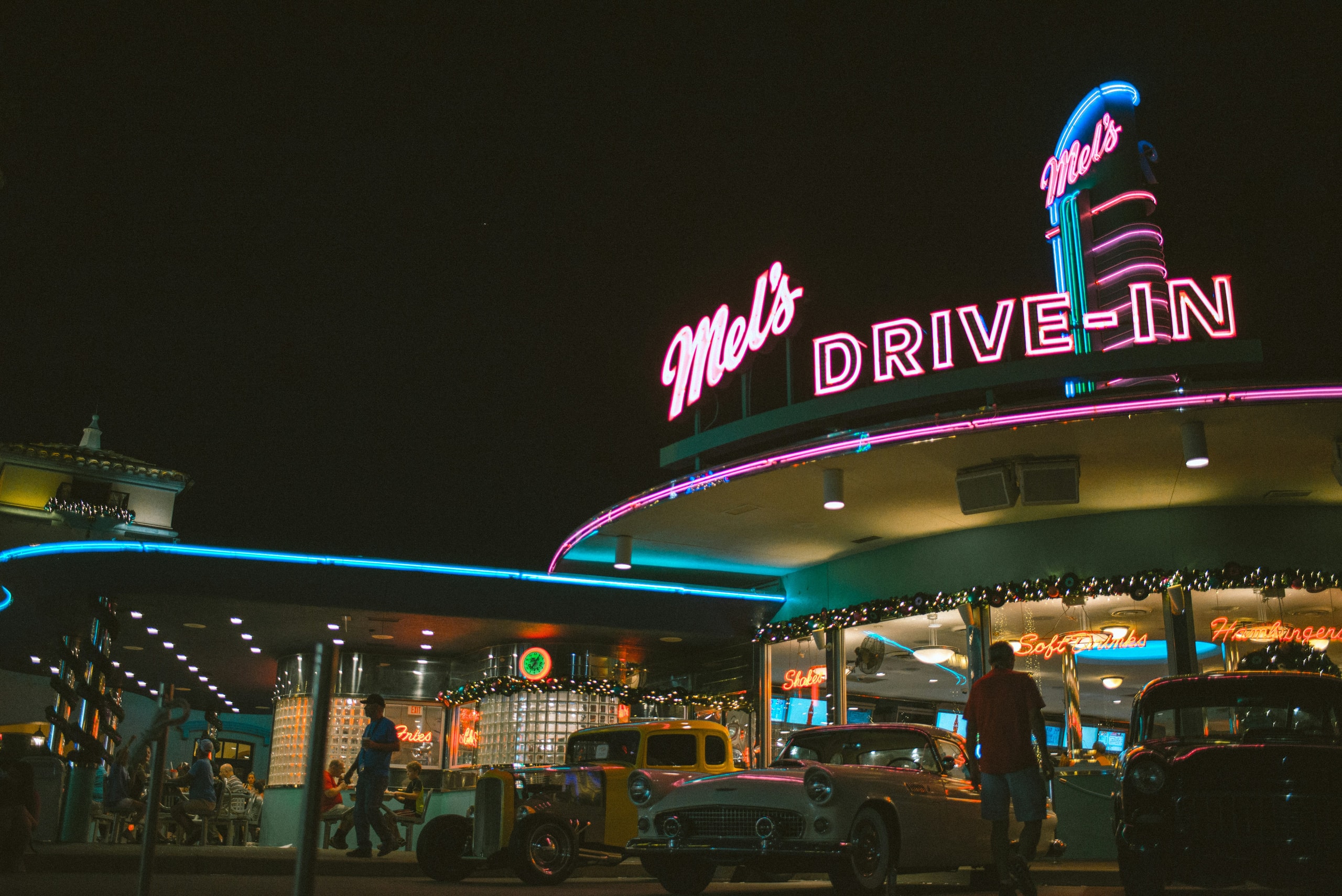
Vintage Classic Cars parked outside Mel's Drive-In retro diner at night


FOOD &DRINKS

The American culinary system industrialized consistency and democratized access to food on a planetary scale.

0B
0+
$0B
The American culinary system industrialized consistency and democratized access to food on a planetary scale.

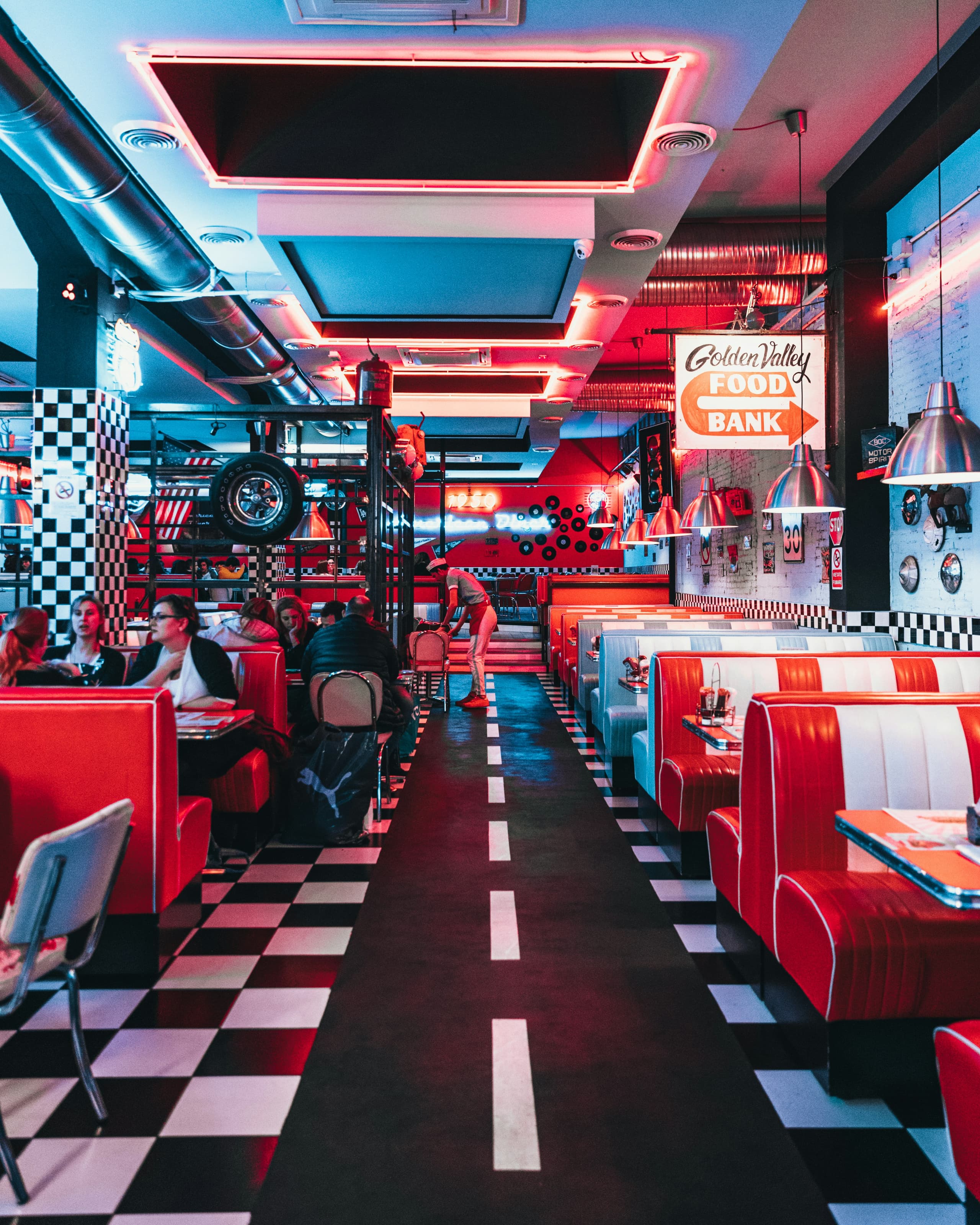
The American diner represents the spatial design of democratic access. The franchise model (McDonald's, Starbucks, Subway) turned food preparation into a precision assembly system. American pizza — NY slice and Chicago deep dish — reinvented an Italian dish into something entirely new. Ice cream, potato chips, brownies, donuts — all have distinctly American origins or popularization.

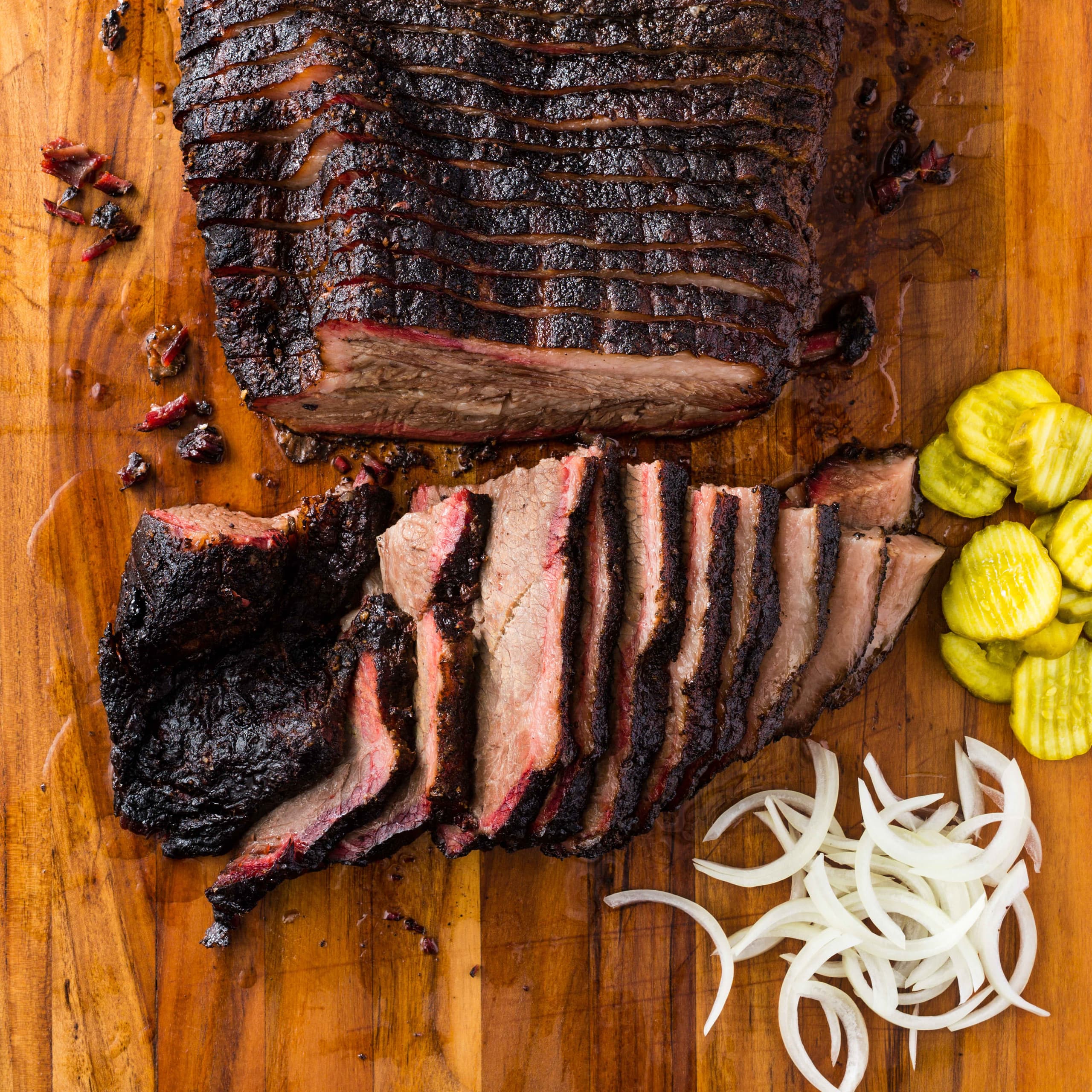
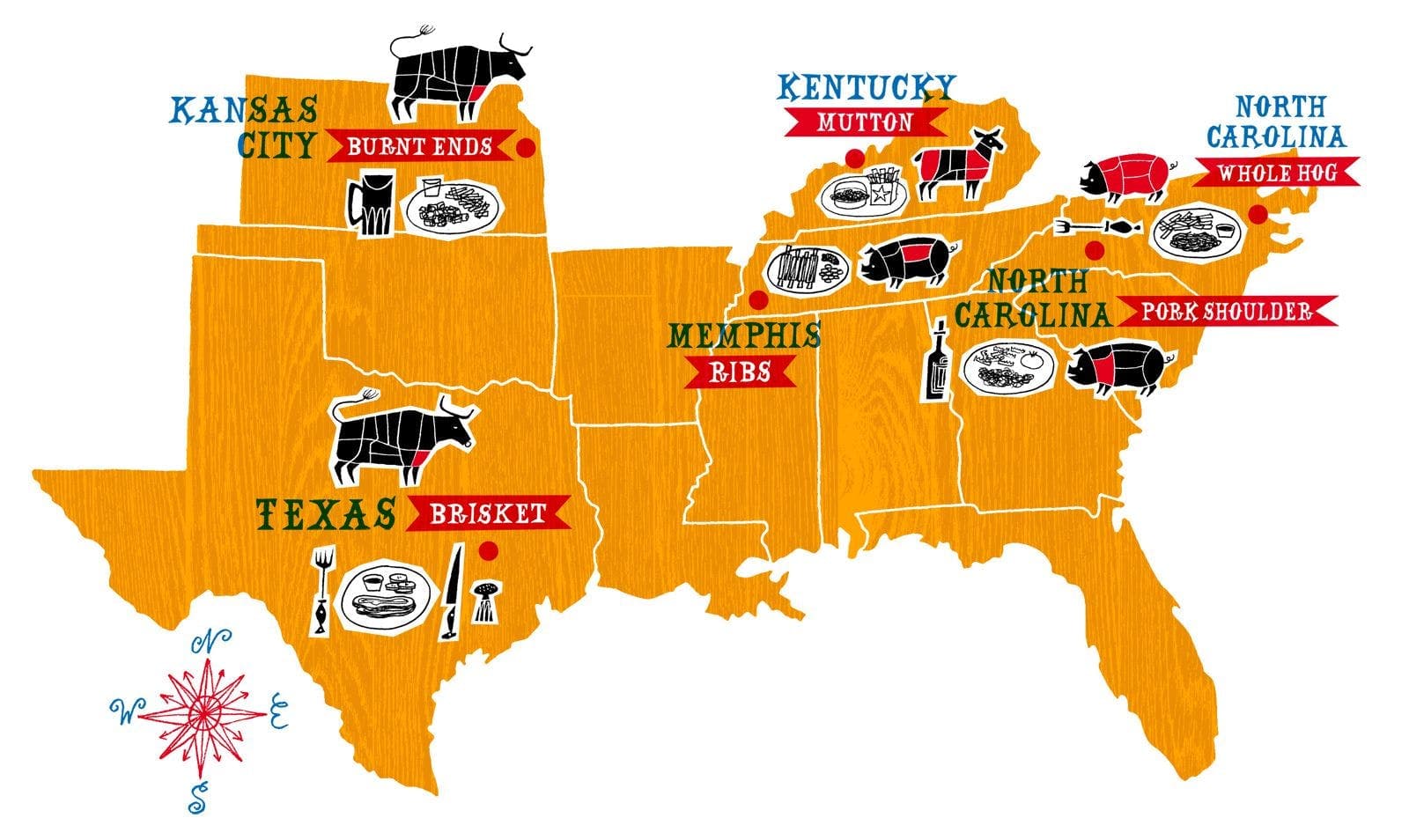
American BBQ is actually four completely different regional traditions: Texas smoked brisket, Memphis ribs, Carolina pulled pork, and Kansas City burnt ends. Each with its own wood, its own sauce, and its own philosophy about what perfect meat means.

1.9B
Daily Coca-Cola servings worldwide
40,000+
McDonald's locations worldwide
$97B
Global ice cream market

CULINARY ICONS

FOOD PILLARS

Symbol of Culinary Democracy

The Hamburger

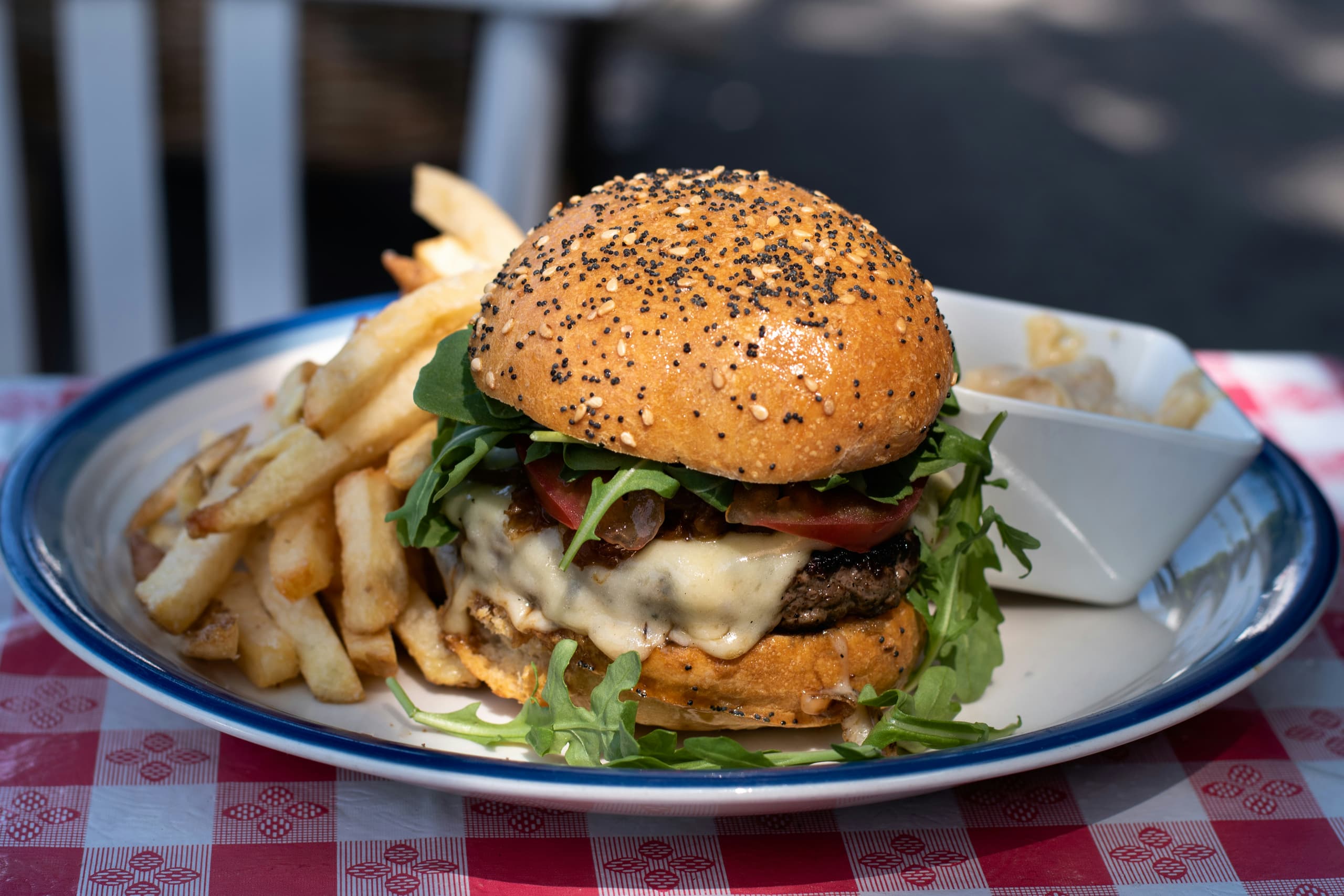
From the backyard grill to McDonald's, the American hamburger redefined what a fast, satisfying, universal meal looks like. Now consumed by billions worldwide daily.

Classic American Burger

Four Traditions, One Philosophy

Texas BBQ

12–18 hour oak-smoked brisket, Memphis ribs glazed with sweet-hot sauce, Carolina vinegar-based pulled pork, Kansas City burnt ends — four distinct culinary religions with millions of devoted followers.

Texas BBQ brisket

Invented & Industrialized in America

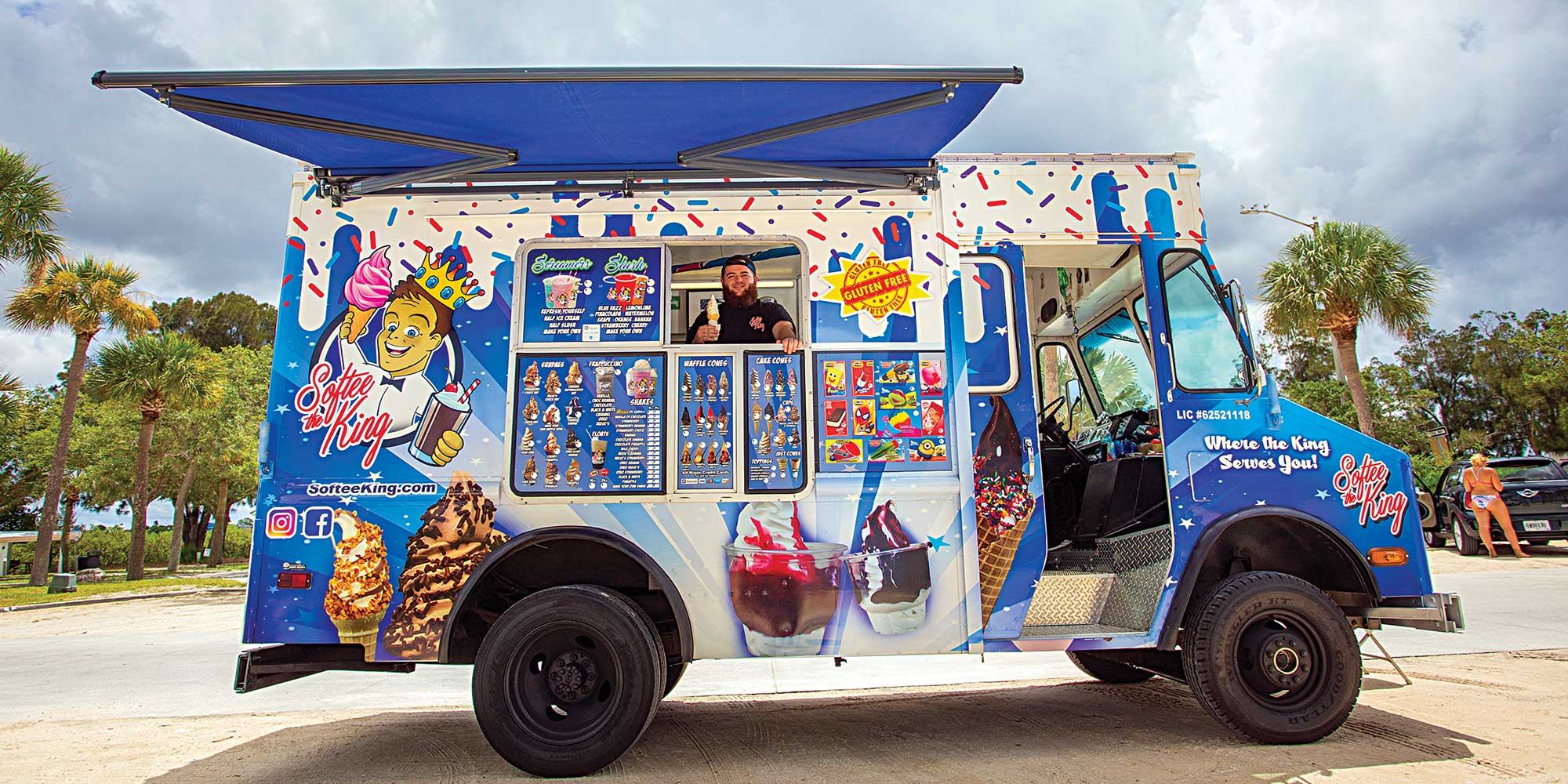
Ice Cream

The ice cream cone was invented at the St. Louis World's Fair (1904). Soft serve — American invention. Ben & Jerry's, Häagen-Dazs — American brands dominating the $97 billion global market.

American ice cream truck

NY Slice & Chicago Deep Dish

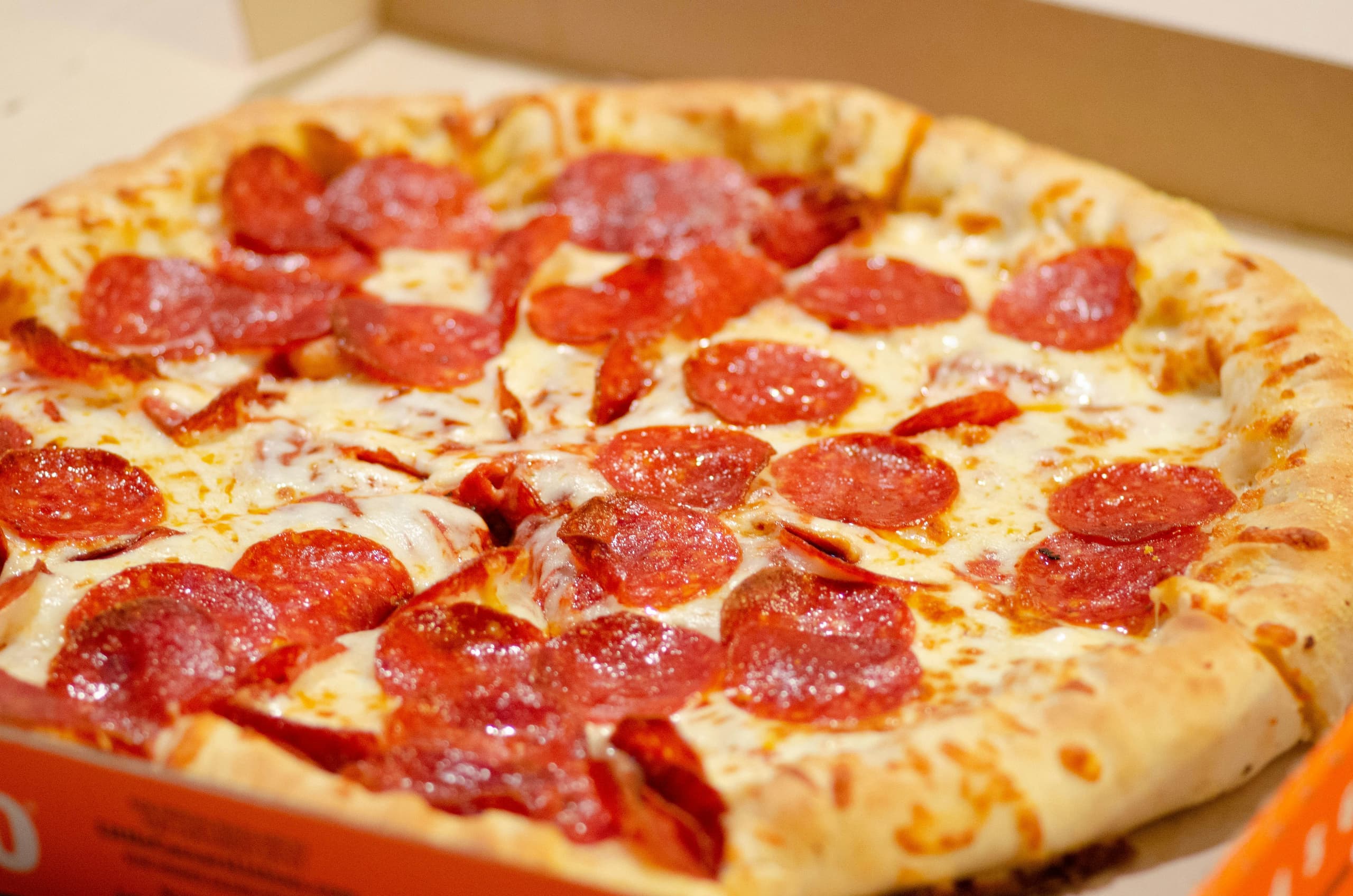
American Pizza

Italian immigrants brought pizza to New York in the early 1900s, but America reinvented it entirely. The NY slice (1905), Chicago deep dish (1943), Pizza Hut (1958, Kansas), Domino's (1960, Michigan) then exported it worldwide. Today pizza is a $153 billion global industry — the NY slice and Chicago deep dish are distinctly American inventions.

Classic American pepperoni pizza

FOUR ORIGIN STORIES

FOUR FOODS THAT DEFINE AMERICA

Steak, milk, the sandwich, the apple — so ordinary we barely see them as food. Each has an origin story that turns out to be pure American history. Click any of them.

Steak

From two directions · 1520s

Steak

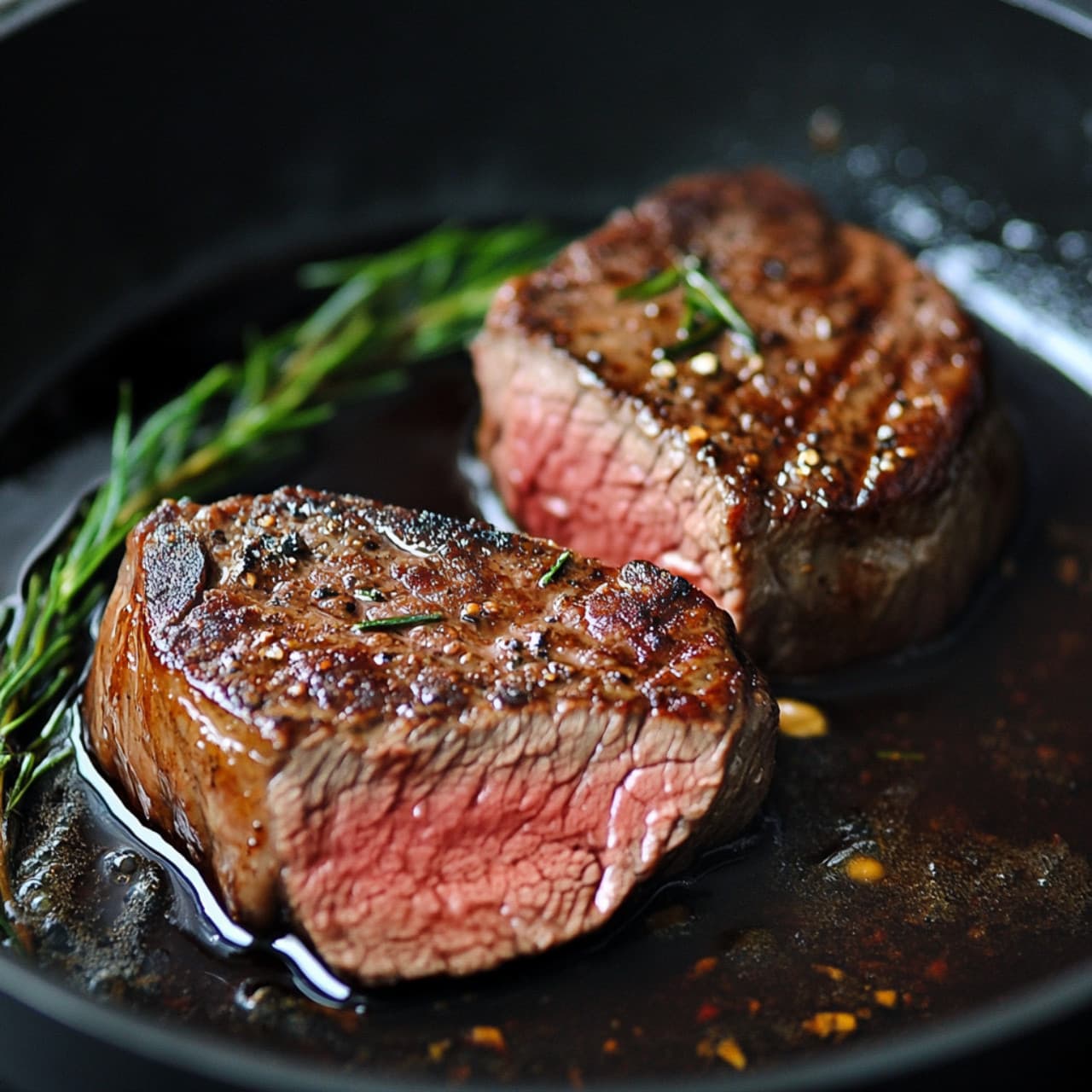
Beef reached America twice. Columbus carried the first cattle to the Caribbean, and from the 1520s Spanish colonists spread open-range ranching across Mexico — which is why the vocabulary of the American cowboy (bronco, lasso, rodeo, ranch) is simply anglicized Spanish. A century later the Dutch and British landed their own herds on the East Coast. But beef only became absurdly abundant when two Midwestern forces met: corn to fatten the cattle and railroads to move them. Chicago, Omaha and Kansas City became meatpacking capitals, refrigerated railcars carried steaks east, and firms like Swift and Armour grew into the first corporate titans of the Gilded Age. Beef is still America's most valuable farm product, and the steak dinner became one of the nation's first restaurant rituals.

#1
World beef producer
4
Cowboy words from Spanish
1865+
Corn + rail built the industry

THE SWEET CANON

SEVEN GREAT AMERICAN DESSERTS

Every dessert here carries a slab of American history — from the melting-pot donut to the cotton candy a dentist invented. Click any of them.

The Donut

1920s

The Donut

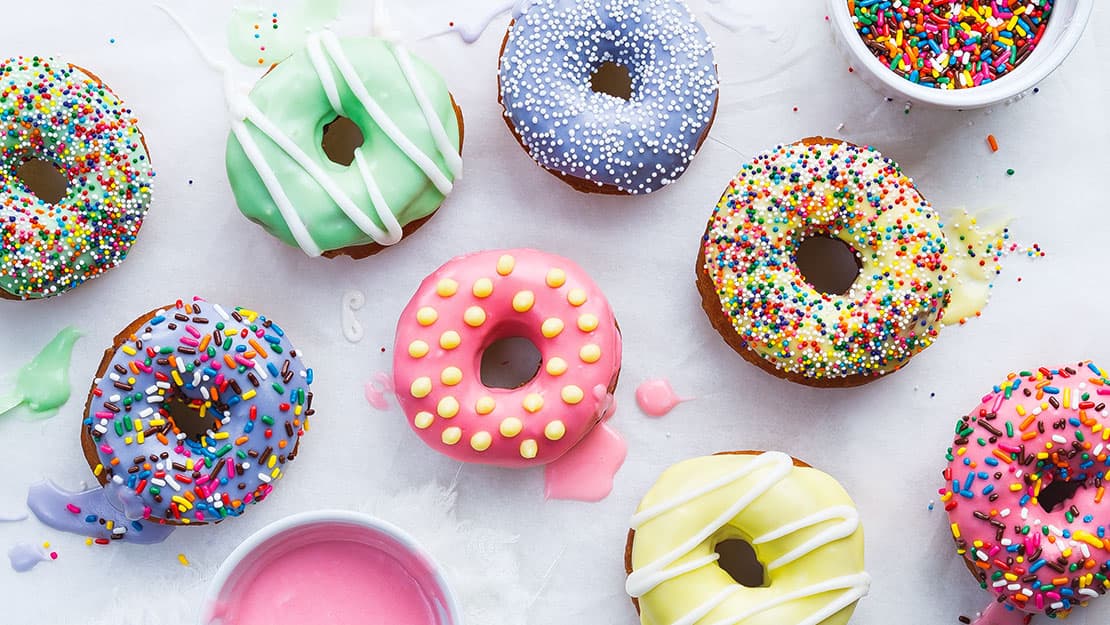
A donut is just dough fried in oil — an idea half the world stumbled onto independently — but the American version is a true melting-pot story. It grew out of the New England fried-bread traditions of Dutch, French and German settlers (the Dutch 'olykoek', or oil-cake, gets most of the credit). The ring shape won out because it cooks fast and evenly, with no mushy middle. World War I gave doughnuts to soldiers overseas, who came home craving them; a Bulgarian immigrant named Adolph Levitt built the conveyor-belt frying machine in 1921, and the chains followed — Krispy Kreme in 1937, Dunkin' in 1950. Today the donut is at once the symbol of cheap office convenience and the artisanal-pastry flex.

1921
Levitt's frying machine
1937
Krispy Kreme opens

350 SLICES A SECOND

HOW PIZZA BECAME AMERICAN

Pizza began as the peasant street food of Naples — flattened dough with lard and salt, eaten by day laborers who could afford little else. Over four million southern Italians emigrated to the East Coast between 1880 and 1920, and in America they found an abundance unthinkable back home: blocks of cheese, tomatoes, meat. They rebuilt pizza around those ingredients. Spaghetti and meatballs, lasagna, and modern pizza aren't ancient Italian traditions — they're Italian-American inventions.

Lombardi's in New York (1905) is usually called America's first pizzeria. Experimentation bred the regional styles that still argue with each other. After the war, technology took over: frozen supermarket pizza, then the chains — Pizza Hut was selling over 100 million pizzas a year by the late 1970s. Domino's made '30 minutes or it's free' famous — though it never actually gave away free pizza, and dropped the promise in 1994 after accusations it was causing accidents. And the Teenage Mutant Ninja Turtles did the rest, making pizza the signature food of an American childhood.

Pepperoni
Pepperoni
The American default
New York Slice
New York Slice
Thin, foldable, by the slice
Chicago Deep Dish
Chicago Deep Dish
A pie you eat with a fork
1905
Lombardi's, America's first pizzeria
4M+
Italian immigrants, 1880–1920
100M
Pizza Hut pizzas/year by 1979
350
Slices Americans eat per second

THE FOOD THAT CONQUERED THE WORLD

THE BIG THREE OF FAST FOOD

The burger, the fry, the chicken nugget — three American creations so widespread they became symbols for food itself. Three different kinds of origin story. Click any of them.

The Burger01

No single inventor · 1900s

The Burger

The name gives the game away: a hamburger is named not for ham but for Hamburg, the northern German port most 19th-century German immigrants sailed from — which made "hamburger" a general adjective for German-American cooking. A "hamburger steak" was just a blob of Americanized ground beef those cooks served, and when it met the era's exploding sandwich culture, someone inevitably put it between bread. At least half a dozen towns and families claim to have made the first. J. Walter Anderson mainstreamed the soft bun — it soaked up the grease of the patties he was proud of — and turned it into a chain: White Castle, opened in Wichita in 1921, America's first. It was so influential that a wave of copycats put the word "White" in their own names. Cheese arrived in the 1930s, and the new word "cheeseburger" marked the moment the burger became its own food rather than a delivery system for a steak. Bacon (A&W, 1963), lettuce, tomato and the rest followed as the postwar chains fought to stand out.

  1. 1890s"Hamburg steak" spreads with German immigration
  2. 1921White Castle opens in Wichita — America's first chain
  3. 1930s"Cheeseburger" enters the language
  4. 1963A&W claims the first bacon burger
6+
Cities claiming the first burger
1921
White Castle, the first chain

FOUR FLAVORS, FOUR STORIES

THE CHIP FLAVOR CANON

Classic, sour cream & onion, barbecue, salt & vinegar — the four dominant American flavors feel natural here, but they're deeply arbitrary (Holland runs on pepper, much of Asia on shrimp). Each one hides a tale of America's cultural evolution. Click any of them.

1853Saratoga chips are born

Classic

The plain chip is the whole story in miniature. The potato is native to the Americas but was cultivated first by the native peoples of Latin America, carried to Europe by the Spanish, and there dismissed as gross peasant food — "only the wretched eat the roots." Egalitarian America never took to that snobbery; colonists and then a wave of Irish immigrants made the potato a mainstream food eaten by every class. It even reached fine restaurants like Moon's Lake House in Saratoga Springs, New York, where the potato chip was invented around 1853. Factory technology in the early 1900s turned chips from a scoop-it-from-a-barrel bulk good into sealed individual bags, and postwar entrepreneurs bought up the regional makers into national giants.

60%+
Of US chips are Frito-Lay
50%
Of US snack food, by 1975

WORTH KNOWING

The famous legend — a snotty chef slicing potatoes paper-thin in 1853 to spite tycoon Cornelius Vanderbilt — is almost certainly a myth. Historians think the chef's sister invented them in a far less theatrical accident.

EVOLUTION, NOT REVOLUTION · 1993–2025

HOW AMERICAN FOOD CHANGED

Once cheap, convenient, modern food was taken for granted, Americans started to care about its characteristics instead. Six subtle shifts that redefined the way America eats.

THE GREAT 30 · 1961–1993

Cost. Convenience. Modernity.

A happy obliviousness: fast-food burgers, microwave dinners, delivery pizza, SpaghettiOs and Kool-Aid.

THE LESSER 30 · 1993–2025

Flavor. Authenticity. Anxiety. Ethics.

The nutrition label arrived in 1992 — and ever since, food has been about what it is, not just what it costs.

SHIFT 01

The Flavor Explosion

GREAT 30 · 1961–1993
Chocolate, vanilla, mint, cherry
LESSER 30 · 1993–2025
Pumpkin spice, guava, açaí, Purple Thunder

For a century, mass-produced flavor meant the handful of tastes Victorians already knew — chocolate, vanilla, mint, a few fruits. The Lesser 30 blew that open. Rising incomes and immigration mainstreamed tropical fruits once thought exotic and intimidating — the avocado, the mango, guava, açaí — while flavor chemistry, supercharged after the mapping of the human genome, learned to engineer tastes no one had dreamed of: Earl Grey lavender ice cream, glazed-cranberry-lemon protein bars, and Starbucks' 2003 Pumpkin Spice Latte, which turned a spice blend into a whole season. Some flavors stopped referring to the natural world at all — Purple Thunder Mountain Dew, Meta Moon Prime.

AvocadoMangoAçaíPumpkin SpiceGuava“Purple Thunder”
2003Pumpkin Spice Latte debuts
“The last three decades have been a time of evolution, not revolution — but subtle changes are still changes.”

FOUR TRADITIONS, ONE PHILOSOPHY

THE BBQ MAP

Illustrated Regional US Barbecue Map

KELLOGG'S · IHOP · WAFFLE HOUSE · THE MORNING RITUAL

Breakfast Culture

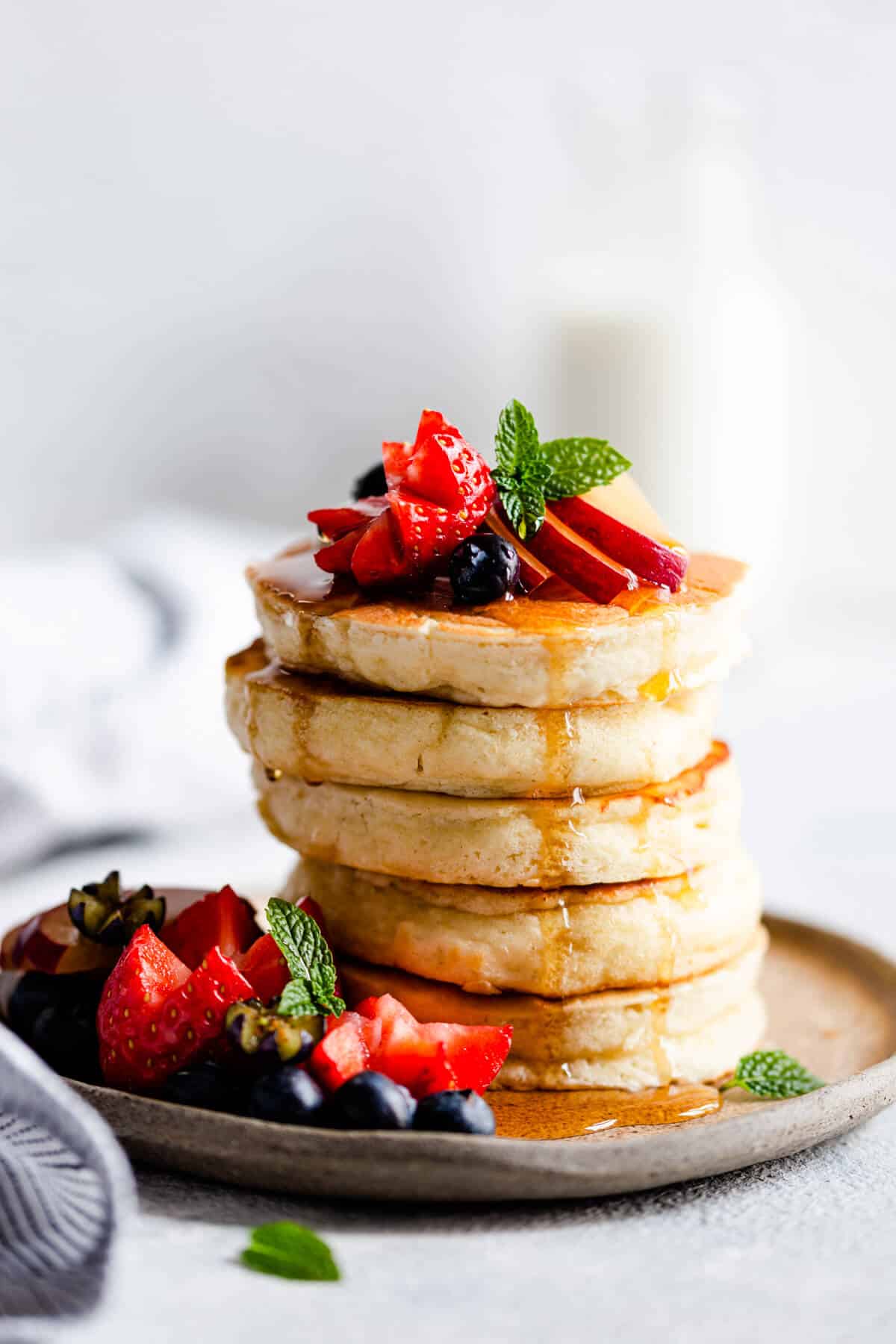
America invented the modern breakfast. Kellogg's Corn Flakes (Battle Creek, Michigan, 1906) redefined the morning. IHOP (1958), Waffle House (1955), Denny's (1953) turned the all-day breakfast into a democratic institution. Maple syrup pancakes, waffles, eggs Benedict, hash browns, crispy bacon — no nation eats breakfast with more religious devotion than America.

Classic fluffy American pancakes with maple syrup

THE AMERICAN DISH CATALOGUE

ICONIC DISHES

ICONIC DRINKS

THE DRINKS

Coca-Cola

1886

Founded, Atlanta GA

Invented by Dr. John Pemberton. Now available in 200+ countries — the most distributed product on Earth.

Speakeasy & Cocktail

1920s

Prohibition Era

Underground bars invented the modern cocktail. Manhattan, Old Fashioned, Martini — all American in origin.

American Coffee

$100B+

Annual Market

Starbucks transformed coffee into an aspirational experience — 35,000 locations across 6 continents.

Bourbon & Tennessee Whiskey

1791

First bourbon distillery

Jack Daniel's, Maker's Mark, Buffalo Trace — bourbon is legally producible only in the USA (1964 act of Congress). The industry tops $12B and exports the distinct culture of the American South worldwide.

1.9BDaily Coke servingsGlobally distributed
40K+McDonald's locationsAcross 6 continents
$900BFood service marketAmerican gastro economy
1904Ice cream cone inventedWorld's Fair, St. Louis
Inside a classic American diner

THE SPATIAL DESIGN OF COMFORT

With chrome counters, neon glow, and vinyl booths, the diner is the democratic interface of neighborhood conversation across America.

VINTAGE AD ARCHIVE

THE TASTE OF HISTORY

AI Oracle

The Ask America Oracle

Ask the AI Oracle about the history of McDonald's, Coca-Cola's origins, American BBQ regional styles, or how ice cream was invented in America.

Ask America →